
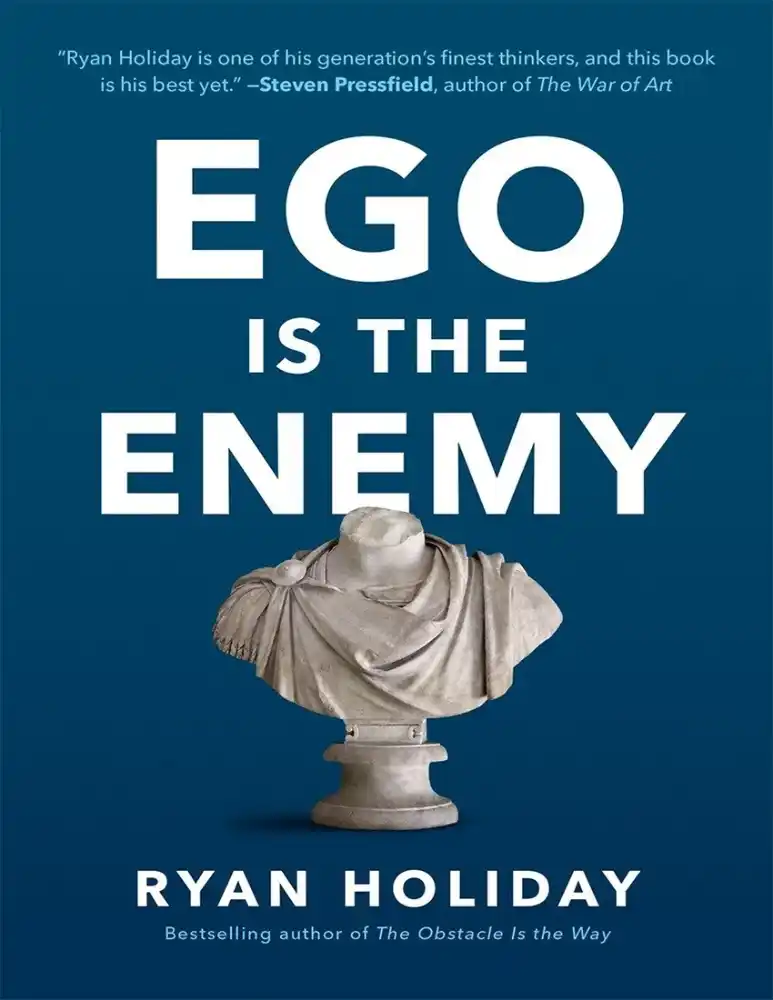
The conventional wisdom about career success tells us to stand out, promote ourselves, and make sure we get proper credit for our work. Ryan Holiday‘s “Ego is the Enemy” flips this script entirely with a counterintuitive strategy that’s powered some of history’s most successful people: making yourself invaluable by helping others shine.
Holiday calls this the “canvas strategy”—the art of clearing the path for those ahead of you, knowing that those who shape the canvas ultimately control the painting. It’s a long-term power move disguised as humility, and it works precisely because ego prevents most people from even considering it.
The Strategy Nobody Wants to Hear
The canvas strategy is simple to understand but difficult to execute: find ways to help more experienced or powerful people succeed, and do it without demanding credit or recognition. Trade short-term gratification for long-term investment in yourself, your skills, and your network.
Holiday notes that most of us bristle at this idea. Our ego insists: “I will not be demeaned like this.” We want recognition now. We deserve credit for our contributions. Why should others get the spotlight when we did the work?
These objections reveal exactly why the strategy is so powerful. While everyone else is fighting for immediate recognition, you’re building something far more valuable: genuine expertise, authentic relationships, and a reputation as someone who gets things done without letting ego get in the way.
Benjamin Franklin’s Invisible Hand
One of history’s most brilliant practitioners of the canvas strategy was Benjamin Franklin. As a teenager working for his brother James’s newspaper, Franklin recognized his own writing talent but faced a problem: his brother’s jealousy and the social constraints of being a young apprentice meant he couldn’t publish under his own name.
Rather than waste time resenting this reality, Franklin created the persona of “Silence Dogood,” an anonymous middle-aged widow who submitted clever letters to the paper. The letters became wildly popular with readers. Franklin’s writing reached thousands while his ego remained in check.
When James eventually discovered the deception, he literally beat Benjamin in jealous rage. Franklin’s talent had outshone his brother, but by maintaining anonymity, he’d achieved something more important than personal recognition: he’d proven he could create work that mattered.
Holiday emphasizes that Franklin’s early lesson stayed with him throughout his remarkable life. He learned that creative expression mattered more than personal credit, and that influence could be built through contribution rather than self-promotion.
Bill Belichick’s Grunt Work Revolution
Before becoming one of the most successful coaches in NFL history, Bill Belichick embodied the canvas strategy as a young man breaking into professional football. He volunteered to work for the Baltimore Colts without pay, taking on the unglamorous task of analyzing game film—work that more senior coaches considered beneath them.
Belichick didn’t demand recognition or credit for his insights. He simply did the work at an extraordinarily high level, allowing senior coaches to take his analysis and use it to develop winning strategies. As one colleague recalled, “You gave him an assignment and he disappeared into a room and you didn’t see him again until it was done, and then he wanted to do more.”
This approach required suppressing his ego entirely. He could have insisted on credit, demanded compensation, or showcased his knowledge in ways that made senior coaches uncomfortable. Instead, he mastered what others dismissed as grunt work and made himself indispensable in the process.
The payoff? Belichick started getting paid soon after, launched a legendary coaching career, and is now recognized as one of the greatest strategic minds in sports history. The recognition came, but only after he’d earned it through actual contribution rather than self-promotion.
Why the Canvas Strategy Actually Works
The canvas strategy isn’t about being a doormat or accepting exploitation. It’s a sophisticated career accelerant that works through several powerful mechanisms:
Rapid Skill Development: When you’re solving diverse problems for different people, you learn faster than peers focused solely on their own narrow objectives. Each challenge you take on expands your capabilities and understanding.
Genuine Relationship Building: Helping someone succeed creates authentic bonds that can’t be manufactured through networking events or LinkedIn messages. You’re not transactionally collecting contacts; you’re building real trust and goodwill.
Reputation Without Self-Promotion: People notice when someone consistently delivers results without demanding credit. Word spreads organically about the person who “just gets stuff done.” This reputation is far more valuable than any carefully crafted personal brand.
Strategic Positioning: As Holiday notes, the person who clears the path ultimately controls its direction. By becoming indispensable to influential people, you gain insight and influence that would take years to build through conventional career advancement.
Bank of Favors: Every act of service is an investment. You’re building a reserve of goodwill that compounds over time. When you eventually need assistance, you’ll have countless people willing to return the favor.
Implementing the Canvas Strategy Today
Holiday provides practical applications that anyone can start using immediately:
Generate Ideas for Your Boss: Don’t hoard insights or observations. Share them freely and let your superior take credit for implementing them. Your contribution will be remembered even if it’s not publicly acknowledged.
Make Valuable Introductions: Connect people in your network who could benefit from knowing each other. Facilitate collaborations without inserting yourself as the middleman demanding recognition.
Do What Nobody Wants to Do: Find the unglamorous, overlooked work that needs doing. Master it. Become the person everyone depends on for getting these crucial but undesirable tasks done excellently.
Identify Inefficiencies: Look for waste, redundancies, and bottlenecks in your organization. Fix them without fanfare. Leaders notice people who make their lives easier without demanding recognition.
Create More Than You Consume: Produce valuable ideas, insights, and solutions at a rate that far exceeds what you take. Give your ideas away freely to people who can execute them better than you can right now.
The Marcus Martial Warning
Holiday introduces us to Marcus Martial, a Roman poet who spent his career bitter about serving wealthier patrons. Martial despised subservience and constantly complained about being demeaned by helping others advance their careers.
His bitterness poisoned his life and limited his success. Rather than seeing his position as an opportunity to develop his craft and build relationships, Martial viewed it as an injustice to be endured. His ego prevented him from accessing the very strategy that could have transformed his circumstances.
The lesson? Resentment about serving others is just ego protecting itself from the vulnerability of genuine contribution. When we tell ourselves that every second not spent promoting ourselves is wasted, we close off the most powerful strategy available to ambitious people.
When to Deploy the Canvas Strategy
The canvas strategy isn’t limited to young people starting their careers. Holiday emphasizes it’s available at any time and has no expiration date. You can use it:
Before You Have a Job: Volunteer your skills to organizations or individuals you want to work with. Demonstrate value before anyone asks.
While Building Your Career: Even as you advance, continue finding ways to make others successful. The strategy scales infinitely.
When Starting Something New: Every new venture requires building relationships and proving yourself. The canvas strategy accelerates both.
Inside Organizations Without Support: When you lack strong allies or political capital, becoming invaluable through service is often the fastest way to build both.
After You’ve Achieved Success: Many successful people stop using this strategy precisely when it could amplify their impact most. Don’t make that mistake.
The Paradox of Power Through Service
Holiday reveals the ultimate paradox at the heart of the canvas strategy: by deliberately seeking to receive less credit, you end up receiving more. By focusing on others’ success rather than your own visibility, you become more visible in the ways that actually matter.
This happens because ego-free contribution is so rare that it stands out dramatically. In a world full of self-promoters jockeying for attention, the person who quietly delivers exceptional results while making others look good becomes invaluable.
Organizations and leaders actively seek people who can execute without letting ego interfere. They’re so rare that once found, they’re held onto, promoted, and trusted with increasingly important responsibilities.
Overcoming the Emotional Resistance
The biggest obstacle to implementing the canvas strategy isn’t intellectual—it’s emotional. Holiday acknowledges that fighting the ego’s resistance to this approach is the hardest part.
Your ego will complain: “That’s my idea! I should get credit!” It will feel unfair when others are praised for work you contributed to. You’ll want to correct the record, to make sure everyone knows your role.
These feelings are normal, but acting on them is counterproductive. The canvas strategy only works when executed with genuine commitment to others’ success, not as a manipulative tactic for delayed recognition.
The emotional discipline required is itself a competitive advantage. Most people can’t maintain this approach because their ego won’t let them. Your ability to do so separates you from the pack.
The Long View Versus the Short Game
Holiday emphasizes that the canvas strategy is fundamentally about choosing the long game over the short game. Immediate recognition feels good, but long-term positioning and skill development matter infinitely more.
Consider two people starting their careers:
Person A focuses on visibility, taking credit, and making sure everyone knows their contributions. They might get promoted slightly faster initially.
Person B focuses on helping others succeed, developing diverse skills, and building genuine relationships. They might seem to advance slower at first.
Five years later, Person A has hit a ceiling. Their reputation is as a self-promoter rather than a contributor. They haven’t developed the depth of skills needed for higher-level positions, and their relationships are transactional.
Person B has become indispensable to multiple influential people, has developed extraordinary capabilities through solving diverse problems, and has a reputation for getting important things done. Their trajectory is unlimited.
The canvas strategy is a long-term investment that pays compound interest over an entire career. Short-term gratification through self-promotion is just that—short-term.
The Ultimate Freedom
Holiday argues that the canvas strategy, paradoxically, leads to greater freedom and independence than the conventional path of constant self-promotion. When you’re genuinely valuable rather than merely visible, you have options.
You’re not dependent on maintaining a carefully crafted personal brand. You don’t need to constantly market yourself. You don’t have to worry about whether your reputation matches your actual capabilities.
Instead, you can focus on the work itself, knowing that your value comes from what you can do rather than what you can convince people you might be able to do. This is the ultimate liberation from ego’s tyranny.
The Choice Before You
Holiday presents a stark choice: Will you insist on getting credit for everything you do, or will you focus on making meaningful contributions regardless of recognition?
Most people choose the former, which is precisely why choosing the latter is so powerful. The canvas strategy works because ego prevents most people from even considering it seriously.
Your ambition doesn’t have to be loud to be effective. In fact, the quieter it is, the more powerful it becomes. Let others scramble for the spotlight while you build the stage they’re performing on.
That’s not subservience—it’s strategy.
Source: “Ego is the Enemy” by Ryan Holiday – Essential reading for anyone seeking to build lasting success without letting ego sabotage their potential.
Related posts:
 Complete Guide to Ego is the Enemy: Ryan Holiday’s Blueprint for Defeating Self-Sabotage
 Ego is the Enemy by Ryan Holiday: 25 Life-Changing Takeaways (Complete Summary & Review)
 Michael Saylor’s Bitcoin MENA 2025 Keynote: The Blueprint for Digital Capital, Credit, and Banking Revolution
 The Peg & Awl Sendak Artist Roll: Why This Waxed Canvas Organizer is the Ultimate EDC Tool for Creatives
 Who is Ryan Holiday and His Impact on Philosophy