
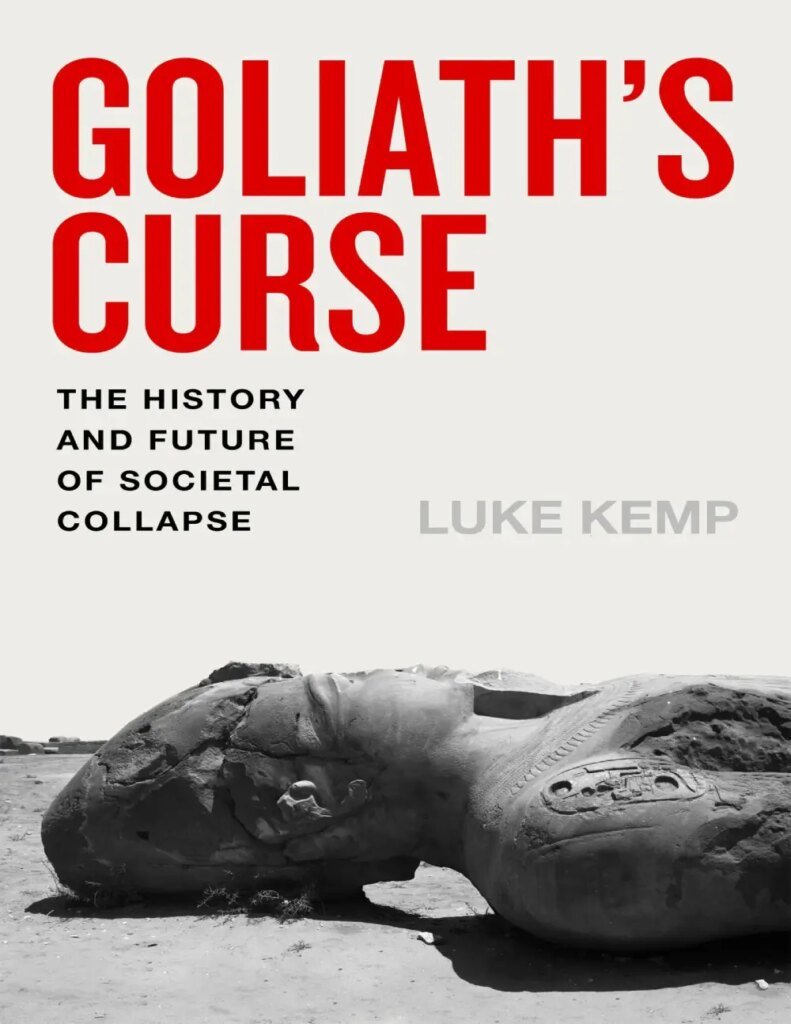
Around 1200 BCE, the Bronze Age Mediterranean world experienced what archaeologists call a “systems collapse”—the catastrophic failure of interconnected civilizations within just a few decades. In “Goliath’s Curse: The History and Future of Societal Collapse,” Luke Kemp uses this pivotal moment in human history to illustrate how interconnected, complex societies face unique vulnerabilities that simpler systems avoid. The parallels to our modern globalized world prove both striking and deeply concerning.
A World of Palace Economies
The Late Bronze Age represented the ancient world’s first experiment with large-scale internationalism. From roughly 1500 to 1200 BCE, palace-centered economies and kingdoms formed an interconnected trade network spanning the Eastern Mediterranean and Near East. Egypt’s New Kingdom, the Hittite Empire in Anatolia, Mycenaean Greece, the kingdoms of Cyprus, and the city-states of the Levant maintained diplomatic relations, traded extensively, and shared technologies.
Kemp describes a sophisticated system where palace bureaucracies controlled economic production and distribution. Specialized craftsmen produced goods in palace workshops. Agricultural surpluses flowed to central storage facilities. Long-distance trade carried tin from Afghanistan, copper from Cyprus, amber from the Baltic, and grain from Egypt. Merchant ships crisscrossed the Mediterranean carrying luxury goods, raw materials, and correspondence between rulers.
Archaeological evidence reveals remarkable standardization across the region. Similar pottery styles, architectural features, and writing systems appeared from Greece to Syria. Diplomatic marriages linked royal families across kingdoms. Treaties and alliances created networks of mutual obligation. The Amarna letters—diplomatic correspondence discovered in Egypt—document this interconnected world of palace politics and international relations.
This Bronze Age globalization enabled unprecedented prosperity and cultural achievement. Large populations supported by agricultural surplus allowed specialization in crafts, administration, and military service. Monumental architecture arose—palaces, temples, fortifications. Literacy spread among scribal classes. Art and technology flourished through cross-cultural exchange.
Yet this interconnection created hidden vulnerabilities. The palace economies depended on continuous functioning of trade networks, centralized administration, and agricultural surplus. Any significant disruption could cascade through the system with devastating speed.
The Collapse Unfolds
Around 1200 BCE, the entire Bronze Age system collapsed with shocking rapidity. Within approximately fifty years, most major palatial centers throughout the Eastern Mediterranean had been destroyed or abandoned. Cities burned. Trade networks disintegrated. Writing disappeared in many regions for centuries. Populations declined dramatically or scattered.
The scale of destruction staggers modern observers. In Greece, nearly all Mycenaean palace centers were destroyed, including Mycenae, Tiryns, and Pylos. The Hittite Empire—one of the ancient world’s great powers—vanished completely, its capital Hattusa burned and abandoned. Ugarit, a wealthy trading city on the Syrian coast, was destroyed and never rebuilt. Egypt survived but emerged severely weakened, having lost its Levantine territories.
The archaeological record shows layers of ash and destruction across dozens of sites within a compressed timeframe. In some locations, evidence suggests hasty abandonment rather than violent destruction—people simply fled, leaving behind valuable possessions. Trade goods suddenly disappear from archaeological contexts, indicating broken commercial networks.
The human cost proved enormous. Urban populations either died or dispersed into rural hinterlands. Without palace redistribution systems, many regions experienced severe food insecurity. Specialized craftsmen who had spent generations perfecting techniques saw their workshops destroyed and patron classes eliminated. Knowledge preserved only in palace archives vanished when those archives burned.
Theories and Causes
What caused this catastrophic collapse? Kemp explores multiple theories, noting that no single explanation adequately accounts for the scale and speed of the disaster. More likely, multiple factors combined to overwhelm the Bronze Age system’s resilience.
Climate change features prominently in recent theories. Paleoclimate data suggests a prolonged drought affecting the Eastern Mediterranean during this period. Reduced rainfall would have stressed agricultural systems throughout the region. Palace economies dependent on consistent grain surpluses to support urban populations, craftsmen, and armies would have faced increasing difficulty.
The “Sea Peoples”—mysterious raiders mentioned in Egyptian texts—often feature in collapse narratives. Egyptian sources describe major attacks by maritime groups originating from somewhere in the Mediterranean or Aegean. These raids may have accelerated collapse, but probably weren’t sole causes. The Sea Peoples themselves may have been refugees from collapsing regions seeking resources elsewhere.
Earthquake evidence appears at many destroyed sites. The Eastern Mediterranean sits in a seismically active zone. A cluster of major earthquakes during this period could have damaged cities, disrupted agriculture through landslides and ground liquefaction, and destroyed infrastructure. However, earthquakes alone don’t explain why societies failed to rebuild as they had after previous disasters.
Internal social stresses likely played crucial roles. Palace economies concentrated wealth among elite classes while extracting heavy taxes from agricultural populations. During good times, this system functioned despite inequalities. But drought-induced food shortages would have increased tensions. Popular revolts against palace authorities may have contributed to widespread destruction.
The interconnection that had been the Bronze Age world’s greatest strength became its fatal weakness. When one part of the system failed—whether from drought, earthquake, invasion, or internal revolt—the effects rippled outward. Egyptian grain shipments that normally stabilized regions facing local shortages couldn’t arrive if trade routes were disrupted. Kingdoms dependent on tin imports from distant sources couldn’t produce bronze weapons when merchants stopped traveling. Palace economies relying on tribute from subject territories collapsed when those territories rebelled or were overrun.
The Systems Collapse Concept
Kemp uses the Bronze Age collapse to introduce the concept of systems collapse—catastrophic failure resulting from the breakdown of interconnected components rather than any single cause. Modern systems theory helps explain what happened.
Complex systems with many interdependent parts can appear stable during normal conditions while harboring hidden vulnerabilities. When disruptions occur, failures cascade through the system faster than compensatory responses can contain them. The more tightly connected the system, the faster failures propagate.
The Bronze Age network had evolved during several centuries of relative stability. Palace economies optimized for efficiency rather than resilience. Trade specialization meant regions depended on distant sources for critical materials. Centralized food storage created single points of failure. When multiple stresses hit simultaneously—drought, raids, earthquakes, social unrest—the system lacked redundancy to absorb shocks.
Individual kingdoms might have survived isolated challenges. But interconnection meant challenges hitting one region immediately affected others. Egyptian grain couldn’t relieve Hittite famine if shipping was disrupted. Mycenaean kingdoms couldn’t maintain armies without Cypriot copper and Afghan tin for bronze weapons. As each palace center fell, it removed a node from the network, making the remaining system more vulnerable.
The Dark Age That Followed
The collapse ushered in what historians call the Greek Dark Ages—several centuries of reduced population, simpler material culture, and lost literacy. However, “dark age” may be misleading. For common people who had borne the tax burdens and labor obligations of palace economies, the collapse may have brought relief from exploitation.
Kemp emphasizes that collapse affected elites far more severely than ordinary people. Palace-dwelling aristocrats, bureaucratic scribes, and specialized craftsmen dependent on palace patronage suffered catastrophically when their world ended. But farmers who had been producing surplus to feed urban populations could consume more of their own production after palaces fell. Without centralized states extracting taxes and conscripting soldiers, agricultural populations gained autonomy.
Archaeological evidence supports this interpretation. While monumental construction and luxury goods production ceased, basic settlement patterns often continued. People still farmed, raised animals, and lived in villages. They simply did so without palace oversight and tax collectors. Material culture became simpler, but this reflected reduced inequality rather than universal impoverishment.
Modern Parallels and Warnings
The Bronze Age collapse resonates powerfully with contemporary concerns. Our modern global system exhibits many Bronze Age characteristics taken to extreme levels. International trade networks span the globe. Supply chains stretch across continents. Specialized production means most regions depend on distant sources for essential goods. Just-in-time manufacturing and lean inventory practices optimize efficiency while reducing resilience.
Like Bronze Age palace economies, modern systems create impressive capabilities during stable periods while building hidden vulnerabilities. A pandemic disrupts global supply chains for years. Conflicts in key regions send shockwaves through energy and food markets worldwide. Financial crises cascade across interconnected banking systems. Climate change simultaneously stresses multiple aspects of civilization—agriculture, water supplies, habitability, infrastructure.
Kemp warns that our greater complexity and tighter integration make modern civilization potentially more fragile than Bronze Age systems, not less. We’ve optimized for efficiency and growth rather than robustness and resilience. Single points of failure—whether critical shipping chokepoints, essential manufacturing facilities, or key data infrastructure—create systemic vulnerabilities.
Lessons for Building Resilience
What lessons does the Bronze Age collapse offer for modern civilization? Kemp suggests several principles for building more resilient systems.
Maintain redundancy even at the cost of efficiency. Distributed production, multiple supply sources, and local self-sufficiency reduce vulnerability to disruptions. The Bronze Age lesson shows that lean, optimized systems perform brilliantly until they fail catastrophically.
Recognize interconnection as a source of fragility, not just strength. Global trade creates prosperity but also propagates shocks. Building circuit breakers—ways to isolate failures before they cascade—becomes essential as complexity increases.
Don’t assume stability will continue indefinitely. The Bronze Age kingdoms experienced several centuries of prosperity before collapse. Success doesn’t guarantee future success. Systems that work during favorable conditions may fail when multiple stresses combine.
Consider inequality and elite extraction as collapse factors. When systems primarily benefit narrow elite classes while burdening broader populations, internal tensions undermine resilience during stress periods. More equitable distribution of both benefits and burdens creates societies better able to withstand challenges collectively.
Preserve knowledge and capabilities beyond centralized institutions. The loss of Bronze Age literacy occurred because writing existed primarily in palace archives. When palaces fell, literacy disappeared. Distributed knowledge—whether technological expertise, agricultural wisdom, or social organization—survives disruptions better than centralized databases.
The Question of Inevitability
Was Bronze Age collapse inevitable? Probably not. Different choices—maintaining larger grain reserves, developing less exploitative social systems, investing in agricultural resilience rather than monumental construction—might have enabled Bronze Age kingdoms to weather the stresses they faced.
Yet once the system reached certain levels of interconnection and optimization, collapse became increasingly probable when multiple challenges coincided. This suggests modern societies face genuine risks from our global integration and complexity. The question isn’t whether we’ll face serious challenges—climate change alone guarantees that—but whether our systems possess resilience to survive them.
“Goliath’s Curse” uses the Bronze Age collapse as both historical case study and warning. The first great experiment in large-scale interconnected civilization ended in catastrophic systems failure. Our modern experiment with global integration proceeds with far greater complexity, tighter coupling, and higher stakes. Learning from Bronze Age failures isn’t about avoiding progress or rejecting beneficial interconnection. It’s about building resilient systems capable of surviving the inevitable stresses complex civilizations face.
As Kemp demonstrates, the Bronze Age world didn’t collapse because people lacked intelligence or capability. It collapsed because they built systems that worked brilliantly during stable conditions while creating vulnerabilities invisible until too late. We face the same challenge today—creating modern civilization sophisticated enough to meet our ambitions while robust enough to survive its failures.
25 Key Takeaways From Luke Kemp’s Book Goliath’s Curse
Related posts:
 The Year Civilization Collapsed: What Ancient Collapse Teaches Modern Civilization
 25 Key Takeaways From Luke Kemp’s Book Goliath’s Curse
 The Year Civilization Collapsed: How Bronze Age Villages Survived When Empires Fell
 7 Bronze Age Survival Strategies That Still Work in Modern Life
 What Ancient Societies Teach Us About Resilience: The Adaptive Cycle Framework