Black Mirror has always warned us that the future will not arrive with sirens or spectacle. It will arrive quietly, disguised as progress, convenience, and choice. Season 7’s episode “Common People” is among the series’ most devastating stories precisely because it resists sensationalism. There are no rogue AIs or apocalyptic events. Instead, the episode offers something far more unsettling: a world that looks humane on the surface, ethical in its language, and merciless in its outcomes.
It is a story about love, illness, and survival—but also about how modern economic logic infiltrates the most intimate aspects of life. When read alongside Douglas Rushkoff’s Team Human, “Common People” feels less like speculative fiction and more like a warning flare. Together, they ask a single, uncomfortable question: what happens when profit becomes more valuable than people?
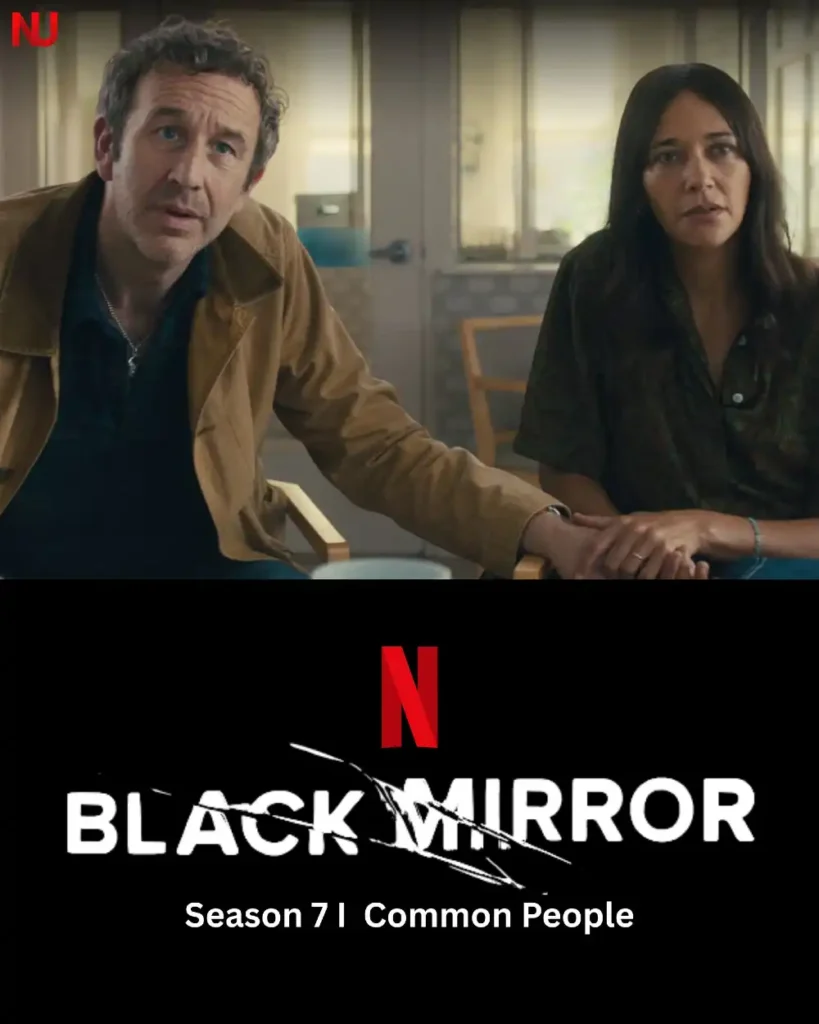
The Story: Ordinary Love in an Unforgiving System (Spoilers)
Amanda and Mike are not exceptional in any cinematic sense. They are not brilliant innovators, political rebels, or cultural elites. They are gentle, affectionate, and financially vulnerable. Their lives are shaped by routines, compromises, and the quiet effort required to stay afloat. This ordinariness is crucial. It ensures that what happens to them feels not extraordinary, but transferable.
When Amanda collapses at work, the episode lingers on the mundane terror of sudden illness. Hospital corridors, hushed voices, and clinical language frame the diagnosis: a catastrophic neurological failure. Part of Amanda’s brain has died. There is no cure. Death is not a possibility—it is a timetable.
The miracle arrives not as divine intervention, but as a sales pitch.
A private technology company offers an experimental neural replacement. It will integrate seamlessly with Amanda’s remaining brain tissue. The procedure is risky but effective. Amanda will live. The representative speaks with practiced empathy, careful not to sound predatory. Only later does the crucial detail emerge: the implant functions on a subscription model.
Life, in this world, is not purchased once.
It is leased.
Survival, Tier by Tier
Initially, the cost feels manageable. Mike does not hesitate. They agree without debate. The price of life is infinite—everything else is secondary.
Amanda survives the procedure. She wakes up aware, responsive, grateful. She tells Mike she feels normal. For a moment, the episode allows the audience to believe that this is simply a story about medical innovation and love overcoming adversity.
But the normalcy is fragile.
On the basic plan, Amanda experiences lapses: fatigue, emotional flatness, moments of absence. The company explains that higher tiers unlock better “stability,” “continuity,” and “emotional optimization.” Each upgrade promises to restore more of Amanda’s inner life. The implication is clear: full humanity is not standard—it is a premium feature.
Mike works longer hours. They cut expenses. They justify each sacrifice as temporary. Each upgrade brings relief. Amanda laughs more freely. She feels present again. Love becomes easier.
The system rewards compliance.
The Body as a Platform
The episode’s most disturbing turn does not arrive with anger or violence, but with cheerfulness.
During a private conversation, Amanda suddenly freezes. Her face remains calm as she begins delivering a bright, rehearsed advertisement. The words are not hers. Her eyes betray awareness—and humiliation. When Mike demands answers, the company responds without apology: ad-supported speech is included in the lower tiers.
Amanda has not lost consciousness. She has lost agency.
Her mind has become infrastructure. Her voice has become a delivery mechanism. The company does not frame this as exploitation, but as value extraction. The implant is expensive to maintain, after all. Revenue must come from somewhere.
This moment clarifies the episode’s true horror: Amanda is no longer merely dependent on the system. She has been absorbed by it.

The Price of Love, Paid in Shame
As subscription costs rise, Mike’s sacrifices deepen. He begins participating in degrading online tasks—anonymous, voyeuristic content designed to generate fast income. The work is humiliating by design. Shame is part of the product.
The episode never sensationalizes this. There is no melodrama. Just the steady erosion of dignity. Mike’s body becomes another resource to be exploited. His discomfort is irrelevant as long as it generates revenue.
Meanwhile, Amanda understands exactly what is happening. Her survival is consuming Mike’s humanity. Love, once a refuge, has become a debt.
Eventually, the upgrades become impossible to sustain. Amanda is downgraded.
Living, But Less
Amanda does not die when her subscription tier drops. That would be too abrupt, too honest. Instead, she becomes diminished.
Her emotional range narrows. Her responsiveness slows. She is still conscious—perhaps cruelly so. She understands what she has lost and why. She remains loving, but her love is quieter, harder to express. She exists in a reduced state, caught between life and absence.
This is where “Common People” delivers its most devastating insight: the system does not need to kill people to dehumanize them. It only needs to reduce them enough that disappearance feels merciful.
Amanda recognizes the truth before Mike can accept it. She tells him calmly that this is not living—it is prolongation without dignity. She asks him to help her die while she still has enough agency to choose.
Her request is framed as consent, but it is consent manufactured by circumstance.
A System Without Blood on Its Hands
The system never pulls the trigger.
It never issues a command.
It never commits an overt crime.
Instead, it constructs a reality in which self-erasure feels responsible, compassionate, and inevitable. The subscription ends. Amanda dies. The contract is fulfilled.
Mike remains.
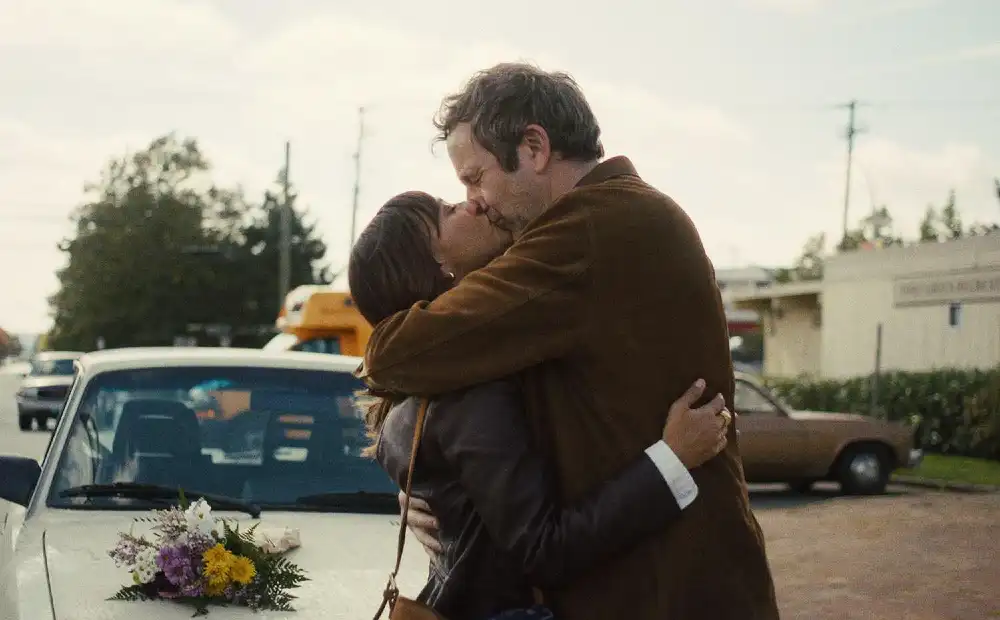
The final cruelty of the episode is not death, but continuity. Mike survives in the same economic structure that destroyed Amanda, forced to keep degrading himself just to exist. There is no reckoning, no collapse of the system. Life goes on—for those who can afford it.
Humanity as an Afterthought
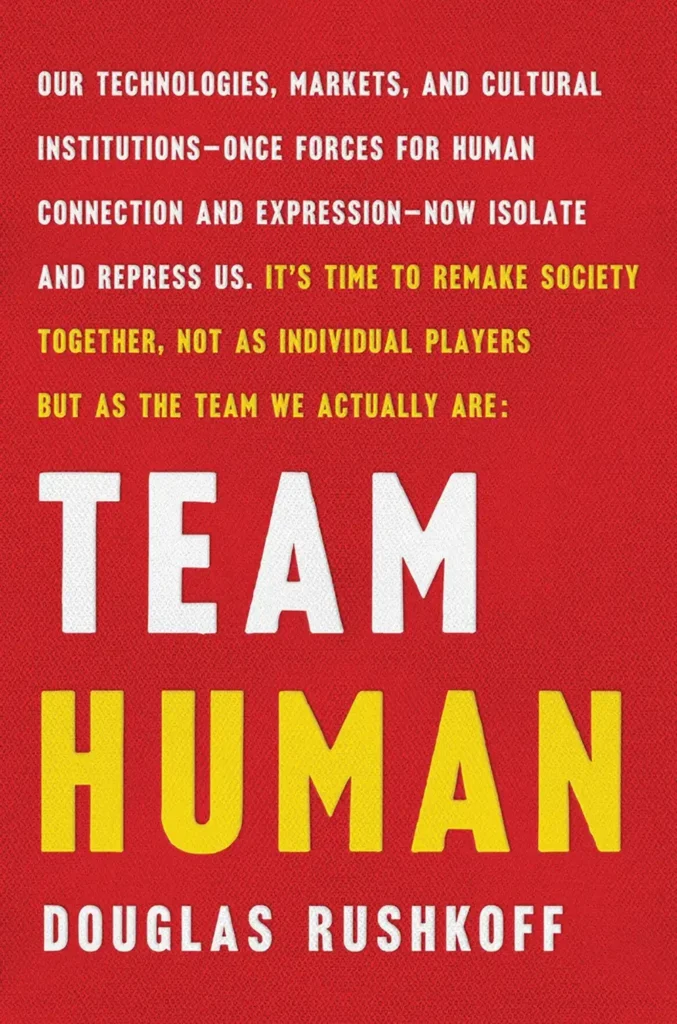
In Team Human, Douglas Rushkoff argues that modern systems increasingly view humans as inefficient obstacles rather than essential participants. When people are emotional, social, and unpredictable, they resist optimization. So systems isolate them, individualize responsibility, and convert needs into revenue streams.
“Common People” is the endpoint of this logic.
Healthcare becomes a service.
Consciousness becomes a platform.
Love becomes insufficient without income.
Money is no longer a means of supporting life.
Life exists to justify money.
The Absence of Team Human
Rushkoff insists that being human is a collective endeavor. We thrive through shared responsibility, mutual care, and social belonging. “Common People” depicts a world that has abandoned this principle entirely.
There is no community safety net.
No public obligation.
No shared moral baseline.
Each person negotiates survival alone, through contracts and upgrades and quiet humiliations. Amanda and Mike do not fail each other. They love deeply, consistently, and honestly.
The system fails them—and calls it sustainability.
The Warning Beneath the Silence
“Common People” does not scream its message. It whispers it. That is what makes it so dangerous.
It does not ask whether this future is possible. It asks whether we will notice when it arrives wrapped in politeness, legality, and customer support language.
There are no villains here—only business models doing exactly what they are designed to do.
And that is the final question the episode leaves us with, echoing the warning of Team Human:
If profit is allowed to outrank humanity,
how long before being human itself becomes a luxury?
References
Black Mirror (Netflix)
Season 7, Episode: “Common People”
Created by Charlie Brooker
Rushkoff, Douglas.
Team Human
W. W. Norton & Company, 2019
Related posts:
 Team Human by Douglas Rushkoff: 25 Essential Insights From the Book That Explains Our Digital Crisis (Complete Summary & Analysis)
 Hume Band Review: Does This Stress-Tracking Wearable Actually Work?
 Douglas Rushkoff’s Team Human: A Complete Guide to Staying Human in the Digital Age
 The Transhumanist Delusion: Why Tech Billionaires Want to Escape Being Human
 The Silicon Valley Death Cult: How Transhumanist Ideology Puts Humanity at Risk