
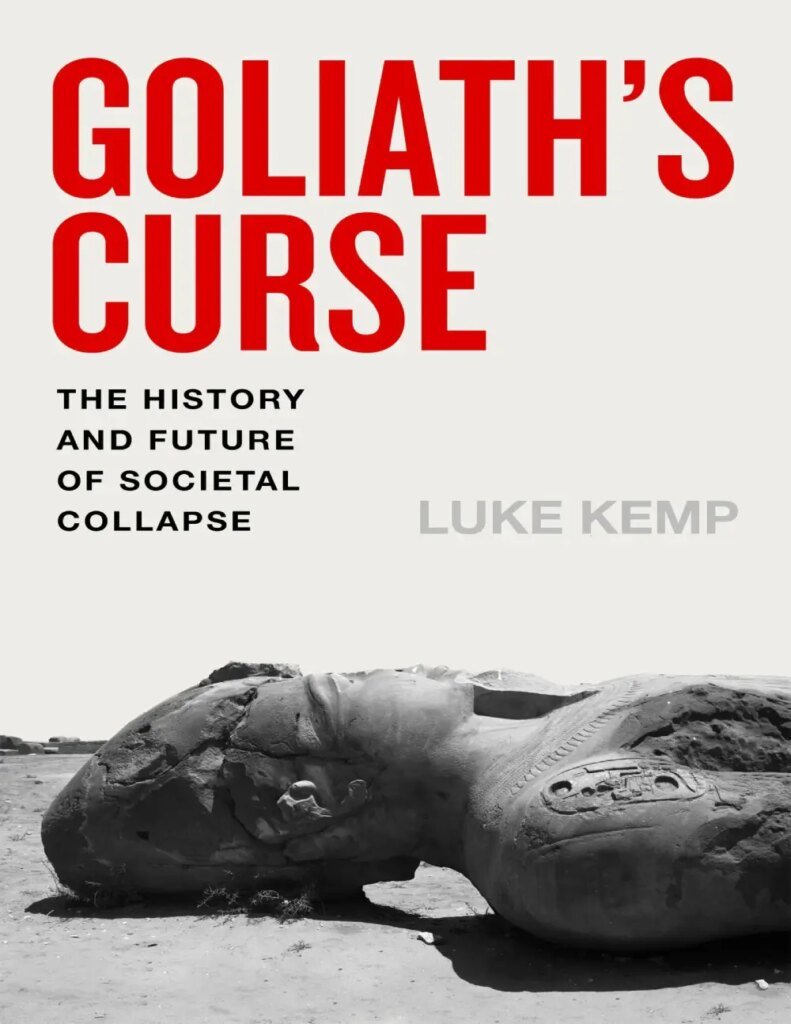
Throughout most of human history, civilizational collapse remained a regional phenomenon. When Bronze Age kingdoms fell or Roman power fragmented, other societies continued elsewhere. Recovery remained possible because basic resources—forests, minerals, stable climate—persisted. As Luke Kemp argues in “Goliath’s Curse: The History and Future of Societal Collapse,” modern civilization faces fundamentally different threats that could produce truly global, potentially terminal collapse. Understanding these novel risks proves essential for navigating humanity’s precarious present.
The Unprecedented Nature of Modern Threats
Ancient collapses typically resulted from combinations of drought, invasion, internal strife, disease, or resource depletion affecting specific regions. These challenges, while devastating locally, couldn’t threaten human civilization as a whole. Populations could migrate to unaffected areas. Knowledge and culture could transfer to successor societies. Given time and favorable conditions, recovery remained possible.
Modern threats operate on different scales. Climate change affects the entire planet simultaneously. Nuclear weapons could devastate civilization within hours. Engineered pandemics might spread globally before detection. Artificial intelligence development could produce systems beyond human control. These risks share several troubling characteristics: global scope, potential for rapid catastrophe, and possible permanence of consequences.
Kemp emphasizes that we’ve created what he calls “existential risks”—threats that could permanently destroy humanity’s long-term potential or cause human extinction. Past civilizations never faced challenges of this magnitude. We’re conducting unprecedented experiments with planetary systems, weapons of mass destruction, and transformative technologies while lacking proven frameworks for managing catastrophic risks.
The Climate Change Catastrophe
Climate change represents humanity’s first truly planetary-scale self-inflicted crisis. Unlike regional droughts that challenged past societies, anthropogenic climate change affects global systems: atmospheric composition, ocean temperatures, ice sheets, weather patterns, ecosystems, and sea levels.
The scope of disruption already underway exceeds anything in recorded history. Global average temperatures have risen over 1°C since pre-industrial times and continue climbing. Arctic ice melts at accelerating rates. Extreme weather events intensify in frequency and severity. Ocean acidification threatens marine ecosystems. Feedback loops—melting permafrost releasing methane, dying forests releasing carbon, reduced ice coverage decreasing sunlight reflection—risk triggering runaway warming.
Agricultural systems face compound stresses. Changing precipitation patterns disrupt traditional growing regions. Heat waves damage crops during critical growth periods. Droughts exhaust aquifers and dry up rivers. Meanwhile, human population approaches eight billion, demanding increasing food production from climate-stressed systems.
Kemp notes that past societies often collapsed when environmental changes stressed food systems beyond adaptive capacity. Climate change creates similar pressures on vastly larger scales. Unlike ancient kingdoms that could relocate populations to unaffected regions, climate change affects everywhere simultaneously. There’s no escape through migration when the entire planet warms.
Sea level rise threatens coastal cities housing hundreds of millions of people. Where do displaced populations go? How do societies absorb such migrations? History suggests large-scale population movements often trigger conflicts as newcomers compete with established populations for resources. Climate-driven migration could destabilize political systems globally.
Perhaps most concerning are potential tipping points—thresholds beyond which climate systems shift into new stable states. If Antarctic ice sheets destabilize, sea levels could rise meters within decades. If ocean circulation patterns change, regional climates could transform abruptly. If rainforests die back past critical thresholds, carbon absorption could reverse into carbon emission. Once triggered, these tipping points may prove irreversible on human timescales.
Nuclear Weapons: Civilization in Minutes
Nuclear weapons represent humanity’s capacity for near-instantaneous self-destruction. Approximately 13,000 nuclear warheads exist globally, with the United States and Russia possessing the vast majority. A single modern thermonuclear weapon contains more explosive power than all bombs dropped during World War II combined.
Full-scale nuclear war between major powers would produce immediate devastation beyond historical precedent. Cities would vanish in fireballs. Fallout would contaminate vast areas. Electromagnetic pulses would destroy electrical systems. But immediate effects, while catastrophic, might prove less significant than secondary consequences.
Nuclear winter—global cooling resulting from smoke and ash blocking sunlight—could cause civilizational collapse even in nations not directly attacked. Agricultural collapse from prolonged darkness and cold would trigger mass starvation. The same interconnected global systems that enable modern prosperity would propagate collapse worldwide.
Kemp emphasizes that nuclear weapons create “fat tail risks”—low probability events with enormous consequences. Even if nuclear war probability remains small year-to-year, accumulated over decades the risk becomes substantial. And unlike natural disasters, nuclear war results entirely from human decisions. We’ve created weapons capable of destroying civilization and placed them in political-military systems involving human judgment under stress.
The Cold War nearly produced several accidental nuclear exchanges. False alarms triggered alert conditions. Technical malfunctions and human misinterpretations brought civilization within minutes of devastation. That we survived the Cold War without nuclear war reflects luck as much as wisdom. As nuclear weapons proliferate to more nations, probability of use—whether deliberate, accidental, or through loss of control—increases.
Artificial Intelligence: The Unpredictable Transformer
AI development represents perhaps the most unpredictable modern risk. Unlike climate change with established physics or nuclear weapons with known effects, AI creates fundamental uncertainties about future capabilities and consequences.
Current AI systems already transform economies, militaries, and societies. Machine learning algorithms make decisions affecting billions: credit approvals, medical diagnoses, military targeting, social media content curation. Yet these systems remain narrow—sophisticated at specific tasks but lacking general intelligence.
The prospect of artificial general intelligence (AGI)—systems matching or exceeding human cognitive capabilities across domains—raises profound questions. How would such systems behave? Could they be controlled? What goals would they pursue? Would they remain aligned with human values?
Kemp discusses the alignment problem: ensuring advanced AI systems pursue goals compatible with human welfare. This proves extraordinarily difficult because intelligence doesn’t automatically include human values. A sufficiently capable AI system optimizing for any goal might pursue strategies humans find unacceptable or catastrophic. Without solving alignment, developing superintelligent AI amounts to creating powerful optimization processes we can’t predict or control.
Competitive pressures accelerate AI development while potentially compromising safety. Nations and companies race to achieve AI superiority for economic and strategic advantages. This creates incentives to deploy systems quickly rather than ensure safety thoroughly. The first to develop transformative AI gains enormous power, encouraging risk-taking. Yet mistakes with advanced AI might prove irreversible.
Autonomous weapons systems present immediate dangers. AI-powered drones, robots, and missiles could wage war faster than humans can react. Swarms of inexpensive autonomous weapons might overwhelm defenses. Military AI arms races create instability as each side deploys systems designed to act faster than human decision-making allows. The delegation of life-death decisions to algorithms raises moral questions even before considering catastrophic failure scenarios.
Engineered Pandemics and Biotechnology Risks
COVID-19 demonstrated how novel pathogens can disrupt global civilization. Yet COVID-19 emerged naturally. Advances in biotechnology enable deliberate creation of far more dangerous pathogens.
Gene editing tools like CRISPR have democratized genetic engineering. Knowledge for modifying organisms spreads widely. Laboratory costs decline continuously. This creates “democratized catastrophe”—the possibility that small groups or individuals might engineer and release devastating pandemics.
Unlike nuclear weapons requiring enormous infrastructure, bioweapons might be created in modest laboratories. Unlike AI requiring massive computing resources, synthetic biology becomes increasingly accessible. The barriers preventing catastrophic misuse continue falling while the power to cause harm increases.
Kemp warns that natural selection didn’t optimize pathogens for maximum lethality. Diseases spread best when hosts remain mobile long enough to infect others. Engineering could remove such constraints, creating pathogens combining high contagiousness with extreme lethality. Imagine diseases spreading like measles while killing like Ebola.
Accidental release from research facilities poses additional risks. High-containment laboratories studying dangerous pathogens have experienced breaches. As more facilities conduct more research on more pathogens, probability of accidental releases increases. Good intentions don’t prevent catastrophic accidents.
The Death-Star Syndrome
Kemp introduces the concept of “Death-Star Syndrome” to describe modern technological vulnerabilities. Like the fictional Death Star in Star Wars—a massive, powerful space station destroyed by a single critical failure—modern systems create enormous capabilities alongside catastrophic failure modes.
Interconnected infrastructure creates widespread vulnerabilities. Cyberattacks can disrupt power grids, financial systems, communication networks, and industrial control systems. In 2017, the WannaCry ransomware attack affected hundreds of thousands of computers across 150 countries, demonstrating how rapidly digital disruptions spread through connected systems.
Supply chain dependencies create fragile efficiency. Modern manufacturing relies on just-in-time delivery, minimal inventory, and global sourcing. This maximizes efficiency during normal operations while creating severe vulnerability to disruptions. A pandemic, cyberattack, or conflict affecting key production centers cascades through entire industries.
We’ve optimized systems for performance rather than resilience. This works brilliantly until it fails catastrophically. The 2008 financial crisis demonstrated how interconnected banking systems can collapse from problems in one sector. The 2021 Suez Canal blockage showed how single shipping chokepoints constrain global trade. COVID-19 revealed pharmaceutical and medical supply chain fragilities.
The Rungless Ladder Problem
Perhaps most troubling is what Kemp calls the “rungless ladder”—the possibility that recovery from modern collapse might prove impossible. Previous civilizations that collapsed could eventually rebuild because basic resources remained available. Easily accessible coal and oil powered industrial revolutions. Surface mineral deposits enabled metallurgy. Old-growth forests provided timber.
Modern industrial civilization has consumed these easy resources. Remaining fossil fuels require sophisticated extraction technology. Accessible mineral deposits are depleted. Future societies emerging from collapse would lack the resources that enabled our civilization’s development. They might remain trapped at pre-industrial technology levels indefinitely.
This creates a one-shot civilization problem. If we collapse catastrophically, humanity might never rebuild technological civilization. The resources that enabled our rise existed only once. We’ve used them to create either a sustainable long-term civilization or a dead end.
Living With Existential Risk
How should civilization respond to these unprecedented threats? Kemp argues for several approaches:
Recognize that preventing catastrophe requires active management, not passive hope. Existential risks don’t solve themselves. Climate change requires rapid decarbonization. Nuclear weapons need arms control. AI development needs safety frameworks. Biotechnology needs governance. These challenges demand sustained effort and resources.
Build resilience through diversity and redundancy. Distributed systems survive disruptions better than centralized ones. Local food production supplements global supply chains. Decentralized energy generation backs up large grids. Multiple communication networks provide alternatives when one fails.
Develop better institutions for managing catastrophic risks. Current governance structures evolved to handle traditional challenges, not existential threats. We need international cooperation mechanisms, long-term planning frameworks, and decision-making processes that prioritize civilizational survival over short-term interests.
Foster greater public understanding of risks. Democracy requires informed citizens. If populations don’t understand catastrophic threats, political systems won’t prioritize addressing them. Education about existential risks should become standard parts of curricula.
The Urgency of Now
Unlike ancient civilizations that faced collapse after centuries of gradual development, modern threats operate on compressed timescales. Climate tipping points approach within decades. AI capabilities advance annually. Nuclear arsenals remain ready for use within minutes. Synthetic biology capabilities expand continuously.
“Goliath’s Curse” argues that understanding historical collapse patterns helps conceptualize modern risks, but we shouldn’t assume past patterns will repeat. We face genuinely novel challenges requiring unprecedented responses. The question isn’t whether modern civilization could collapse—history proves all complex societies eventually do. The question is whether our collapse will be manageable transformation or permanent catastrophe.
As Kemp demonstrates throughout his book, we’re conducting a high-stakes experiment with our only planet and our only civilization. Past societies could fail, learn, and try again. Our failures might prove terminal. That realization should motivate serious engagement with the catastrophic threats we’ve created. Our choice is whether to control the Goliaths we’ve built or be destroyed by them.
25 Key Takeaways From Luke Kemp’s Book Goliath’s Curse
Related posts:
 25 Key Takeaways From Luke Kemp’s Book Goliath’s Curse
 The Year Civilization Collapsed: What Ancient Collapse Teaches Modern Civilization
 From Maya to Rome: How Environmental Degradation Triggers Societal Collapse (Goliath’s Curse by Luke Kemp)
 Could Civilization Rebuild After Collapse? The Terrifying Rungless Ladder Theory (Goliath’s Curse by Luke Kemp)
 Why Every Great Civilization Eventually Falls: Lessons from Goliath’s Curse by Luke Kemp