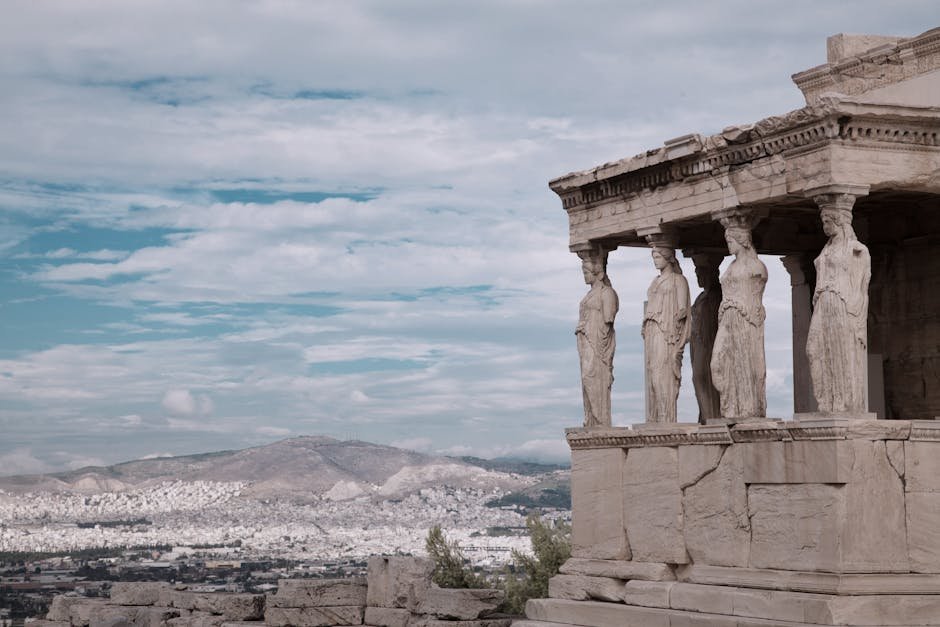
Resilience isn’t just a modern buzzword—it’s a fundamental characteristic that determines whether societies survive existential crises. In “After 1177 B.C.: The Survival of Civilizations,” archaeologist Eric H. Cline applies cutting-edge resilience theory to ancient Mediterranean societies, revealing timeless patterns in how civilizations respond to catastrophic change. His findings offer crucial insights for understanding societal resilience in any era, including our own.
Defining Resilience in Historical Context
When scholars discuss resilience in ancient civilizations, they’re examining something more nuanced than simple survival. Resilience encompasses a society’s capacity to absorb shocks, adapt to changed circumstances, and transform when necessary while maintaining essential functions and identity. As Cline notes in his research, “collapse and resilience are two sides of the same coin”—understanding one requires understanding the other.
The Bronze Age Collapse provides an ideal case study for resilience analysis. Multiple advanced civilizations faced simultaneous crises around 1177 BC, including climate change, famine, invasions, earthquakes, and the breakdown of international trade networks. Some societies demonstrated remarkable resilience while others disappeared entirely. Examining why certain civilizations survived while others perished reveals fundamental principles about societal resilience.
Resilience theory distinguishes between three key characteristics that determine how societies respond to stress: complexity, flexibility, and systemic redundancy. Complexity refers to a society’s organizational sophistication and ability to coordinate diverse functions. Flexibility measures how readily a society can modify practices and structures when circumstances change. Systemic redundancy indicates whether societies maintain backup systems and alternative approaches when primary methods fail.
The Adaptive Cycle Model
To understand how resilience operates over time, Cline employs the adaptive cycle model—a framework originally developed by ecologists but increasingly applied to human societies. This model describes how systems move through four distinct phases: exploitation (growth), conservation (stability), release (collapse), and reorganization (renewal).
During the exploitation phase, societies expand rapidly, experimenting with new approaches and establishing patterns. Bronze Age civilizations grew increasingly sophisticated and interconnected throughout the second millennium BC. Palace economies flourished, international trade networks expanded, and cultural exchange intensified. This phase represented dynamic growth and innovation across the Mediterranean world.
The conservation phase follows, characterized by increasing stability but also growing rigidity. Late Bronze Age societies developed highly specialized and interdependent systems. While this specialization created efficiency and prosperity, it also reduced flexibility. Palace bureaucracies became increasingly complex. Trade routes became essential rather than merely beneficial. Societies optimized their systems for stable conditions rather than maintaining adaptive capacity.
When multiple stressors hit simultaneously, these optimized but rigid systems proved vulnerable. The release phase—what we recognize as the Bronze Age Collapse—occurred rapidly. Within decades, sophisticated palace economies disintegrated, literacy declined or disappeared, populations crashed, and international networks fragmented. This wasn’t gradual decline but catastrophic release, fundamentally transforming the Mediterranean world.
Reorganization and Renewal
The reorganization phase represents the crucial period when resilience determines outcomes. Following collapse, surviving populations faced fundamental choices about how to rebuild their societies. Some attempted to restore previous systems, others transformed completely, and some failed to reorganize effectively at all.
Cline’s analysis reveals that successful reorganization required societies to embrace change rather than resist it. The Phoenicians provide an excellent example. Rather than attempting to rebuild large territorial kingdoms like those that collapsed, Phoenician city-states focused on maritime trade and colonial expansion. They developed new commercial networks, adapted their political structures, and ultimately dominated Mediterranean commerce for centuries. This transformation represented genuine reorganization—creating something new rather than merely restoring what existed before.
The Greeks underwent even more dramatic reorganization. Mycenaean palace civilizations collapsed completely, with populations declining sharply and literacy disappearing. For several centuries, Greek society operated at a much simpler level. However, during this reorganization phase, Greeks experimented with new political forms, eventually developing the polis system. They created new alphabetic writing derived from Phoenician models. They established trade networks and colonial settlements across the Mediterranean. By the eighth century BC, Greece was entering a new exploitation phase—not as a restoration of Mycenaean civilization but as something entirely different.
Panarchy: Multiple Cycles Operating Simultaneously
An additional layer of complexity emerges when we recognize that individual societies undergo their own adaptive cycles while simultaneously participating in broader regional systems. This concept, called panarchy, acknowledges that components within an overall system each progress through adaptive cycles at different rates and in different ways.
The Bronze Age Mediterranean operated as an interconnected system, but each civilization within that system followed its own trajectory. The Hittite Empire collapsed completely and never recovered its previous form. Egypt experienced fragmentation but periodic reunification, demonstrating cyclical patterns of collapse and regeneration. The Assyrians transformed from a relatively minor power into a dominant empire. The Phoenicians transitioned from territorial states to maritime city-states. Each society moved through adaptive cycles at its own pace, influenced by but not identical to broader regional patterns.
This panarchy model helps explain why collapse wasn’t uniform across the Mediterranean. Some societies entered release phases earlier or later than others. Reorganization occurred at different speeds and with different outcomes. Understanding these individual cycles within the broader system provides nuanced insight into how resilience operates across complex interconnected societies.
Climate and Environmental Factors in Resilience
Environmental conditions significantly influenced resilience trajectories during the Iron Age. Cline’s research highlights how climate patterns affected different societies’ ability to reorganize and recover. The Bronze Age Collapse occurred during a period of severe drought affecting much of the Eastern Mediterranean. This environmental stress compounded other challenges facing Bronze Age civilizations.
Recovery patterns correlate with subsequent climate shifts. Archaeological data indicates slightly wetter conditions in the southern Levant between 1150 and 950 BC, enabling agricultural recovery. This environmental improvement helped emerging kingdoms like Israel establish themselves during this period. The climate didn’t determine outcomes—human agency and social organization remained crucial—but improved conditions created opportunities that societies could exploit if they possessed necessary resilience.
Similarly, Mesopotamia experienced a transition to wetter conditions around 925 BC. This shift coincided with Assyrian expansion and consolidation. Again, favorable climate didn’t automatically produce success, but it provided resources that resilient societies could leverage. The Assyrians demonstrated organizational resilience by capitalizing on improved conditions through efficient administration and military innovation.
The relationship between environmental change and societal resilience illustrates an important principle: resilience involves not just withstanding stress but also recognizing and exploiting opportunities when they emerge. Societies with rigid systems focused solely on maintaining existing structures often missed chances to adapt and grow during recovery phases.
Comparative Resilience Across Civilizations
Cline’s systematic comparison of different societies reveals patterns in resilience outcomes. He categorizes Iron Age societies along a spectrum from highly resilient to completely failed. This analysis, drawing on frameworks from the Intergovernmental Panel on Climate Change, provides structured ways to evaluate and compare resilience.
Highly resilient societies like the Assyrians and Phoenicians demonstrated several common characteristics. They maintained organizational flexibility, allowing them to modify structures and practices as circumstances demanded. They developed new capabilities rather than simply attempting to restore previous conditions. They created redundant systems and alternative approaches rather than depending on single methods. They recognized changed circumstances and adapted strategies accordingly.
Moderately resilient societies like Egypt and the southern Levantine kingdoms showed mixed outcomes. They experienced significant disruptions but eventually reorganized, though often at reduced scales or with modified structures. Egypt’s pattern of fragmentation followed by reunification demonstrates resilience through cyclical renewal rather than continuous stability. The Israelite and Judahite kingdoms emerged as smaller territorial states rather than large empires, representing scaled-down but functional reorganization.
Societies with low resilience, like the Mycenaeans and Hittites, failed to reorganize successfully. Their complex palace economies collapsed completely and never recovered in recognizable form. While populations certainly survived in these regions, the specific civilizational forms disappeared. Subsequent societies in these areas represented new developments rather than continuations of Bronze Age predecessors.
Transformation Versus Restoration
A crucial distinction emerges between societies that transformed during reorganization and those that attempted restoration. Successful adaptation often required abandoning traditional structures and embracing new approaches. Societies that tried to simply restore Bronze Age conditions generally failed, while those willing to transform succeeded.
The Phoenicians exemplify successful transformation. Rather than attempting to rebuild territorial kingdoms with palace economies, they created maritime commercial networks connecting city-states. This represented fundamental structural change, not mere adjustment. The transformation proved so successful that Phoenician influence extended across the Mediterranean and beyond, far exceeding the geographic reach of previous territorial states in the region.
Greek transformation went even further. After complete societal collapse, Greeks rebuilt from fundamentals, creating political systems, cultural practices, and economic structures markedly different from Mycenaean predecessors. This wasn’t restoration but genuine innovation. The resulting Classical Greek civilization bore little resemblance to Bronze Age Mycenaean palace societies, yet Greeks themselves saw continuity in their identity and traditions.
Egypt, in contrast, repeatedly attempted restoration rather than transformation. Each reunification sought to recreate the glory of previous kingdoms. While this approach achieved periodic success, it left Egypt vulnerable to repeated cycles of collapse and recovery. The inability or unwillingness to fundamentally transform structures meant Egypt never achieved the sustained resilience demonstrated by societies more willing to embrace change.
Modern Applications of Ancient Resilience
Cline explicitly connects Bronze Age resilience lessons to contemporary challenges. Modern societies face potentially catastrophic stresses including climate change, pandemics, economic instability, and geopolitical tensions. Understanding how ancient societies navigated similar crises offers practical guidance for enhancing modern resilience.
First, recognizing the adaptive cycle helps societies anticipate and prepare for inevitable transitions. Growth and conservation phases create vulnerabilities alongside their benefits. Systems optimized for stable conditions become brittle when faced with change. Building resilience requires maintaining flexibility and redundancy even during prosperous times, accepting some inefficiency to preserve adaptive capacity.
Second, the panarchy concept highlights how individual communities, regions, and nations cycle through adaptive phases at different rates within global systems. International cooperation requires acknowledging these different trajectories and supporting societies in various phases. What helps a society in reorganization differs from what benefits one in conservation.
Third, successful adaptation often requires transformation rather than restoration. When fundamental conditions change, attempting to recreate previous systems typically fails. Resilience involves willingness to embrace new approaches, structures, and practices rather than rigidly adhering to traditional methods that may no longer suit changed circumstances.
Building Resilient Systems
The ancient civilizations studied by Cline offer practical examples of resilience-building strategies. Successful societies maintained organizational flexibility through decentralized decision-making and diverse power structures. They developed multiple economic strategies rather than depending on single approaches. They invested in communication networks and transportation infrastructure that could function even when some components failed.
Cultural factors also influenced resilience. Societies with strong but adaptable identities—maintaining core values while modifying specific practices—demonstrated greater resilience than those with rigid cultural frameworks. The ability to incorporate new ideas, technologies, and populations without losing fundamental identity proved crucial for long-term survival.
Education and knowledge transmission systems determined whether societies retained capabilities during disruptions. The loss of literacy in post-collapse Greece created centuries of limited organizational capacity. In contrast, societies that maintained writing systems and educational infrastructure retained greater adaptive capacity throughout crises.
Conclusion
Eric H. Cline’s “After 1177 B.C.: The Survival of Civilizations” demonstrates that resilience isn’t mysterious or unpredictable—it follows identifiable patterns that societies can learn from and cultivate. The adaptive cycle framework reveals how societies move through phases of growth, stability, release, and reorganization. The panarchy concept explains how individual communities cycle through these phases within larger systems. Climate and environmental factors influence but don’t determine resilience outcomes.
The Bronze Age Collapse and subsequent Iron Age provide rich examples of resilience in action. Some societies transformed successfully, others attempted restoration with mixed results, and still others failed to reorganize at all. These varied outcomes weren’t random but reflected fundamental differences in flexibility, complexity, and redundancy.
Modern societies facing multiple simultaneous stresses can apply these ancient lessons. Building resilience requires maintaining flexibility even during prosperous times, embracing transformation when circumstances demand change, and developing redundant systems that function even when primary approaches fail. The survival of civilizations after the Bronze Age Collapse proves that catastrophic change needn’t be terminal—with sufficient resilience, societies can not only survive but thrive in transformed conditions.
Related posts:
 The Year Civilization Collapsed: What Ancient Collapse Teaches Modern Civilization
 The Year Civilization Collapsed: How Bronze Age Villages Survived When Empires Fell
 7 Bronze Age Survival Strategies That Still Work in Modern Life
 The Year Civilization Collapsed: How Ancient Organizations Teach Modern Business Resilience
 How Bronze Age Globalization Collapsed in Just 50 Years: Lessons for Today (Goliath`s Curse by Luke Kemp)