There’s a reason most people who try to build a personal brand eventually quit. It’s not that they’re lazy or untalented. It’s that they’re playing the wrong level of the game.
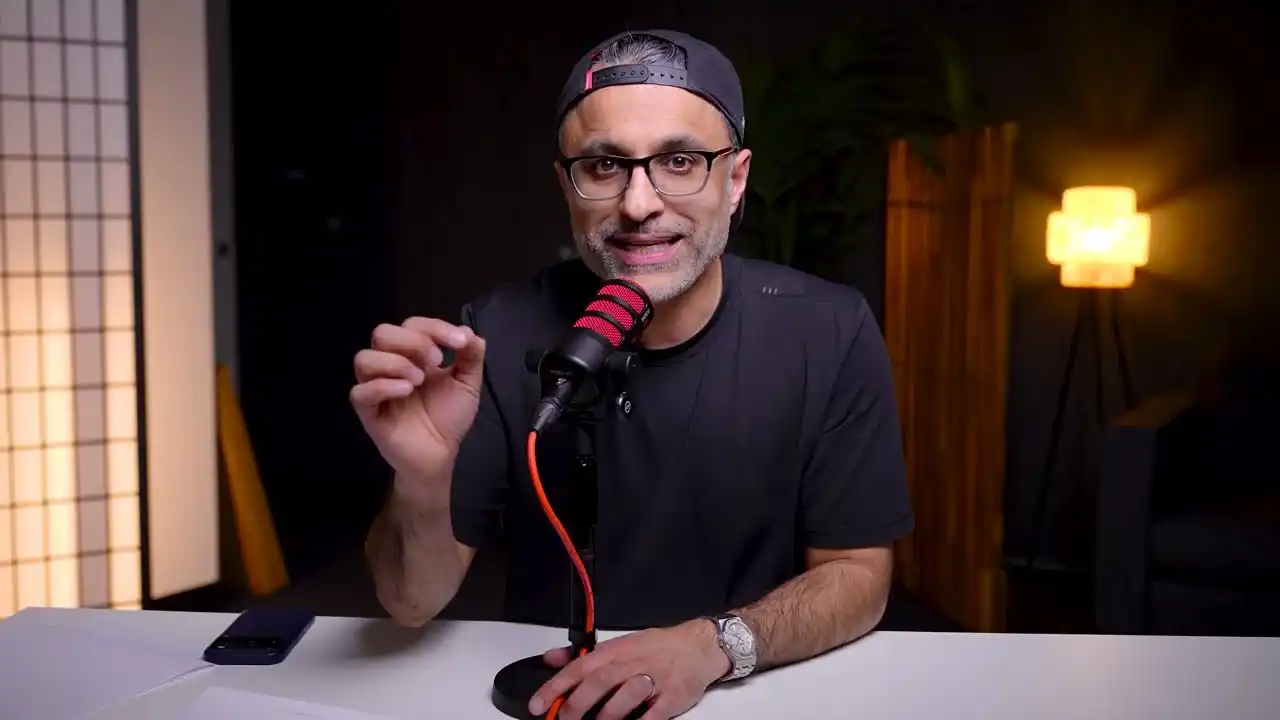
That insight comes from a creator and entrepreneur who has built two multi-seven-figure businesses — one in real estate and mortgage, another in B2B education through Forward Academy — entirely through personal brand content. The framework he teaches is deceptively simple: building a personal brand is a video game, and there are six levels to it. Each level has one skill you have to unlock before you can advance.
Most people fail not because they lack effort, but because they’re applying level-four thinking to a level-one problem. Understanding where you actually are — and what skill the game is demanding from you right now — is the difference between grinding endlessly and making real progress.
Level 1: You’re Invisible — The Perspective Problem
At level one, you exist online, but you might as well not. You’re posting, or trying to, but nothing is gaining traction. Maybe you’ve heard the advice to “be consistent” or to optimize your lighting, posting times, or thumbnails. None of it is really moving the needle.
Here’s the honest diagnosis: you sound like everyone else.
In 2026, commodity content — the tips, the hacks, the generic how-tos — is everywhere. It’s background noise. If you’re in any established industry and you’re posting market updates or “three ways to do X,” you’re producing the same content as a thousand other people. Consistency without differentiation isn’t a strategy; it’s just a quieter form of being invisible.
The shift that gets you out of level one isn’t technical. It’s philosophical. You need a unique point of view — content that carries your specific perspective, shaped by the things you’ve learned the hard way.
A useful question to ask yourself: What do people keep coming to me for, and why are they being referred to me? That repetition is the market telling you where your expertise actually lives. Another: What did I learn the hard way that I now tell everyone? Those lessons — the ones that cost you something — are the content nobody else can make. They can’t be outsourced to AI. They can’t be replicated by a competitor. They are yours.
The distinction that matters here is between commodity content and perspective content. Commodity content builds an audience of consumers. Perspective content builds an audience of believers — people who don’t just watch your videos but adopt your way of thinking. When those people are ready to work with someone, you’re the obvious choice. Not because you marketed harder, but because you already changed how they see the world.
Level 2: You Have Ideas, But Nothing’s Landing — The Packaging Problem
At level two, you’ve found your perspective. You’re producing content with a genuine point of view. You’re growing a little — maybe a few hundred or thousand followers — but the views are inconsistent, and nothing is really catching fire.
The instinct here is to create more content, go more viral, double down on everything. That instinct is wrong. The problem at level two is packaging.
Packaging is how you present your ideas to an audience. And it turns out that packaging often matters more than the quality of the idea itself. The same concept, restructured with a different hook or visual opener, can perform ten times better than the original version. Not because the idea changed — but because the format did.
One practical technique worth borrowing: testing two versions of the same opening. Change the first line, the on-screen text, the music, or the background. What you’re doing is finding the version that makes people stop. The goal of the first few seconds of any piece of content is singular: interrupt the scroll.
A particularly effective format right now is what might be called the “quote flip.” You open with a statement that represents the conventional wisdom or the viewer’s existing belief — something already floating in the cultural conversation. Then you respond to it with your perspective. The psychology is powerful: you’re not positioning yourself as a lecturer. You’re participating in an ongoing conversation. You’re meeting the viewer where they already are, and then taking them somewhere new.
Same ideas. Different packaging. Radically different reach.
Level 3: You Have Followers, But No Clients — The Bridge Problem
Level three is where things get genuinely frustrating. The content is working. People are watching, following, engaging. But the phone isn’t ringing. Nobody is hiring you. The CTA at the end of your videos lands with a deafening silence.
The assumption most people make here — I just need more followers — is incorrect. The real problem is structural: there is no bridge between your content and a transaction.
Most people watching your content are not ready to hire you. They might be open to it eventually, but they’re not about to make a significant financial decision based on a 60-second video. Calling this group “the not-yet people” is accurate. They need a next step — something that moves them closer without asking them to leap all the way.
That next step could be a well-designed lead magnet, a longer-form video that deepens the relationship, or — most powerfully — a conversion event like a webinar or online training. The mechanism works because it creates immersion. In 30 to 60 minutes, someone who’s been casually watching your content can leave with real, practical value and a completely different sense of who you are and what you’re capable of.
The key insight is this: don’t sell the end thing. Sell the step in the middle. Get people to the webinar before you invite them to buy the program. Get people to the training before you pitch the service. Backing the offer up one step — removing the pressure of the big ask — can transform conversion rates in ways that more content never will.
Level 4: The Business Is Working, But You’re the Bottleneck — The People Problem
Level four is both a success and a trap. The business is generating real revenue. The content is reaching significant numbers of people. The conversion events are working. And you are absolutely exhausted.
At this level, you cannot work your way out of the problem. The hours aren’t there. And AI tools, while genuinely useful for many things, don’t solve the core issue either. What level four demands is people — specifically, the right people in the right roles.
The most important early hire is an executive assistant or chief of staff. This is someone who manages the operational layer of your day: calendar, bookings, communications, logistics. The value isn’t just in the tasks themselves. It’s in what happens when you begin to see your days clearly — what you should be doing, what you shouldn’t, and what someone else could own completely.
The second transformative hire is a dedicated content creator. Not an editor, not a freelancer — a person who can take your raw material and move it all the way through the production process to publication. This single role removes the creative bottleneck that quietly limits most personal brand businesses.
Beyond those two, the distinction that separates level-four operators from those heading to level five is the difference between helpers and leaders. Helpers execute tasks when told. Leaders own outcomes. They take responsibility for their domain without needing to be managed through every decision. Building a team of leaders — people who are accountable for results, not just activities — is the unlock that takes you from being an operator of the business to being its CEO.
Systems matter at this level too: task management, project management, and eventually bringing key functions like media buying in-house rather than depending entirely on agencies. But the people come first.
Level 5: You’re No Longer the Bottleneck — The CEO Transition
Level five is where the game fundamentally changes character. Up to this point, the business has been built around you — your ideas, your energy, your presence. At level five, the business begins to run without you at the center of every decision.
This is the transition from operator to CEO. The systems are in place. The right leaders are in the right roles. Work moves through the organization without everything routing back to you for approval or execution. The exhaustion of level four — that constant feeling of being the ceiling of your own business — lifts.
What makes this transition genuinely difficult is that it requires a kind of letting go that doesn’t come naturally to most founders. The habits that built the business — personal involvement, high standards enforced through direct oversight, the sense that nobody will do it quite like you — become the obstacles to growth. Trusting your team to own outcomes, rather than simply complete tasks, is the psychological and operational work of level five.
It’s worth noting that reaching this level is not the end of ambition. It’s the beginning of a different kind of ambition — one focused on organizational leadership, culture, and the compounding returns that come from a team that grows stronger over time, rather than depending on the sustained output of a single individual.
Level 6: Your Brand Outlives You — Building Enterprise Value
Level six is the horizon most personal brand creators never think about — and perhaps don’t need to. But it’s worth understanding, because it reframes what you’re actually building.
At level six, the brand and the business no longer depend on your daily presence to sustain themselves. You’ve built something with genuine enterprise value — an asset, not just an income stream. The kind of thing that could, in theory, be sold, scaled beyond its original form, or passed on.
Most personal brands carry what’s called keyman risk: the business is inseparable from the individual. Remove the person, and the value evaporates. Level six is the deliberate work of reducing that dependency — building systems, teams, intellectual property, and community that hold value independently of any single face or voice.
This doesn’t mean erasing your personality from the brand. It means building an organization around it that is larger than you. Most creators will be happy building a highly profitable, deeply fulfilling business that never needs to reach level six. But for those who want to eventually exit, or simply want to build something that lasts beyond their active involvement, this is the final frontier of the game.
What makes this framework more than a tactical roadmap is the philosophy beneath it. There’s a temptation in entrepreneurship to treat the business as the goal — to optimize for revenue, scale, and exits without ever asking what kind of life you actually want to live.
The clearest expression of that philosophy here is this: design your life, then your business. Not the other way around. Because building an exhausting, all-consuming business is one of the easiest things an ambitious person can do. Building one that generates real income, serves real people, and doesn’t hollow you out in the process — that requires intention.
The “new rich” isn’t a number in a bank account. It’s the experience of doing meaningful work, at a sustainable pace, in a way that still leaves room for the people and moments that matter.
That might be the most important level of the game — and it doesn’t come after level six. It comes before level one.
This article draws on ideas shared in a video by the Forward Academy creator, an entrepreneur Neel Dhingra who has built two multi-seven-figure businesses through personal brand content. His work focuses on the intersection of content strategy, business systems, and sustainable entrepreneurship.
Frequently Asked Questions
What is the most important skill for building a personal brand at the beginning? At level one, the essential skill is developing a unique point of view. Generic, commodity content blends into the noise. Sharing hard-won perspective — the things you’ve learned personally and teach to others — is what differentiates you and builds genuine trust.
Why am I growing followers but not getting clients from my content? This is a level-three problem: there’s no bridge between your content and a transaction. Most viewers aren’t ready to hire you directly from a short video. A webinar, free training, or lead magnet creates a meaningful next step that moves people closer without overwhelming them with a big ask.
Do I need a large team to build a successful personal brand business? Not at the start. The early priorities are one executive assistant and one content creator. The goal is removing yourself as the bottleneck. A small team of the right people — especially those who take ownership of outcomes — will outperform a large team of task-executors.
What is “perspective content” and why does it matter? Perspective content is content rooted in your specific experience, beliefs, and hard-won lessons. Unlike generic tips or advice, it can’t be replicated by competitors or generated by AI. It builds an audience of believers — people who adopt your way of thinking — rather than just consumers of information.
When should I focus on building business systems and a team? Systems and team-building become critical at level four, when the business is generating real revenue but growth is constrained by your personal bandwidth. Investing heavily in systems before you’ve solved your perspective, packaging, and conversion problems is putting the cart before the horse.
Related posts:
 Ron Dorff Review: Is the Quiet Luxury Menswear Brand Worth It?
 Work-Life Balance for Entrepreneurs Through Integrated Wealth
 Team Human Summary: 25 Essential Ideas From Douglas Rushkoff
 Thinking in Systems Book Summary: 25 Key Takeaways Explained
 Loro Piana Quiet Luxury: Why the Brand Whispers Wealth