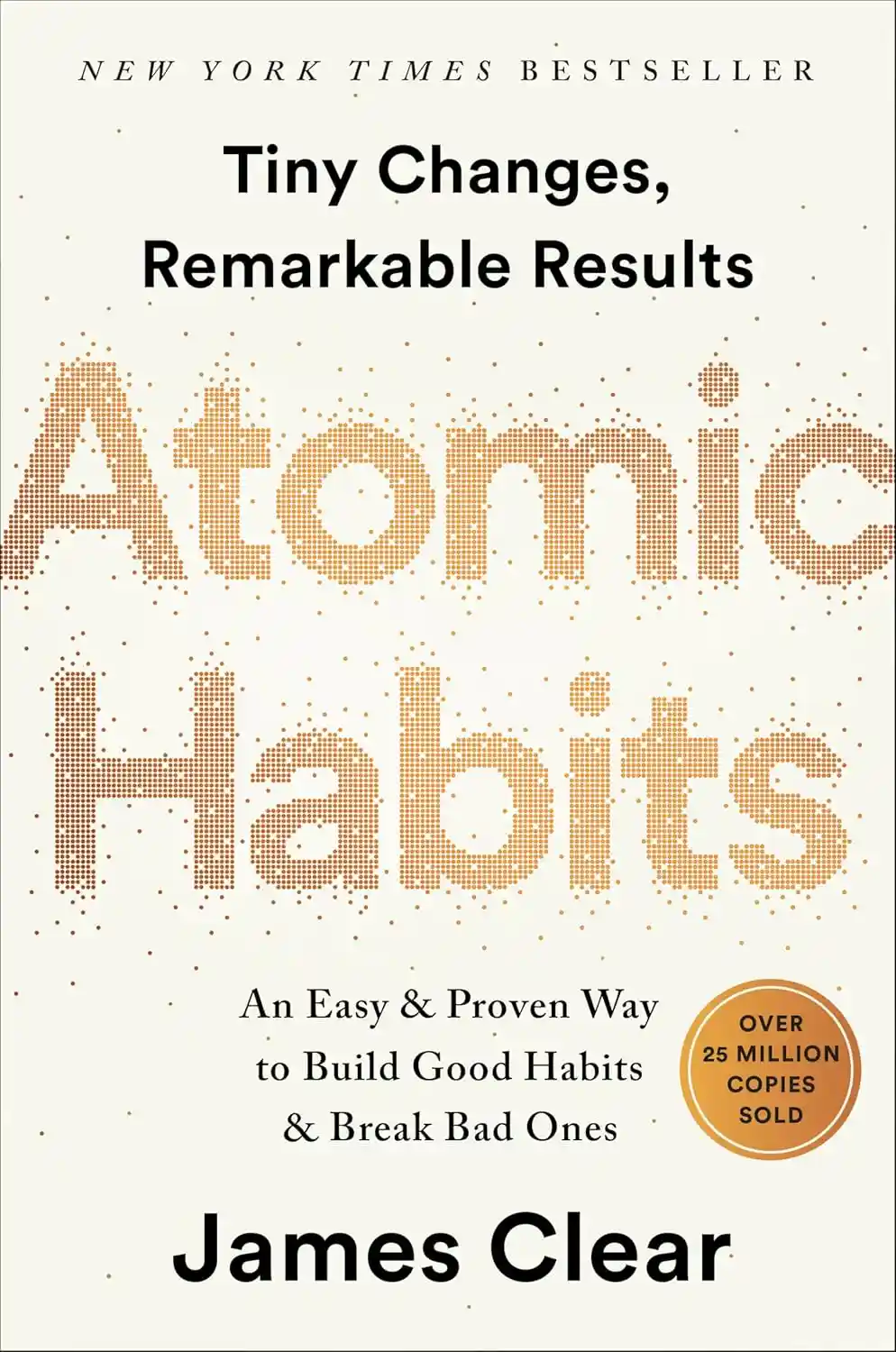
1. “Habits are the compound interest of self-improvement.” (p. 19)
Your habits multiply results over time. Small improvements accumulate into major change.
2. “Success is the product of daily habits—not once-in-a-lifetime transformations.” (p. 21)
Consistency matters more than intensity. Daily actions create long-term success.
3. “Time magnifies the margin between success and failure.” (p. 22)
Time amplifies whatever habits you follow, good or bad.
4. “Good habits make time your ally. Bad habits make time your enemy.” (p. 22)
Your habits determine whether time helps or harms you.
5. “Your outcomes are a lagging measure of your habits.” (p. 21–22)
Your current results reflect your past habits.
6. “You get what you repeat.” (p. 21–22)
Repetition shapes your life more than intention.
7. “Breakthrough moments are often the result of many previous actions.” (p. 23)
Big results come from accumulated effort.
8. “The most powerful outcomes are delayed.” (p. 23–24)
Results take time to appear, even when progress is happening.
9. “All big things come from small beginnings.” (p. 25)
Every major change starts small.
10. “You do not rise to the level of your goals. You fall to the level of your systems.” (p. 29–30)
Your systems determine your results.
🧠 Identity
11. “The most effective way to change your habits is to focus not on what you want to achieve, but on who you wish to become.” (p. 31–32)
Identity-based change is more powerful than goal-based change.
12. “True behavior change is identity change.” (p. 35)
Lasting change happens when identity shifts.
13. “Your identity emerges out of your habits.” (p. 37)
Repeated actions define who you are.
14. “Every action you take is a vote for the type of person you wish to become.” (p. 38)
Each action reinforces identity.
15. “The more you repeat a behavior, the more you reinforce the identity associated with that behavior.” (p. 37)
Repetition strengthens identity.
16. “Behavior that is incongruent with the self will not last.” (p. 34)
Habits must align with identity to stick.
17. “The ultimate form of intrinsic motivation is when a habit becomes part of your identity.” (p. 35)
Identity removes the need for motivation.
18. “Improvements are only temporary until they become part of who you are.” (p. 35)
Change lasts only when identity changes.
19. “Your behaviors are usually a reflection of your identity.” (p. 36)
Actions follow beliefs.
20. “You have the power to change your beliefs about yourself.” (p. 41)
Identity is not fixed.
21. “New identities require new evidence.” (p. 39)
You must prove change through action.
22. “If nothing changes, nothing is going to change.” (p. 39)
Action is required for transformation.
23. “The most practical way to change who you are is to change what you do.” (p. 39)
Behavior drives identity.
24. “Each habit is like a suggestion: ‘Hey, maybe this is who I am.’” (p. 38)
Habits shape self-perception.
25. “You don’t need a unanimous vote to win an election—you just need a majority.” (p. 39)
Consistency beats perfection.
👁️ 1st Law — Make It Obvious
26. “The process of behavior change always starts with awareness.” (p. 52)
You must notice habits before changing them.
27. “People often say that motivation is what you need to build a habit, but it’s actually clarity.” (p. 51–52)
Clarity drives action more than motivation.
28. “You need to be aware of your habits before you can change them.” (p. 52)
Awareness creates control.
29. “Many people think they lack motivation when what they really lack is clarity.” (p. 52)
Confusion prevents action.
30. “Environment is the invisible hand that shapes human behavior.” (p. 56)
Your surroundings influence your actions.
31. “One of the most practical ways to eliminate a bad habit is to reduce exposure to the cue that causes it.” (p. 56)
Remove triggers to break habits.
32. “Self-control is a short-term strategy, not a long-term one.” (p. 57)
Systems beat willpower.
33. “You can break a habit, but you’re unlikely to forget it.” (p. 57)
Habits leave lasting memory.
34. “Make the cues of good habits obvious in your environment.” (p. 54–55)
Design your space for success.
35. “The more visible a cue, the more likely it is to influence behavior.” (p. 54)
Visibility drives action.
36. “Habits are easier to build when they fit into the flow of your life.” (p. 54–55)
Convenience supports consistency.
37. “The cue triggers your brain to initiate a behavior.” (p. 44)
Habits start with triggers.
38. “Without awareness, habits remain automatic.” (p. 52)
You can’t change what you don’t notice.
39. “The first step to changing bad habits is awareness.” (p. 52)
Recognition leads to change.
40. “Clarity precedes success.” (p. 51)
Clear actions lead to consistent behavior.
❤️ 2nd Law — Make It Attractive
41. “The more attractive an opportunity is, the more likely it is to become habit-forming.” (p. 67)
Attraction increases repetition.
42. “Habits are a dopamine-driven feedback loop.” (p. 68)
Anticipation drives behavior.
43. “It is the anticipation of a reward—not the fulfillment of it—that gets us to take action.” (p. 68)
Desire motivates action.
44. “Temptation bundling is one way to make your habits more attractive.” (p. 70)
Pair pleasure with discipline.
45. “We imitate the habits of three groups: the close, the many, and the powerful.” (p. 73)
Social influence shapes behavior.
46. “One of the most effective things you can do is join a culture where your desired behavior is normal.” (p. 74)
Environment includes people.
47. “The normal behavior of the tribe often overpowers the desired behavior of the individual.” (p. 74)
Group norms dominate.
48. “We tend to adopt habits that are praised and approved of by our culture.” (p. 74)
Social reward reinforces behavior.
49. “Bad habits are often a response to underlying needs.” (p. 76)
Habits solve problems.
50. “Your habits are modern-day solutions to ancient desires.” (p. 77)
Behavior is rooted in human nature.
⚙️ 3rd Law — Make It Easy
61. “Walk slowly, but never backward.” (p. 128)
Progress matters more than speed.
62. “The law of least effort states that humans will naturally gravitate toward the option that requires the least amount of work.” (p. 131)
Make habits easy to succeed.
63. “Habits are easier when they require less effort.” (p. 131)
Reduce friction.
64. “The best way to start a new habit is to make it as easy as possible.” (p. 126)
Simplicity increases consistency.
65. “You don’t need to master a habit. You just need to start it.” (p. 126)
Focus on beginning.
66. “A habit must be established before it can be improved.” (p. 126)
Build consistency first.
67. “The two-minute rule states that when you start a new habit, it should take less than two minutes.” (p. 122)
Start small to build momentum.
68. “Standardize before you optimize.” (p. 126)
Consistency comes before improvement.
69. “Reduce the friction associated with good behaviors.” (p. 132)
Make habits easy to perform.
70. “Increase the friction associated with bad behaviors.” (p. 132)
Make bad habits harder.
🎯 4th Law — Make It Satisfying
81. “What is immediately rewarded is repeated.” (p. 153)
Reward strengthens behavior.
82. “What is immediately punished is avoided.” (p. 153)
Pain discourages habits.
83. “The Cardinal Rule of Behavior Change: What is immediately rewarded is repeated.” (p. 153)
Immediate satisfaction drives habits.
84. “We are more likely to repeat a behavior when the experience is satisfying.” (p. 153)
Pleasure reinforces repetition.
85. “Success is the product of daily habits.” (p. 21)
Consistency drives results.
86. “Professionals stick to the schedule; amateurs let life get in the way.” (p. 179)
Discipline separates success.
87. “The Goldilocks Rule states that humans experience peak motivation when working on tasks that are right on the edge of their abilities.” (p. 190)
Optimal challenge sustains motivation.
88. “Habits are attractive when we associate them with positive feelings.” (p. 69)
Emotion strengthens habits.
89. “The secret to getting results that last is to never stop making improvements.” (Conclusion)
Growth is continuous.
90. “You should be far more concerned with your current trajectory than with your current results.” (p. 22)
Direction matters more than position.
91. “Habits are the atoms of our lives.” (p. 29)
Small units build everything.
92. “Small habits are part of a larger system.” (p. 29)
Consistency builds structure.
93. “Each improvement builds on the last.” (p. 19–20)
Progress compounds.
94. “The seed of every habit is a single, tiny decision.” (p. 25)
Big change starts small.
95. “Habits shape your trajectory.” (p. 22)
Daily choices determine direction.
96. “Consistency is more important than intensity.” (implied p. 21–22)
Repetition beats effort spikes.
97. “Progress requires patience.” (p. 24)
Results take time.
98. “Your system determines your results.” (p. 27–30)
Process creates outcome.
99. “Small habits create big change.” (p. 19–25)
Tiny actions matter.
100. “You become what you repeatedly do.” (p. 37–38)
Identity is built through action.
Related posts:
 Why Most People Don’t Become Wealthy: The 7 Reasons (and How to Beat Each One)
 Self Discipline and Success: Why Winners Refuse Excuses
 How to Overcome Fear of Rejection: A Mentalist’s Method
 Alcohol Is a Poison: The Reframe That Makes Quitting Drinking Easier
 Ego Is the Enemy Summary: 25 Essential Lessons From Ryan Holiday