
Self-discipline is the foundation of leadership because people follow leaders whose behaviour they can predict and trust, and that consistency comes from managing yourself before you try to manage anyone else. Research shows a leader’s discipline, or lack of it, spreads further than most leaders realise: into their team’s mood, trust and willingness to admit mistakes. Drawing on Brian Tracy’s No Excuses!, this article covers self-management, consistency, emotional discipline, vision, courage, listening, accountability, why many leaders fail and a 30-day plan to lead yourself first.
It’s Monday, 9:07 a.m. Last week you told the team, firmly, that deadlines and punctuality matter. This morning you walk into the meeting seven minutes late, coffee in hand, slides not quite finished. Nobody says anything. One person glances at the clock, then looks away.
You start the meeting as if nothing happened. But something did. Your team just learned which of your standards are real.
What Is the Link Between Self-Discipline and Leadership?
Self-discipline is the capacity to hold yourself to your own standards, and leadership is the capacity to get others to hold to shared ones. You can’t do the second for long without the first, because people take their cues from what a leader does, not what he says. Authority isn’t imposed. It’s earned through disciplined behaviour, repeated until people trust it.
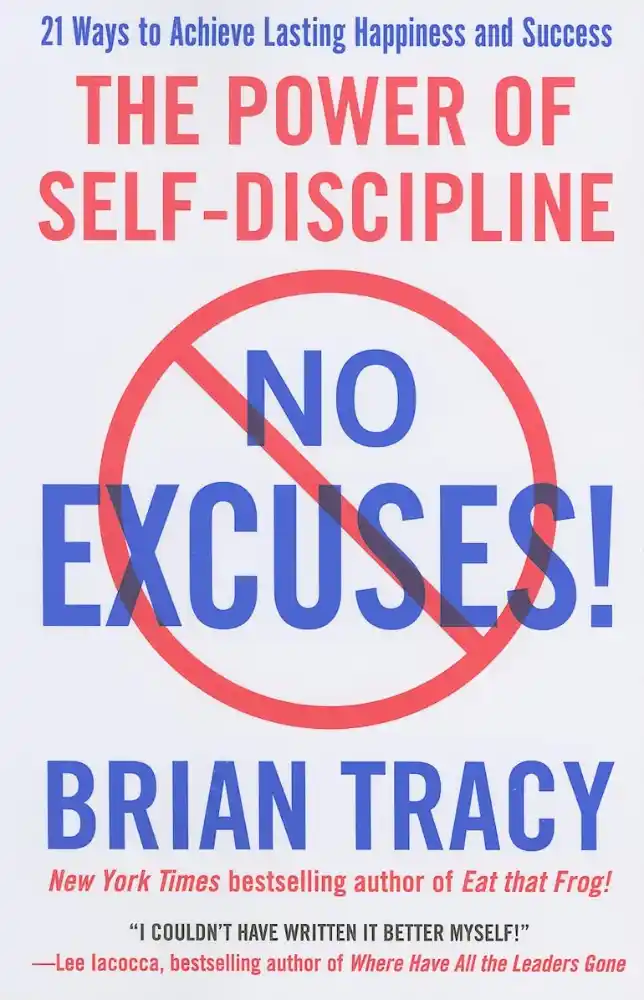
That’s the core of Brian Tracy’s view of leadership in No Excuses! The Power of Self-Discipline. Brian Tracy argues that the best leaders aren’t the most charismatic or the most senior. They’re the ones who’ve mastered themselves first: their time, their emotions, their commitments and their example. The site’s complete mini course on self-discipline covers the wider book. This article focuses on how discipline turns into authority, whether you lead a company, a team or a family.
Leadership Is Self-Management First
Before you lead others, you have to lead yourself. That means personal standards you keep whether or not anyone is watching: keeping commitments, arriving prepared, staying calm under pressure and living the values you talk about.
This is the unglamorous part of leadership, and it’s the part most people skip. They want the authority without the self-control that earns it. But teams are very good at noticing the gap between what a leader asks and what he does. A manager who demands punctuality and arrives late, or preaches focus and checks his phone in every meeting, teaches his team that the rules are for other people.
Self-control is the foundation of control over anything else. That’s why leadership sits naturally alongside self-discipline and character: character is what people see when the pressure is on and the title doesn’t help.
Consistency Builds Trust
Trust erodes quickly when a leader’s behaviour shifts with his mood or convenience. One day he’s supportive, the next he’s dismissive. One week a standard matters, the next it’s forgotten. Team members spend their energy reading the weather rather than doing their work.
Research suggests this costs more than morale. Tony Simons at Cornell’s School of Hotel Administration studied what he calls behavioural integrity: the match between what managers say and what they do. Surveying more than 6,500 employees at 76 Holiday Inn hotels in the US and Canada, he found that hotels where staff believed their managers followed through on their promises were measurably more profitable. A one-eighth-point rise in the average score on a five-point scale was associated with a 2.5 per cent increase in profitability, worth roughly $250,000 a year for an average hotel.
What that means for you is that consistency isn’t a soft virtue. It’s a performance driver. When people can predict what you’ll do, they feel safe, and when they feel safe, they do their best work. The idea runs through authentic leadership as well: people trust leaders whose words and actions line up.
Emotional Discipline: Your Mood Is Contagious
Undisciplined leaders react impulsively. Under stress, they snap, blame and escalate. Disciplined leaders pause, take responsibility and look for solutions. Tracy treats composure as one of the clearest marks of a leader.
The reason it matters so much is that a leader’s emotions don’t stay with the leader. Psychologists Thomas Sy and Jin Nam Choi studied 102 self-managing groups in which the leader was randomly put into a positive, negative or neutral mood. The leader’s mood spread to team members, and then from member to member, so that the whole group gradually converged on the leader’s emotional tone. A leader who walks in tense doesn’t just feel tense. He sets the temperature of the room.
What that means for you is that emotional discipline isn’t about suppressing what you feel. It’s about choosing what you transmit. Take the extra breath before replying to the email that annoyed you. Walk around the block before the difficult conversation. Mastering the gap between feeling and acting is the core skill, and staying calm under pressure at work gives a psychologist’s practical method. It’s also one of the five pillars of emotional intelligence in leadership.
Vision Requires Discipline
Every leader talks about vision. Few have the discipline to protect it. Vision requires long-term thinking, and long-term thinking requires the willingness to accept short-term discomfort: unpopular decisions, slower growth, standards held when lowering them would be easier.
Tracy treats delayed gratification as one of the master keys to success, and it’s especially true in leadership. The disciplined leader weighs sustainability, morale, culture and strategic direction against short-term applause, and chooses the long view more often than not. He makes the hard call that will look right in two years even if it looks wrong this quarter. Patience, in this sense, is a form of disciplined restraint. The benefits of delayed gratification explain why that restraint pays off.
Raise the Standard by Living It
Leaders set standards, but the standards that stick are the ones the leader visibly lives. Expectations and example have to match. A leader who asks for excellence and delivers mediocrity gets mediocrity back; a leader who asks for honesty and shades the truth gets a team that shades it too.
This is why influence grows from the inside out. You can’t demand that people care more than you do. But when they see you prepare thoroughly, follow through, own your mistakes and treat people with respect under pressure, many will rise to meet you, not because they’re told to but because they’ve seen what the standard looks like. That’s the difference between enforcement and leadership.
Courage: The Leader’s Discipline
Leadership regularly requires uncomfortable acts: the difficult conversation about performance, the decision to let someone go, the correction of a respected colleague, the unpopular call. Undisciplined leaders avoid them, hoping problems will resolve themselves. They rarely do.
Tracy frames courage as a discipline rather than a trait. It isn’t bravado; it’s steady conviction, the habit of facing problems directly and promptly. The longer you postpone a hard conversation, the harder it becomes and the more it costs the team. Most leaders have at least one hard conversation they’ve been avoiding, and self-discipline and courage explains why the habit of acting despite fear grows with practice.
Preparation and Strategic Thinking
Disciplined leaders prepare. They study their industry, anticipate obstacles, assess risks and refine their plans before the meeting, not during it. Preparation is invisible when it works, but its absence is obvious: the reactive decision, the scrambled answer, the meeting that goes nowhere.
Preparation also makes composure easier. A leader who has already thought through the likely objections can stay calm when they arrive. The same disciplines that drive individual performance, such as planning the day the evening before, starting with the highest-value task and protecting time for thinking, matter even more when other people depend on your decisions. Self-discipline and time management covers the method.
The Discipline of Listening
Strong leaders listen fully. They ask clarifying questions, consider other perspectives and respond thoughtfully rather than reflexively. That takes restraint, especially for men used to having the answer.
Listening does more than make people feel respected. Psychologists Guy Itzchakov, Avraham Kluger and colleagues ran five experiments in which people shared their views with either a high-quality listener, attentive, empathic and non-judgemental, or a poor one. Speakers with good listeners felt less social anxiety, explored their own thinking more deeply and came away with clearer views. Good listening, in other words, helps people think better, which is exactly what a leader needs from his team.
What that means for you is that the most powerful thing you can do in your next one-to-one may be to talk less. Put the phone away, ask one more question than feels natural and resist solving the problem before you’ve understood it. Listening is also one of the foundations of psychological safety at work, because people only speak up when they believe they’ll be heard.
Accountability: Owning Mistakes Out Loud
Admitting mistakes builds trust, respect and morale. Deflecting blame does the opposite: it damages confidence, culture and the leader’s own authority. Blame weakens authority; ownership strengthens it.
Research on leader humility supports this. Bradley Owens, Michael Johnson and Terence Mitchell studied what they call expressed humility: a willingness to see yourself accurately, appreciate others’ strengths and stay open to learning. In a large field sample, leaders who expressed humility had more engaged employees, partly because their teams became more focused on learning, and those employees were more likely to stay. Humility, it turns out, isn’t the opposite of strength. In a leader, it’s one of its clearest signals.
What that means for you is simple and hard: when you get something wrong, say so, early and plainly, in front of the people affected. It costs a moment of discomfort and buys months of trust. There’s more on why ownership spreads, and blame does too, in self-discipline and personal responsibility.
Leadership Is Built in Daily Habits
Tracy is clear that leadership isn’t developed in workshops or on away days. It’s built in small, daily behaviours that look ordinary from the outside.
The disciplined leader arrives a few minutes early and prepared. He follows through on what he said he’d do, even the small things: the email he promised, the introduction he offered, the feedback he said he’d give. He speaks honestly, including when a softer version would be easier. He admits mistakes quickly rather than waiting to see whether anyone noticed. He stays composed when others don’t, and he keeps long-term goals ahead of short-term comfort.
None of these habits is impressive on a single day. Over a year, they become a reputation. Over a career, they become a kind of authority no title can give you. It’s the leadership version of a simple truth: how you do anything is how you do everything, and the same habits that make a man disciplined at work are the ones that make people want to follow him.
Leadership and Self-Esteem
Tracy links self-discipline to self-esteem, and the link matters for leaders. When you act in line with your values, keeping commitments and holding standards, you trust yourself more. That internal trust steadies your external leadership. You make decisions with less anxiety, recover from setbacks faster and don’t need constant approval from the people you lead.
Leaders who lack that internal trust often overcompensate: micromanaging, seeking reassurance, or projecting a confidence they don’t feel. The steadier path is the slow one, building self-trust through kept promises, which is the argument of self-trust versus confidence.
Why Many Leaders Fail
Talent and ambition may get someone into a leadership role. A lack of discipline is usually what ends it.
The failures are familiar: emotional volatility that makes people walk on eggshells, inconsistency that destroys trust, poor preparation that leads to bad calls, blame-shifting that poisons the culture, and short-term thinking that sacrifices the future for the quarter. None is a failure of intelligence. Each is a failure of self-management, and each is fixable by the same leader who caused it, once he decides to see it. How leaders lose power traces how these patterns quietly erode a leader’s position long before anyone says anything.
Discipline Without Rigidity
A common misunderstanding is that disciplined leadership means strict, cold or authoritarian leadership. It doesn’t. Discipline is about consistency and self-control, not harshness. Some of the most disciplined leaders are also the warmest, because their steadiness lets them be generous without losing standards.
The goal is high standards combined with genuine care: holding people to account while making it clear you’re on their side. That balance is the heart of heart-centred leadership. Rigid leaders enforce rules; disciplined leaders embody them, and that’s why people follow.
Leading at Home
Leadership isn’t only something that happens at work. For many men, the most important people they lead are at home: a partner, children, sometimes ageing parents. The same principles apply, often with higher stakes.
Children learn far more from what their father does than from what he says. A dad who tells his son to control his temper and then shouts at the referee teaches a lesson, just not the one he intended. A father who keeps his promises, apologises when he’s wrong and stays steady when the household is chaotic gives his children a model they’ll carry for decades. Engaged fatherhood at different ages shows what that looks like as children grow.
With a partner, disciplined leadership has nothing to do with control. It means being the steady one when things are hard, taking responsibility for your part, and holding yourself to the standards you’d hope to see in her. That’s the distinction drawn in masculine leadership in relationships without control.
A 30-Day Leadership Discipline Plan
Five steps, one month. Expect the first week to feel deliberate and slightly awkward; that’s how new habits feel before they become yours.
First, choose one personal standard to improve, such as punctuality, preparation or follow-through, and keep it visibly for 30 days. Second, build a pause before responding: in difficult moments, wait a few seconds before you speak or reply. Third, prepare properly for every meeting you lead, with a clear purpose and an agenda. Fourth, take public responsibility when something goes wrong on your watch, early and without excuses. Fifth, review your decisions every Friday: what went well, what you’d do differently, and what your team saw you do this week.
Most leaders who try this notice their composure improving within the month. Reputation takes longer, often several months, because trust is built on a pattern, not a gesture.
Lead Yourself First
Go back to that Monday meeting: 9:07, coffee in hand, the glance at the clock. It wasn’t a disaster. But it was a lesson, and your team learned it.
Leadership is taught in moments like that, more than in speeches or strategy documents. Lead yourself first. Set the standard by living it. Prepare. Stay composed. Own your mistakes. Think in years. Do that consistently, and authority stops being something you claim and becomes something people give you.
Next Monday, what will your team learn about which of your standards are real?
If Your Team Could Answer for You: 7 Questions
Answer these straight after your next team meeting, while you can still picture the faces around the table.
- In the meeting you just left, which moment showed your team the standard you actually hold, rather than the one you talk about?
- Which of your own rules have you quietly exempted yourself from, and what did that exemption save you?
- When bad news reaches you, what happens to your posture, shoulders up, arms crossed, leaning back, and what does your team read from it before you’ve said a word?
- If your team could only judge your leadership by how you behaved in the last week, with no title and no history to help you, what conclusion would they reach?
- If the most junior person on your team described what it’s like to bring you a problem, what would they say?
- It’s ten years from now, and your team is being studied as an example of exceptional leadership: what’s the one discipline you started this year that the researchers trace it all back to?
- Which leader do you want your team members to become one day, and what are they learning from watching you now?
Five If-Then Plans for Leading Under Pressure
Decide now, while you’re calm, how you’ll lead when it gets hard. Write each plan on one line.
- If someone brings me bad news, then I’ll thank them first and ask one question before I react.
- If I feel anger rising in a meeting, then I’ll pause for three breaths and speak more slowly than I want to.
- If I make a mistake that affects the team, then I’ll name it to them within a day, in one sentence without “but”.
- If one of these plans works for a month, then I’ll teach it to one other leader or a team member who’s stepping up, so the habit outlasts me.
- If I catch myself breaking a standard I’ve set for others, then I’ll fix it in public, so the team sees the standard still applies to me.
Pick one of the five. Write it on the first page of your notebook before tomorrow’s first meeting.
Frequently Asked Questions About Self Discipline and Leadership
How are self-discipline and leadership connected?
Leadership depends on trust, and trust depends on consistent behaviour. Self-discipline is what makes a leader’s behaviour consistent: keeping commitments, staying composed, preparing and holding standards. Brian Tracy argues in No Excuses! that you must lead yourself before you can lead others, because people follow what a leader does, not what he says.
Can someone be a good leader without self-discipline?
Not for long. Charisma, talent or position can win a leadership role, but a lack of discipline usually shows up as volatility, inconsistency, poor preparation and blame-shifting. These erode trust, and without trust, authority becomes fragile. Most leadership failures are failures of self-management rather than intelligence.
Why is emotional control important for leaders?
A leader’s mood spreads. In research by Thomas Sy and Jin Nam Choi, leaders put into a positive, negative or neutral mood passed it on to team members, who then passed it to each other. Emotional discipline means choosing what you transmit, since your team will tend to mirror your emotional tone.
Does self-disciplined leadership mean being strict?
No. Disciplined leadership is about consistency and self-control, not harshness. Many of the most disciplined leaders are also warm, because their steadiness lets them combine high standards with genuine care. Rigid leaders enforce rules; disciplined leaders live the standards they set, which is why people follow them.
Does it matter if leaders keep their promises?
Yes. Tony Simons of Cornell University studied 76 Holiday Inn hotels and found that where employees believed managers followed through on their word, hotels were more profitable. A one-eighth-point rise on a five-point scale was linked to a 2.5 per cent increase in profitability, about $250,000 a year per hotel.
How can I develop leadership through self-discipline?
Start with one personal standard and keep it visibly. Build a pause before reacting, prepare thoroughly for meetings, take public responsibility for mistakes and review your decisions weekly. Research by Bradley Owens and colleagues suggests leaders who admit mistakes and stay open to learning have more engaged teams.
References
- Itzchakov, G., DeMarree, K. G., Kluger, A. N., & Turjeman-Levi, Y. (2018). The listener sets the tone: High-quality listening increases attitude clarity and behavior-intention consequences. Personality and Social Psychology Bulletin, 44(5), 762–778.
- Owens, B. P., Johnson, M. D., & Mitchell, T. R. (2013). Expressed humility in organizations: Implications for performance, teams, and leadership. Organization Science, 24(5), 1517–1538.
- Simons, T. (2002). The high cost of lost trust. Harvard Business Review, 80(9), 18–19.
- Sy, T., & Choi, J. N. (2013). Contagious leaders and followers: Exploring multi-stage mood contagion in a leader activation and member propagation (LAMP) model. Organizational Behavior and Human Decision Processes, 122(2), 127–140.
- Tracy, B. (2010). No excuses! The power of self-discipline. Vanguard Press.
Take the FULL FREE MINI COURSE on DISCIPLINE here
Related posts:
 Emotional Intelligence in Leadership: The 5 Core Skills Great Leaders Need
 Heart-Centered Leadership: How Empathy and High Standards Build Strong Cultures
 Manipulator, Inspirer, Follower: The Archetypes of Influence Running Every Relationship You’re In
 How to Practice Self-Compassion Without Losing Discipline or Standards
 25 Essential Lessons from Jeffrey Pfeffer’s Power: Key Takeaways That Will Transform Your Career