Self discipline and personal excellence are not abstract ideals.
They are measurable advantages.
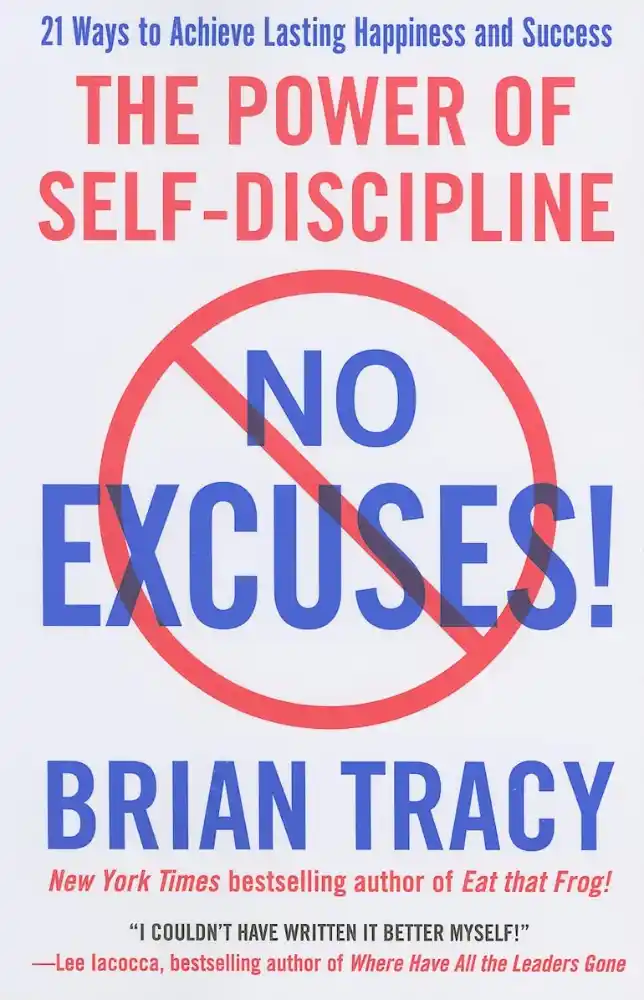
In No Excuses!: The Power of Self-Discipline, Brian Tracy makes a clear and practical argument: the top 20% in any field earn and achieve far more than the bottom 80%, and the difference is rarely talent alone.
The difference is discipline applied to growth.
Personal excellence is not about perfection.
It is about continuous improvement.
And self discipline is the engine that sustains that improvement over years.
The Top 20% Principle
Tracy highlights a consistent economic reality: in most industries, the top 20% of performers generate 80% of the results.
This applies to:
- Sales
- Leadership
- Entrepreneurship
- Creative industries
- Skilled trades
- Athletics
The question is not whether this pattern exists.
The question is: how do you move into that top 20%?
Tracy’s answer is simple: deliberate self discipline applied to skill development.
Excellence Is a Decision
Personal excellence begins with a decision.
Most people aim for adequacy.
Very few commit to mastery.
Tracy encourages readers to decide — deliberately — to become excellent at what they do.
This decision changes daily behavior.
When excellence becomes the standard:
- You prepare more thoroughly.
- You practice more consistently.
- You seek feedback.
- You refine your craft.
Self discipline and personal excellence begin with that internal commitment.
The 3% Investment Rule
One of Tracy’s most practical recommendations is what he calls the “3% rule.”
Invest at least 3% of your income back into your own development.
Books.
Courses.
Seminars.
Skill-building tools.
This is not motivational fluff. It is economic strategy.
When you increase your skill level, you increase your earning ability.
Self discipline ensures that this investment is consistent — not occasional.
The Compounding Effect of Daily Improvement
Personal excellence is rarely dramatic.
It is incremental.
If you improve your performance by even a small percentage each month, over time the gap between you and average performers becomes significant.
Tracy often emphasizes the power of consistent study and practice.
One extra hour per day focused on your craft equals hundreds of hours per year.
Over five years, that becomes thousands of additional learning hours.
Self discipline and personal excellence compound quietly.
Mastery Requires Deliberate Practice
Natural talent may offer a slight head start.
But mastery requires structured repetition.
Tracy stresses that every skill is learnable.
If someone else excels in your field, they developed specific competencies that can be studied and practiced.
The disciplined individual:
- Identifies key skills.
- Focuses on improvement.
- Measures performance.
- Corrects mistakes quickly.
Personal excellence is not accidental.
It is engineered.
The Discipline of Preparation
One of the simplest distinctions between average and top performers is preparation.
The top 20% prepare more thoroughly.
They rehearse presentations.
They study their industry.
They analyze data.
They anticipate problems.
Preparation reduces anxiety and increases confidence.
Self discipline and personal excellence meet in preparation.
When preparation becomes habit, excellence follows naturally.
Raise Your Standards
Tracy argues that your income and impact are closely tied to your standards.
If your standard is “good enough,” your results will reflect that.
If your standard is excellence, your effort changes.
Raising standards requires discipline because it demands:
- Extra time.
- Extra attention.
- Extra correction.
- Extra learning.
But over time, those standards become identity.
You become known for quality.
Focus on High-Value Skills
Not all effort produces equal results.
Tracy encourages identifying the skills that have the highest impact in your field.
For example:
- In sales: communication and closing.
- In leadership: decision-making and clarity.
- In business: strategic thinking.
- In writing: clarity and persuasion.
Self discipline ensures focused development rather than scattered effort.
Excellence is strategic, not random.
Excellence and Self-Esteem
One of the deeper psychological benefits of personal excellence is self-respect.
When you consistently improve:
- You feel capable.
- You feel competitive.
- You feel confident.
- You feel purposeful.
Self discipline and personal excellence reinforce self-esteem because they build competence.
Competence breeds confidence.
And confidence attracts opportunity.
Overcoming Mediocrity
Mediocrity is comfortable.
Excellence requires discomfort.
It requires:
- Study when others relax.
- Practice when others scroll.
- Reflection when others avoid feedback.
- Correction when ego resists.
The path of least resistance leads to average results.
The disciplined path leads to excellence.
This is not dramatic. It is cumulative.
The Emotional Side of Excellence
Pursuing excellence does not require arrogance.
It requires responsibility.
It is not about outperforming others out of insecurity.
It is about honoring your potential.
Self discipline and personal excellence align when growth becomes personal rather than competitive.
You measure progress against your past self — not others.
This keeps ambition grounded.
Long-Term Thinking
Tracy consistently emphasizes long-term perspective.
Personal excellence rarely produces instant rewards.
But over five, ten, or twenty years, the disciplined learner separates dramatically from the distracted one.
Short-term thinking leads to stagnation.
Long-term thinking fuels mastery.
Self discipline supports long-term thinking because it resists immediate comfort in favor of sustained growth.
Daily Habits for Personal Excellence
To move toward the top 20%, Tracy’s philosophy suggests:
- Read in your field daily.
- Invest in skill development consistently.
- Seek mentors.
- Practice deliberately.
- Review performance regularly.
- Eliminate low-value distractions.
None of these habits are extreme.
But practiced daily, they create excellence.
Excellence Builds Opportunity
Opportunities tend to flow toward competence.
When you are known for reliability and skill:
- Promotions increase.
- Referrals grow.
- Income rises.
- Influence expands.
Self discipline and personal excellence make you valuable.
Value attracts demand.
Demand increases leverage.

Frequently Asked Questions
1. How do self discipline and personal excellence connect?
Self discipline ensures consistent improvement. Personal excellence results from disciplined skill development over time.
2. Is talent necessary for excellence?
Talent may help initially, but disciplined practice determines long-term mastery.
3. What is the 3% rule?
Invest at least 3% of your income into personal growth and learning to increase earning ability and skill level.
4. How long does it take to achieve excellence?
It depends on the field, but consistent daily improvement over several years produces significant results.
5. Why do most people remain average?
Because excellence requires disciplined effort beyond comfort and immediate gratification.
Final Reflection
Self discipline and personal excellence are long-term commitments.
They do not promise instant applause.
They promise gradual strength.
In No Excuses!, Brian Tracy makes the case clearly:
If you want to increase your income, impact, and confidence, commit to becoming excellent.
Decide.
Invest.
Practice.
Improve.
Persist.
Excellence is not reserved for the gifted.
It is available to the disciplined.
And over time, discipline elevates you into the top 20%.
Take the FULL FREE MINI COURSE on DISCIPLINE here
Related posts:
 Self Discipline and Success: Why Winners Refuse Excuses
 Self Discipline: The Complete Mini Course to Mastery, Success, and a Life Without Excuses Inspired by Brian Tracy & The Power Of Self-Discipline
 Self Discipline at Work: Double Your Productivity, Income and Career Success
 Self Discipline and Leadership: The Foundation of Real Authority
 Self-Discipline and Character: How to Build Integrity That Wins