Most articles about self-discipline and character treat character as a mysterious quality — something you either have or don’t.
That’s wrong.
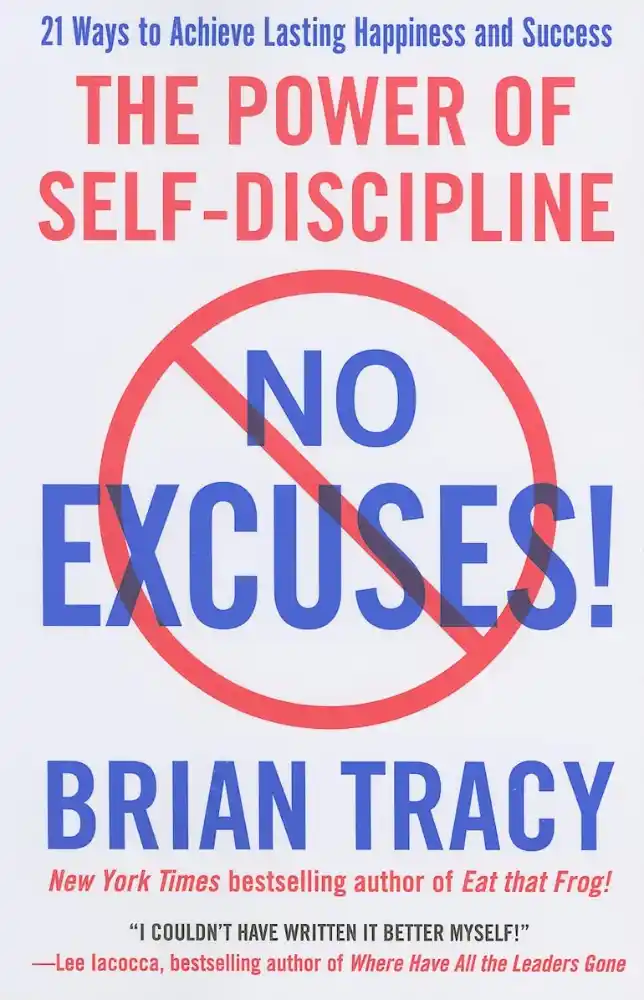
In No Excuses!: The Power of Self-Discipline, Brian Tracy argues the opposite. Character is not an abstract virtue. It is not a gift. It is the natural, predictable result of disciplined thinking and disciplined action repeated over time.
You do not build character through intention.
You build it through behavior aligned with principle, repeated until it becomes who you are.
This is the article the search results are missing — the version that treats character as a trainable outcome of self-discipline, written for men who want to do the training.
Self-discipline and character are inseparable.
If discipline governs what you do, character governs who you become.
The Difference Between Self-Discipline and Character
A useful starting point, because most men confuse the two.
Self-discipline is an action. It’s the moment-to-moment decision to do what you said you’d do, even when you don’t feel like it. It’s behavioral. It can be practiced, measured, and improved this week.
Character is the residue. It’s what’s left behind after years of those decisions accumulate inside you. It’s identity. It’s the version of you that emerges when discipline has been practiced long enough that it stops feeling like effort.
Discipline is the input. Character is the output.
Skip the input and there is no output.
What Is Character?
Character is who you are when no one is watching.
It is your internal standard — the invisible code guiding your decisions when there is no audience, no scoreboard, no consequence except the one inside you.
Tracy describes integrity as the highest value in business and in life. Without it, success is unstable. With it, success compounds.
Self-discipline and character intersect in the gap between impulse and action.
When you choose principle over convenience, you strengthen character.
When you compromise repeatedly, you weaken it.
There is no neutral. Every choice deposits or withdraws.
Character is built through small decisions made daily — and built nowhere else.
Integrity: The Core of Character
Integrity means alignment.
Your thoughts, your words, and your actions match.
You keep promises — especially to yourself.
You follow through — especially when it is inconvenient.
Tracy emphasizes that high levels of self-discipline naturally produce integrity because disciplined men do what they commit to doing. The two cannot be separated.
Integrity builds:
- Trust from others.
- Respect from colleagues.
- Confidence within yourself.
- Long-term opportunity that compounds for decades.
Reputation is the visible expression of repeated disciplined behavior. You can’t fake it. You can’t shortcut it. You can only earn it.
The Three Parts of Self-Concept
Tracy explains that character and self-esteem are linked through three components of self-concept:
- Self-Ideal — the man you aspire to be.
- Self-Image — the man you currently see yourself as.
- Self-Esteem — how much you actually like and respect yourself.
Self-discipline strengthens all three.
When your behavior moves toward your self-ideal, your self-image improves.
When your self-image improves, your self-esteem rises.
This is why undisciplined men feel quietly bad about themselves no matter how much they distract themselves. The gap between the ideal version and the current version is wide, and they know it.
Character is not just moral. It is psychological. It’s how you feel about yourself in the silent moments.

Discipline Under Pressure: Where Character Is Actually Forged
Anyone can appear disciplined when conditions are easy.
The real test of self-discipline and character appears under pressure:
- When you are tired.
- When you are discouraged.
- When you are tempted.
- When no one would notice if you compromised.
Pressure reveals character.
Tracy emphasizes that the disciplined man chooses long-term integrity over short-term advantage. This is not always dramatic. Often it is quiet:
You decline the shortcut.
You honor the deadline.
You admit the mistake.
You choose honesty when dishonesty would benefit you.
Character grows in these small, unseen moments — not in the moments anyone is watching. The audience-version of you is not the real you. The 11 p.m. version is.
Character in Business and Career
In professional life, self-discipline and character create opportunity faster than any other trait.
Employers and clients look for one thing above all: reliability.
Reliability is just discipline applied consistently over time.
A disciplined professional:
- Arrives prepared.
- Delivers on his promises.
- Accepts accountability without flinching.
- Maintains his standards even when unsupervised.
Over years, this builds reputation.
Reputation attracts responsibility. Responsibility attracts opportunity. Opportunity increases income.
Character compounds economically — the same way money does.
Most men chase the income directly. The disciplined ones build the character, and the income follows them.
Why Character Is a Long-Term Asset
Shortcuts can produce temporary gains.
But Tracy warns that shortcuts always eventually erode trust.
Self-discipline and character protect long-term success because they are rooted in principle rather than impulse. Principle does not change with mood. Impulse does.
Integrity may not produce immediate rewards.
But it produces lasting ones.
Trust once broken is difficult — often impossible — to restore. Trust built over years becomes an asset more valuable than any salary.
Character is the foundation of sustainable success. Everything else is just decoration.
The Internal Reward: Self-Respect You Can Feel
Beyond career and reputation, character pays an internal dividend almost no one talks about.
When your actions align with your values:
- Anxiety decreases.
- Regret fades.
- Self-trust increases.
- Emotional stability strengthens.
You do not waste energy defending your decisions.
You do not rehearse excuses.
You stand firm because your behavior is aligned with your principles — and that alignment produces a peace that no external reward can buy or replicate.
Self-discipline and character create psychological order. Inside the disciplined man, things are quiet.
Resisting the Path of Least Resistance
Tracy often describes the “Path of Least Resistance.”
Human nature gravitates toward whatever is easy.
Character demands conscious resistance to that pull. Every day. Every choice.
The easy choices:
- Cutting corners.
- Avoiding responsibility.
- Blaming someone else.
- Breaking small commitments to yourself.
The disciplined choices:
- Following through.
- Taking ownership.
- Doing the extra preparation.
- Maintaining standards consistently — especially the ones no one else is enforcing.
Character strengthens each time you resist convenience in favor of principle. It weakens each time you don’t.
There is no third option. You are either training the muscle or letting it atrophy.
Courage and Character
Character requires courage.
Not loud, dramatic courage — but quiet moral courage. The kind that doesn’t make a sound.
The courage to:
- Admit your mistakes.
- Stand alone when necessary.
- Refuse unethical shortcuts.
- Uphold your standards despite real pressure to drop them.
Self-discipline strengthens courage because it trains you to act based on values rather than mood. The undisciplined man waits for the feeling. The disciplined one moves on the principle.
Courage, in turn, strengthens character — because it protects integrity at the exact moments integrity is under attack.
How Character Builds Leadership
Leadership begins with trust.
Trust is rooted entirely in character.
Men follow other men who:
- Keep their commitments.
- Speak honestly, even when it costs them.
- Remain consistent across contexts.
- Take responsibility without being asked to.
Self-discipline and character make leadership sustainable. Without character, authority is fragile — held together by position alone, and dissolved the moment that position disappears.
With character, authority becomes natural. Men listen because of who you are, not what your title says.
Influence flows from integrity. Always has. Always will.
Daily Practices to Strengthen Character
Tracy’s philosophy is practical. Character is built — actually built — through daily disciplines that look small from the outside:
- Keep small promises to yourself. The 6 a.m. alarm. The workout. The page. These build internal trust faster than anything else.
- Arrive early. Always.
- Finish tasks completely. Half-done work trains a half-done identity.
- Speak truthfully, even when a lie would be cheaper.
- Admit mistakes quickly. Within minutes when possible. The delay costs more than the admission.
- Choose long-term respect over short-term comfort in the exact moment the choice appears.
- Hold the standard when no one is checking. This is the one that actually builds character. Everything else is theater.
These actions may seem ordinary. They are. That’s the point.
Character grows through repetition, not intensity. The disciplined man wins because he does ordinary things, ordinarily, for an unordinary length of time.
Character and Delayed Gratification
Integrity almost always requires delayed gratification.
You sacrifice immediate gain to protect long-term reputation.
You sacrifice momentary comfort to preserve principle.
Self-discipline is what makes this possible. Willpower is too weak and too short-lived to do it alone. Discipline is the system that catches you when willpower runs out.
Without discipline, temptation wins.
With discipline, principle wins.
Over time, these small decisions accumulate into character strength that other men can feel from across a room.
Identity: Becoming the Man You Respect
The deepest reward of self-discipline and character is self-respect.
When your actions match your standards, you start to like yourself.
Self-esteem does not grow from applause. It grows from alignment.
You become the man you intended to be.
That internal congruence creates a confidence that cannot be faked — and cannot be taken from you by any external event. Markets crash. Relationships end. Jobs disappear. The man who has built character through years of discipline is still standing in the same place inside himself.
That is what discipline actually buys you. Not just success. Self.
Frequently Asked Questions
What is the difference between self-discipline and character?
Self-discipline is an action — the moment-to-moment choice to follow through on what you committed to. Character is the long-term residue of those choices: the identity, values, and integrity that result from years of disciplined behavior. Discipline is the input; character is the output.
How does self-discipline build character?
Self-discipline ensures consistent behavior aligned with values. Each disciplined choice deposits a small amount into your internal standard. Repeated over years, those deposits become character — visible to others as integrity, reliability, and trust.
Why is integrity important for success?
Integrity builds trust, and trust creates compounding opportunity. Skill alone gets you in the door, but reliability — the visible form of integrity — is what keeps doors opening for decades. Long-term success depends more on character than talent.
Can character be developed later in life?
Yes. Character is formed through repeated decisions, not by birth or upbringing alone. Every disciplined action strengthens it regardless of age. Men in their fifties who start training discipline see character changes within months, the same way younger men do.
What happens when self-discipline weakens?
Compromises accumulate. Small broken promises to yourself erode self-trust. Eventually, others start to feel it — your reputation softens, opportunities slow, and the internal confidence you used to draw on quietly drains. The decay is invisible until it isn’t.
Is character more important than skill?
Skill creates opportunity. Character sustains it. Both matter, but character is what determines whether what you build lasts ten years or ten months. Skill without character collapses under pressure. Character without skill grows slower but never collapses.
What is the role of Brian Tracy’s No Excuses! in this philosophy?
Tracy’s central thesis is that nearly every successful man can trace his success to one habit: refusing to make excuses, doing the disciplined thing instead, repeatedly. No Excuses! lays out the framework — self-discipline applied to thinking, success, and personal greatness — that produces character as a natural by-product.
Is character innate or trained?
Trained. Some men have early advantages from upbringing or temperament, but the men who end up with the strongest character almost universally built it on purpose, through specific daily disciplines repeated for years. Character is a skill, not a gift.
Final Reflection
Self-discipline and character are quiet forces.
They do not demand attention.
They do not seek applause.
But they shape destiny — quietly, decisively, permanently.
In No Excuses!, Brian Tracy makes the point bluntly: success built without character eventually collapses. Success built on discipline and integrity endures.
Every day presents the same small choices.
Convenience or principle.
Impulse or alignment.
Short-term gain or long-term respect.
Choose discipline.
Character will follow.
And with it, the kind of strength that lasts.
Take the FULL FREE MINI COURSE on DISCIPLINE here
Related posts:
 Self Discipline and Success: Why Winners Refuse Excuses
 Get Smart by Brian Tracy: The Complete Summary Guide to Thinking Like Successful People
 Self Discipline and Courage: Conquering Fear Through Action
 Why Slow Thinking Beats Fast Reactions in High-Stakes Decisions
 Self Discipline and Goal Setting: The 7-Step Success Formula