Hypergamy in Evolutionary Psychology: Beyond the Buzzword
Few terms in modern dating discussions generate as much heat as hypergamy.
It is often used carelessly.
Sometimes resentfully.
Sometimes defensively.
But hypergamy in evolutionary psychology has a precise meaning.
Hypergamy refers to the tendency — observed across cultures — for women to prefer mates of equal or higher status, particularly in long-term mating contexts.
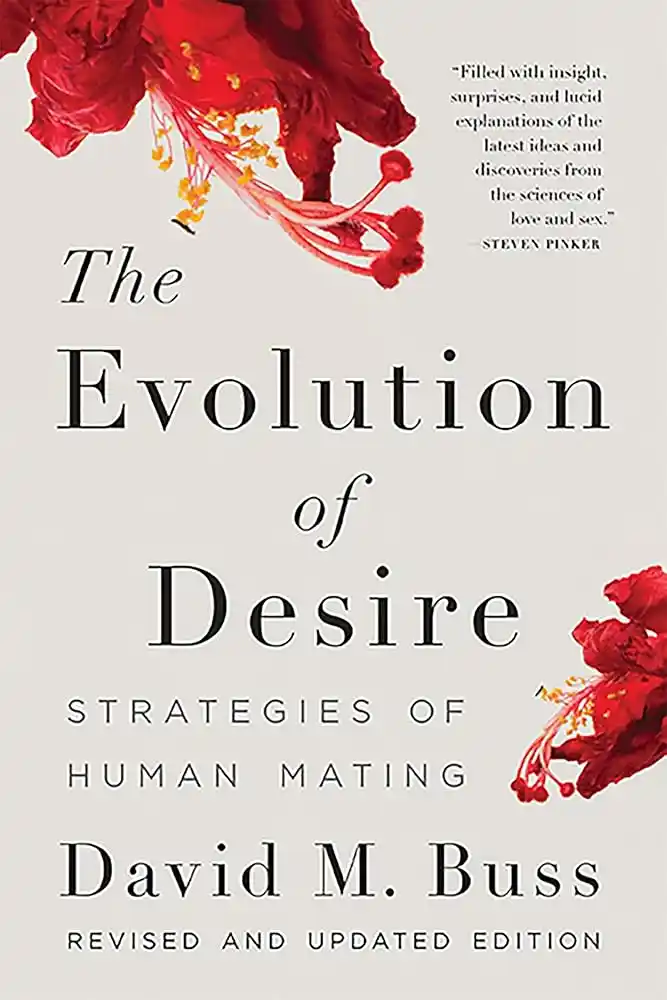
In The Evolution of Desire, David M. Buss presents cross-cultural data showing that women consistently value traits such as:
- Financial prospects
- Ambition
- Social status
- Resource acquisition ability
He writes that women value qualities signaling “ability and willingness to invest.”
That preference pattern creates upward selection pressure.
But hypergamy is not greed.
It is strategy.
Understanding hypergamy in evolutionary psychology requires nuance — not outrage.
The Evolutionary Roots of Hypergamy
To understand hypergamy, we must return to asymmetrical parental investment.
Historically, women bore:
- Pregnancy costs
- Childbirth risks
- Extended childcare
Choosing a mate with higher resource potential increased offspring survival odds.
Men, who could theoretically reproduce with minimal biological investment, faced different pressures.
Thus, female mate choice became more selective.
Buss states:
“Women’s greater obligatory parental investment makes them more discriminating in mate selection.”
Discrimination here does not mean cruelty.
It means strategic caution.
Hypergamy evolved because choosing upward — in status or resources — reduced reproductive risk.
Hypergamy vs Assortative Mating
Hypergamy does not mean women only pursue the top 1%.
Research shows that assortative mating dominates.
Most individuals pair with others of similar mate value.
However, preferences often lean slightly upward.
Women tend to prefer men with equal or slightly higher:
- Education
- Income
- Social standing
Men, by contrast, show less concern about a partner’s income relative to their own.
This asymmetry reflects different evolutionary pressures.
Hypergamy is a directional preference, not an absolute rule.
Modern Hypergamy and Dating Apps
Digital dating amplifies hypergamy dynamics.
Dating apps create visibility hierarchies.
High-status or highly attractive men receive disproportionate attention.
This intensifies competition among men and selectivity among women.
Evolutionary psychology predicts this outcome.
When mate choice expands dramatically, selection pressure intensifies.
However, digital environments distort perception.
Algorithms exaggerate visibility differences.
This can create resentment among lower-status men.
But resentment misunderstands the mechanism.
Hypergamy is not a conspiracy.
It is a statistical tendency shaped by ancient pressures interacting with modern systems.
Economic Independence and Hypergamy
A common question: if women earn more, does hypergamy disappear?
Research suggests partial modification, not elimination.
Even in egalitarian societies, women still value ambition and status.
However, when women possess their own resources, selection criteria broaden.
Emotional intelligence, stability, and shared values gain importance.
Hypergamy evolves alongside environment.
Evolutionary psychology explains origin.
Culture shapes expression.
Upward preference may shift from financial dominance to psychological maturity.
Hypergamy and Male Anxiety
Hypergamy discussions often trigger male insecurity.
If women prefer upward status, what happens to average men?
The answer lies in assortative mating.
Most people pair within similar ranges.
Mate value is relative to context.
High-status men have more options.
But average-status men pair successfully within their social circles.
Hypergamy does not eliminate relational opportunity.
It shapes competition.
The mature response to hypergamy is growth, not bitterness.
Build competence.
Develop confidence.
Strengthen character.
Selection pressure can motivate excellence.
Or it can fuel resentment.
The choice determines trajectory.
Hypergamy and Female Psychology
For women, hypergamy operates subtly.
It is not always conscious.
Attraction to ambition, leadership, and competence often feels automatic.
These traits historically signaled protection and provisioning ability.
However, hypergamy is conditional.
Women also prioritize:
- Emotional availability
- Kindness
- Reliability
- Shared values
Long-term bonding requires more than status.
Buss’s research consistently shows women value commitment signals strongly.
Status without investment loses attractiveness over time.

Hypergamy Misused as Ideology
Online discussions often weaponize hypergamy.
It becomes accusation:
“Women only want rich men.”
That oversimplifies reality.
Evolutionary psychology describes average tendencies, not universal rules.
Many women prioritize compatibility, shared worldview, and emotional safety over raw status.
Moreover, hypergamy does not guarantee happiness.
High-status partners may lack stability or integrity.
Upward selection without character assessment backfires.
Science explains preference patterns.
It does not endorse shallow pursuit.
Male Mate Preferences: The Counterbalance
While hypergamy describes upward female preference, men exhibit their own consistent biases.
Men prioritize:
- Youth
- Physical attractiveness
- Fertility cues
These preferences create reciprocal pressure.
Just as women prefer upward status, men prefer youth signals.
Both are evolutionary.
Both are sometimes uncomfortable to confront.
Both require maturity to navigate ethically.
Understanding hypergamy requires acknowledging symmetrical pressures.
Hypergamy in Long-Term Relationships
Hypergamy influences partner selection more than relationship maintenance.
Once bonded, attachment systems stabilize pair bonds.
However, if status imbalance grows dramatically over time, tension can emerge.
For example:
- Sudden wealth shifts
- Career success disparities
- Social elevation differences
Evolutionary psychology predicts that significant mate value shifts can destabilize bonds.
But secure attachment and shared identity buffer this.
Long-term stability requires mutual respect beyond status metrics.
Masculinity, Competence, and Hypergamy
Healthy masculinity responds to hypergamy through growth, not hostility.
Status and competence are not superficial achievements.
They reflect capacity.
Capacity to provide.
Capacity to lead.
Capacity to protect.
Capacity to build.
Evolutionary psychology suggests these traits historically increased desirability.
But modern maturity expands the definition.
Provision now includes:
- Emotional provision
- Psychological safety
- Shared purpose
Hypergamy in modern context values integrated strength.
Not dominance.
Criticisms of Hypergamy Theory
Critics argue hypergamy is overstated or culturally exaggerated.
There is truth here.
Individual variation is vast.
Many women prioritize egalitarian partnerships.
Hypergamy tendencies decrease in societies with greater economic parity.
However, cross-cultural data consistently shows upward status preference remains statistically present.
The balanced conclusion:
Hypergamy exists as a pattern.
It does not define every individual.
Science describes averages.
Relationships unfold uniquely.
Frequently Asked Questions
What is hypergamy in evolutionary psychology?
Hypergamy refers to the tendency for women to prefer mates of equal or higher status, especially in long-term mating contexts.
Is hypergamy universal?
It appears across cultures as a statistical trend, though individual variation is significant.
Does hypergamy disappear when women earn more?
Economic independence reduces reliance on financial status but does not eliminate preference for ambition or competence.
Is hypergamy selfish?
No. It evolved as a strategy to increase offspring survival probability.
How should men respond to hypergamy?
Through self-development, competence building, and emotional maturity — not resentment.
Conclusion: Clarity Without Contempt
Hypergamy in evolutionary psychology explains an upward selection tendency rooted in ancestral realities.
It is not a moral accusation.
It is not a cultural conspiracy.
It is a pattern shaped by reproductive pressures.
Understanding hypergamy reduces confusion.
It invites growth rather than grievance.
When competence meets character, upward preference becomes partnership.
And partnership — not hierarchy — is where lasting bonds form.
Related posts:
 Mate Value in Evolutionary Psychology: What It Really Means
 The Complete Guide to Evolutionary Mating Psychology in Modern Relationships
 What Is Evolutionary Mating Psychology? The Science of Human Desire
 Short-Term vs Long-Term Mating Strategies: An Evolutionary Psychology Guide
 Sexual Selection in Humans: How Evolutionary Psychology Explains Human Attraction