
Evolutionary jealousy is the idea that romantic jealousy evolved as a built-in alarm system, helping our ancestors protect their relationships from rivals and infidelity, which is why it can feel so sudden, physical and hard to control. Research suggests men and women share the same alarm but that, on average, it’s tuned slightly differently: men tend to be more upset by sexual infidelity, women by emotional infidelity, though the size of that difference is still debated. This article explains why jealousy evolved, what the studies really show about sex differences, where the theory has critics, and how to handle jealousy so that it protects your relationship instead of damaging it.
Answer this before you read any further, and go with your first reaction rather than the one you’d like to give.
Imagine you discover that the person you love has formed a deep emotional connection with someone else. They talk every day, confide in each other, share things they no longer share with you. Now imagine instead that she has had sex with someone else, once, with no emotional attachment at all.
Both would hurt. But if you had to choose, which would hurt more?
That question, or something close to it, has been put to tens of thousands of people over the past thirty years. Your answer, and why you gave it, sits at the centre of one of the longest-running debates in the psychology of love.
What Is Evolutionary Jealousy?
Evolutionary jealousy is the view, from evolutionary psychology, that romantic jealousy is an adaptation: an emotion shaped by natural selection to detect and respond to threats to a valued relationship, such as a rival, signs of a partner’s interest elsewhere, or infidelity. On this view, jealousy isn’t a flaw or simply a sign of insecurity. It’s a defence mechanism that helped our ancestors hold on to the partnerships their survival and children depended on.
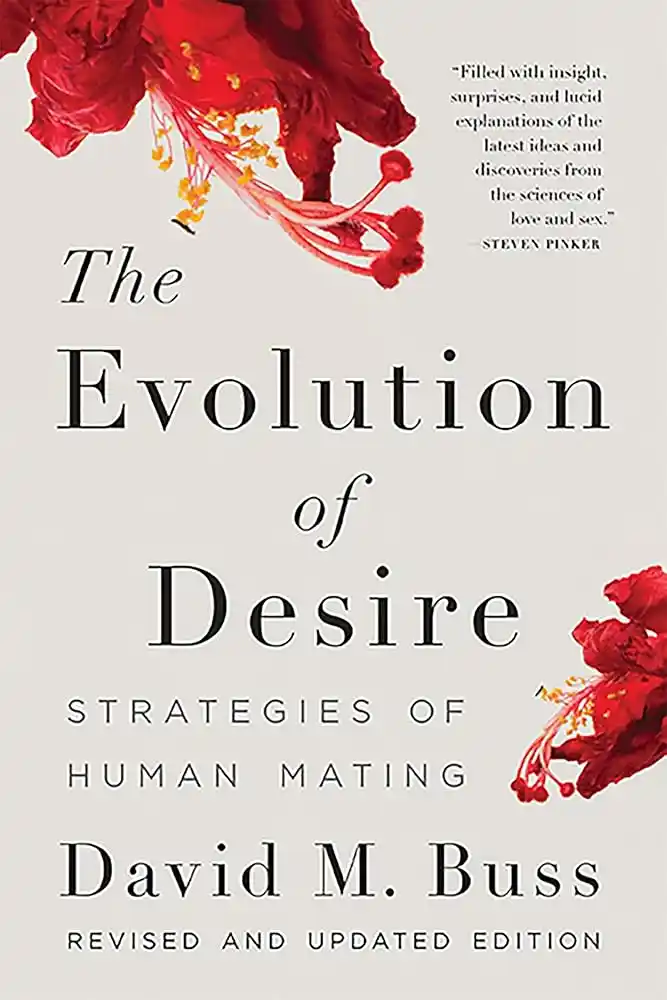
The researcher most associated with this idea is the University of Texas psychologist David Buss, author of The Evolution of Desire and The Dangerous Passion, a book devoted entirely to jealousy. Buss describes jealousy as an early-warning system for infidelity and argues that love itself probably couldn’t have evolved without some defence against rivals and betrayal. In his view, jealousy and love are two sides of the same evolutionary coin.
That doesn’t make every jealous feeling wise or every jealous action acceptable. Understanding where an emotion comes from is not the same as approving of everything it urges you to do. But it does explain why jealousy can arrive so fast, so physically and so out of proportion to the evidence in front of you. The site’s complete guide to evolutionary mating psychology sets jealousy alongside the other emotions and strategies that shape human relationships, and what evolutionary mating psychology is covers the basics of the field.
Why Jealousy Evolved
To see why jealousy would evolve, imagine the problems our ancestors faced. A man who invested years providing for a partner and her children faced a hidden risk: he could never be completely certain the children were his. A woman who depended on a partner’s protection and resources faced a different risk: that he might redirect those resources, and his commitment, to someone else. In both cases, a rival represented a serious threat to survival and reproduction.
An emotion that made people alert to rivals, sensitive to changes in a partner’s behaviour and motivated to guard the relationship would have been useful. Evolutionary psychologists call the behaviours it produces mate guarding: staying close, monitoring, showing affection, signalling commitment, and occasionally warning off rivals. Most of these are mild, even loving. Some aren’t. Jealousy is closely tied to intrasexual competition, the rivalry between members of the same sex for partners, which explains why a confident rival can set off the alarm faster than any message on a phone.
There’s a reason jealousy so often fires on thin evidence. Like a smoke alarm, it’s built to tolerate false alarms in order to avoid missing a real fire. For an ancestral man or woman, wrongly suspecting a partner was costly but survivable. Missing a real betrayal could mean losing a partner, resources or offspring. So the alarm is sensitive by design. That’s useful to remember the next time it goes off over a “like” on a photo.
Buss goes further. A complete absence of jealousy, he argues, isn’t a sign of a healthy relationship but often a worrying one, suggesting that someone no longer cares much about losing the other person. Mild, occasional jealousy can be a reminder of how much a relationship matters, and in his research, some people even provoke it deliberately to test a partner’s commitment.
Sex Differences in Jealousy: The Famous Experiment
The question at the top of this page comes from a 1992 study by Buss and his colleagues. They asked university students which would upset them more: a partner forming a deep emotional attachment to someone else, or a partner having sex with someone else.
The results were striking. Around 60% of the men chose sexual infidelity as more distressing, compared with just 17% of the women. Most women chose emotional infidelity. When the researchers measured physical responses, such as heart rate and skin conductance, while people imagined each scenario, the men tended to react more strongly to the sexual one and the women to the emotional one. And men who had been in a committed sexual relationship were more likely to choose the sexual option than men who hadn’t.
The evolutionary explanation follows from the problems above. A man’s greatest ancestral risk was investing in children who weren’t his, so sexual infidelity should trigger the stronger alarm. The same logic sits behind several other patterns in human mating, from why men are drawn to sexual variety to the differences between short-term and long-term mating strategies. A woman’s greatest risk was losing a partner’s commitment and resources to a rival, so emotional infidelity, a sign that his heart and his investment might follow, should hurt more. It’s the same concern with long-term commitment that shapes how women choose men.
It’s an elegant theory, and it made the study one of the most cited in evolutionary psychology. But elegance isn’t proof, and the findings have been tested hard since.
What the Largest Studies Show
The 1992 study used a few hundred American students. Since then, much larger samples have been collected.
In one of the biggest, published in 2014, the psychologists David Frederick and Melissa Fales surveyed nearly 64,000 American adults aged 18 to 65. Among heterosexual participants, 54% of men said sexual infidelity would upset them more, compared with 35% of women. Put the other way round, 65% of heterosexual women were more upset by emotional infidelity, compared with 46% of heterosexual men. Interestingly, gay men and lesbian women didn’t differ from each other, and neither did bisexual men and women.
Two things stand out. First, the sex difference is real and reasonably robust in large samples: men, on average, lean more towards sexual jealousy than women do. Second, it’s a tilt, not a split. Nearly half of heterosexual men in that study said emotional infidelity would hurt more. The idea that “men care about sex and women care about feelings” is a cartoon of the research, not a summary of it. Most people are hurt deeply by both, and many men find emotional betrayal the more devastating of the two.
For a man, that’s worth knowing. If emotional closeness between your partner and someone else bothers you more than the thought of a one-off physical encounter, there’s nothing unmanly about it. You’re in very good company.
The Critics’ Case
Not every psychologist accepts the evolutionary explanation. The most influential critique came from Christine Harris at the University of California, San Diego, in 2003.
Harris argued that the forced-choice question (which would hurt more?) exaggerates differences, and that other methods tell a more mixed story. She pointed to studies of people who had actually experienced a partner’s infidelity, in which men and women didn’t differ much in whether they focused on the sexual or emotional side. She also noted that men from different countries varied widely in their answers. In her view, jealousy in both sexes is better explained by a general response to threat: perceiving a rival who endangers an important relationship, with differences in how men and women interpret the situation rather than different built-in mechanisms.
Evolutionary psychologists have responded with further studies, including some that find sex differences using several methods and in highly gender-equal countries such as Norway. The debate isn’t settled, and an honest reading is that both sides have a point. There does seem to be an average difference between men and women in which kind of infidelity stings more, but it’s smaller and more variable than the original studies suggested, and culture, experience and individual personality all shape it.
For the purposes of your own relationship, the debate matters less than the shared ground: jealousy is a near-universal human response to the threat of losing someone you love. The site’s articles on male vs female mate preferences and mate value take a similarly careful look at where evolutionary claims are strong and where the evidence is messier.
Why Jealousy Feels So Overwhelming
Anyone who has felt real jealousy knows it doesn’t arrive as a calm thought. It’s physical: heat in the face, a tight chest, a racing mind that replays images you don’t want to see. It can take over your attention for hours or days.
That intensity makes sense if jealousy evolved to protect something that mattered enormously. An alarm that whispered would be easy to ignore. Jealousy shouts. It narrows your focus to the threat, makes you hyper-alert to small signals, and pushes you towards action, sometimes before you’ve checked whether the threat is real.
This is exactly why it needs handling rather than obeying. The alarm can’t tell the difference between a real rival and a misread text. It’s your job, as the man in charge of the alarm, to do the checking. The skills in how to control emotional reactions and stopping the overthinking spiral are directly relevant here.
When Jealousy Turns Dangerous
Buss is clear that jealousy has a dark side. He calls it the dangerous passion for a reason: the same emotion that protects love can also destroy it.
In his research, nearly everyone reported having felt intense jealousy at some point. Around a third said their jealousy had sometimes been hard to control. And among those who admitted to being jealous, close to four in ten said it had made them want to hurt someone. Most never act on that urge. But some do, and jealousy is a known factor in controlling behaviour and violence in relationships.
The line between understandable feeling and unacceptable action needs to be bright. Feeling jealous isn’t wrong. Checking her phone, controlling who she sees, demanding passwords, monitoring her movements, threatening or intimidating: these are not mate guarding in any acceptable sense. They’re control, and they corrode the trust they’re supposedly protecting. Evolution explains the urge. It doesn’t excuse the behaviour.
If you recognise yourself in any of this, or your jealousy feels out of control, please speak to a professional. And if a partner’s jealousy makes you feel unsafe, that matters just as much; it’s worth talking to someone you trust or a support service.
Jealousy in the Age of Social Media
Jealousy evolved in small communities where a person might encounter a handful of potential rivals in a lifetime. Today, a partner’s phone holds access to thousands of people, and every like, follow and late-night message is visible, ambiguous and easy to read too much into.
This creates a mismatch. An alarm calibrated for a village now operates in an endless feed. The result is a steady supply of cues that can trigger jealousy without telling you much at all. A like on an ex’s photo, a new follower, an unexplained laugh at a message: each can set off the same ancient circuitry designed for real threats.
There’s no need to pretend these cues mean nothing. But it helps to remember that the alarm is now far more sensitive than the environment justifies. Couples who talk openly about what online behaviour feels respectful, rather than policing each other in silence, usually find it easier. Clear agreements are a form of healthy boundaries, not a restriction on freedom. And watch for genuinely worrying patterns, like secrecy, hidden conversations or someone else being kept out of view, which are described in what roaching in dating looks like.
Attachment, Insecurity and Jealousy
Evolution explains why everyone has the alarm. Personal history explains why some people’s alarms are louder.
People with an anxious attachment style, often shaped by inconsistent care early in life, tend to fear abandonment and may experience jealousy more frequently and intensely. People with a more avoidant style may feel jealousy but suppress or deny it. Secure attachment doesn’t mean never feeling jealous; it means being able to feel it, name it and talk about it without being swept away. The site’s guide to attachment styles and dating explains these patterns in detail.
Self-worth plays a role too. A man who quietly doubts his value as a partner is more likely to see rivals everywhere, because he half-expects to be replaced. Some of the most effective work on jealousy isn’t about the partner at all. It’s about building a sense of genuine confidence and self-trust that doesn’t depend on constant reassurance.
Is Jealousy Healthy?
In mild, occasional doses, jealousy can be healthy. It can remind you not to take your partner for granted, prompt you to invest more in the relationship, and signal to both of you that the bond matters. A flicker of jealousy when your partner is admired by someone else can even reignite attraction, as long as it leads to more attention rather than more suspicion.
It becomes unhealthy when it’s constant, when it’s based on imagination rather than evidence, when it turns into monitoring or control, or when it makes either of you feel unsafe. The question to ask isn’t “am I jealous?” but “what am I doing with it?”
A useful distinction is between jealousy as a signal and jealousy as a verdict. As a signal, it says: pay attention, something might need care here. As a verdict, it says: she’s betraying you, act now. The first can strengthen a relationship. The second usually damages it. Often, the healthiest response to a jealous flicker is simply to show up more fully: more attention, more affection, more of the gestures that make a partner feel chosen, the kind described in why your gestures of love aren’t landing.
How to Handle Jealousy as a Man
The aim isn’t to eliminate jealousy, which is neither possible nor desirable. It’s to stay in charge of what you do with it. Here’s a practical approach.
Name it without shame
Say to yourself, plainly: “I’m feeling jealous.” Naming an emotion takes some of its heat away, and treating it as a normal human response, rather than a humiliating weakness, makes it easier to handle calmly.
Cool the body before you act
Jealousy floods the body with alarm. Before you send the message, ask the question or make the accusation, step away for twenty minutes. Walk, breathe slowly, let the first wave pass. Decisions made in that first surge are rarely ones you’re proud of.
Check the evidence
Ask yourself: what do I actually know, and what am I imagining? Separate facts (she was out late) from interpretations (she must be with someone). The alarm will offer the worst story. Your job is to test it.
Talk, don’t interrogate
If something genuinely bothers you, raise it calmly and specifically, using “I” rather than “you”: “When you didn’t reply all evening, I felt anxious, and I’d like to understand what was going on.” Curiosity invites honesty. Accusation invites defence.
Address what’s underneath
If jealousy keeps returning without real cause, look at what’s driving it: insecurity, past betrayal, an anxious attachment pattern, or a relationship that genuinely isn’t meeting your needs. Each calls for a different response, from building your own confidence to an honest conversation about the relationship itself.
Know your line
Decide in advance what you won’t tolerate (genuine deception, disrespect, betrayal) and what you’ll let go. A man who knows his boundaries doesn’t need to police his partner. He simply acts if a real line is crossed.
From Instinct to Integrity
Go back to the question at the top of the page: which kind of betrayal would hurt more? Whatever you chose, the more useful question is what you’d do with that hurt.
Evolution handed every man an alarm that’s loud, fast and not very accurate. That’s not your fault, and it’s not something to be ashamed of. But you’re not your ancestors, and you’re not your alarm. You can feel jealousy fully and still choose calm, honesty and trust over suspicion and control. You already do something similar with anger, fear and every other powerful emotion you’ve learned to handle as an adult.
What would change in your relationship if your jealousy became a signal you listened to, rather than a voice you obeyed?
7 Questions to Sit With When Jealousy Hits
Don’t answer these in the heat of the moment. Wait until the first wave has passed (an hour, a night’s sleep) and come back to them somewhere quiet.
- Think of the last time jealousy flared: what exactly did you see or hear, and what story did your mind build on top of it?
- Which hurt more when you answered the question at the start of this article, and what does that tell you about what you most fear losing?
- When jealousy rises, where do you feel the heat first (your face, your chest, your neck), and how long does it take to cool?
- What has your jealousy protected in your relationships, and what has it damaged?
- If you trusted your own worth completely, which of your jealous reactions would simply disappear?
- You know the jealous spiral from the inside: what do you understand about it that someone designing help for jealous men would likely miss?
- Picture your relationship a year from now, with jealousy handled as a signal rather than a verdict: what does the ordinary evening look like?
If jealousy has led you to monitor, control or frighten a partner, or if it feels impossible to manage, please speak to a counsellor or your GP; help works, and asking for it is a strong move.
5 If-Then Questions to Handle Jealousy
Jealousy is a trigger-driven emotion, so the most effective plan is one you make before it fires.
- What is your most common jealousy trigger (a late reply, an ex’s name, a night out without you), and when is it most likely to appear next?
- Write your plan in one line: “If ___ happens and I feel jealous, then I will ___ before I say anything,” and rehearse it once tonight.
- What will you stop doing from today (checking her phone, scrolling her followers, replaying messages) that keeps the alarm ringing?
- Who is one person, your partner or a trusted friend, you’ll tell about this plan, so they can notice when you use it?
- This week, ask two or three men you trust how they handle jealousy, and note the best idea you hear so you can share it with someone who needs it.
Jealousy is the price of caring about someone. The skill is paying it without handing over the keys.
Frequently Asked Questions About Evolutionary Jealousy
What is evolutionary jealousy?
Evolutionary jealousy is the theory that romantic jealousy evolved as an adaptation to protect relationships from rivals and infidelity. Evolutionary psychologists such as David Buss argue it works like an early-warning system, alerting people to threats to a valued partnership and motivating them to guard it, which helps explain why jealousy can feel sudden and intense.
Why do men and women experience jealousy differently?
Research suggests that, on average, men are more distressed by sexual infidelity and women by emotional infidelity. Evolutionary psychologists link this to paternity uncertainty for men and the risk of losing a partner’s commitment for women. Large studies support a difference, but it’s a tilt rather than a split, and many men find emotional infidelity more painful.
Is jealousy natural?
Yes. Jealousy appears in virtually every culture studied, and research by David Buss found that nearly everyone has experienced intense jealousy at some point. Being natural doesn’t make every jealous action acceptable, though. Jealousy is a feeling to understand and manage; controlling or threatening behaviour is never justified by it.
Can jealousy be healthy in a relationship?
Mild, occasional jealousy can be healthy, reminding partners how much the relationship matters and prompting more attention and care. It becomes unhealthy when it’s constant, based on imagination rather than evidence, or turns into monitoring and control. The key question is not whether you feel jealous, but what you do with it.
Is the sex difference in jealousy real?
The debate continues. Studies using forced-choice questions find clear sex differences, and some studies using other methods do too. Critics such as Christine Harris argue the differences are smaller and more variable than claimed, especially when people describe real experiences of infidelity. The fairest summary is a modest average difference shaped by culture and individual experience.
How can I stop being so jealous?
Name the feeling without shame, give your body time to calm before acting, and separate facts from the stories your mind creates. Talk to your partner with curiosity rather than accusation. If jealousy keeps returning without cause, look at the insecurity, attachment pattern or past experience underneath it, and consider talking to a counsellor.
References
- Buss, D. M. (2000). The dangerous passion: Why jealousy is as necessary as love and sex. Free Press.
- Buss, D. M. (2016). The evolution of desire: Strategies of human mating (rev. ed.). Basic Books.
- Buss, D. M., Larsen, R. J., Westen, D., & Semmelroth, J. (1992). Sex differences in jealousy: Evolution, physiology, and psychology. Psychological Science, 3(4), 251–255.
- Frederick, D. A., & Fales, M. R. (2016). Upset over sexual versus emotional infidelity among gay, lesbian, bisexual, and heterosexual adults. Archives of Sexual Behavior, 45(1), 175–191.
- Harris, C. R. (2003). A review of sex differences in sexual jealousy, including self-report data, psychophysiological responses, interpersonal violence, and morbid jealousy. Personality and Social Psychology Review, 7(2), 102–128.
Related posts:
 What Is Evolutionary Mating Psychology? The Science of Human Desire
 Male vs Female Mate Preferences: What Evolutionary Psychology Gets Right, and Where the Evidence Is Messier
 The Complete Guide to Evolutionary Mating Psychology in Modern Relationships
 Sexual Selection in Humans: How Evolutionary Psychology Explains Human Attraction
 Why Men Crave Sexual Variety: The Evolutionary Psychology Behind Male Desire