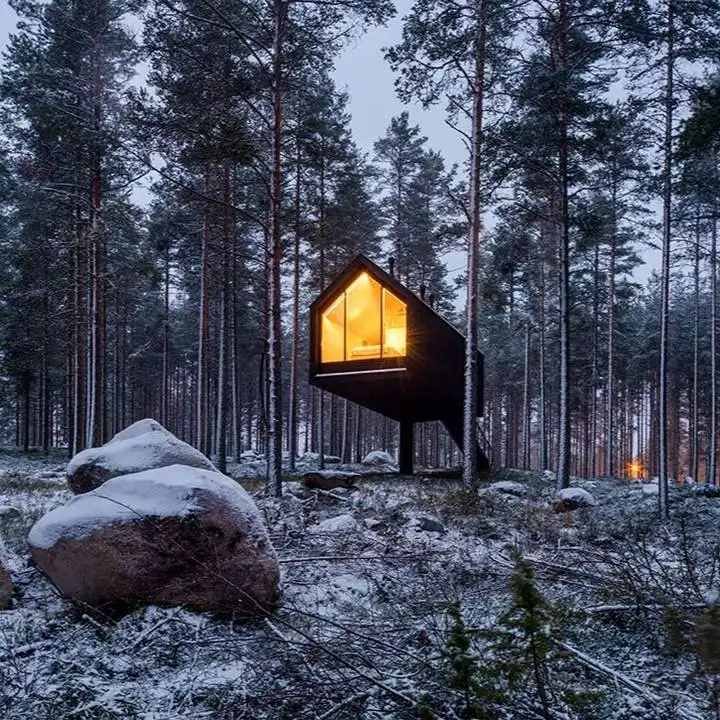
Elevated cabin design is redefining how architecture meets nature, and few projects illustrate this better than the Niliaitta cabin by Studio Puisto. Set within Finland’s forest landscape, this innovative prototype reimagines the traditional cabin as a lightweight, low-impact structure that quite literally rises above the ground to enhance views, reduce environmental disturbance, and create a unique spatial experience.

Designed as part of a new generation of nature-based accommodation, Niliaitta demonstrates how elevated cabins can combine sustainable architecture, Scandinavian minimalism, and immersive forest living in one compact form.
What Is Elevated Cabin Design?
Elevated cabin design refers to cabins that are lifted off the ground, typically using stilts, columns, or minimal foundations. This architectural approach offers several advantages:
- Reduced impact on sensitive terrain
- Improved views and daylight access
- Better protection from moisture, snow, and wildlife
- A stronger sense of separation from everyday life
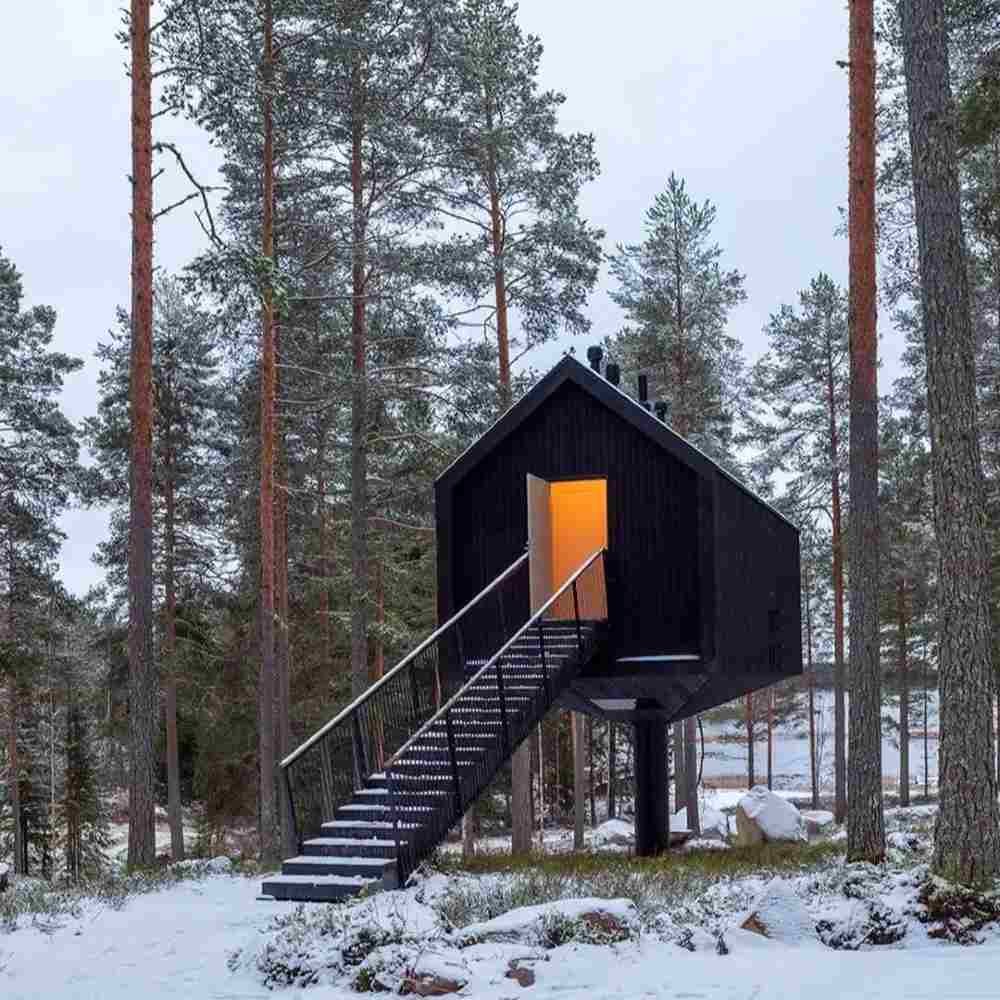
The Niliaitta cabin exemplifies this concept through its striking single-column structure, which supports the entire living space while leaving the forest floor largely untouched.

A Contemporary Interpretation of Nordic Tradition
The name Niliaitta comes from traditional Finnish and Sámi storage buildings that were raised above ground to protect food from animals. Studio Puisto translates this vernacular idea into a modern elevated cabin design that feels both culturally rooted and forward-looking.
Rather than replicating historic forms, the cabin abstracts the idea of elevation into a clean, minimalist volume. The result is an architectural object that feels at home in the forest while clearly belonging to contemporary Scandinavian design.

Architecture That Minimises Environmental Impact
One of the strongest arguments for elevated cabin design is sustainability, and Niliaitta is conceived with this principle at its core.
Key low-impact design features include:
- Single-point foundation, reducing excavation and soil disturbance
- Compact footprint, limiting material use and energy demand
- Lightweight timber construction, aligned with Nordic building traditions
- Dark exterior cladding, allowing the cabin to visually recede into the forest
By lifting the structure above ground, the design preserves existing vegetation and natural water flow, making it particularly suitable for forests and protected landscapes.
Interior Experience: Living Among the Trees
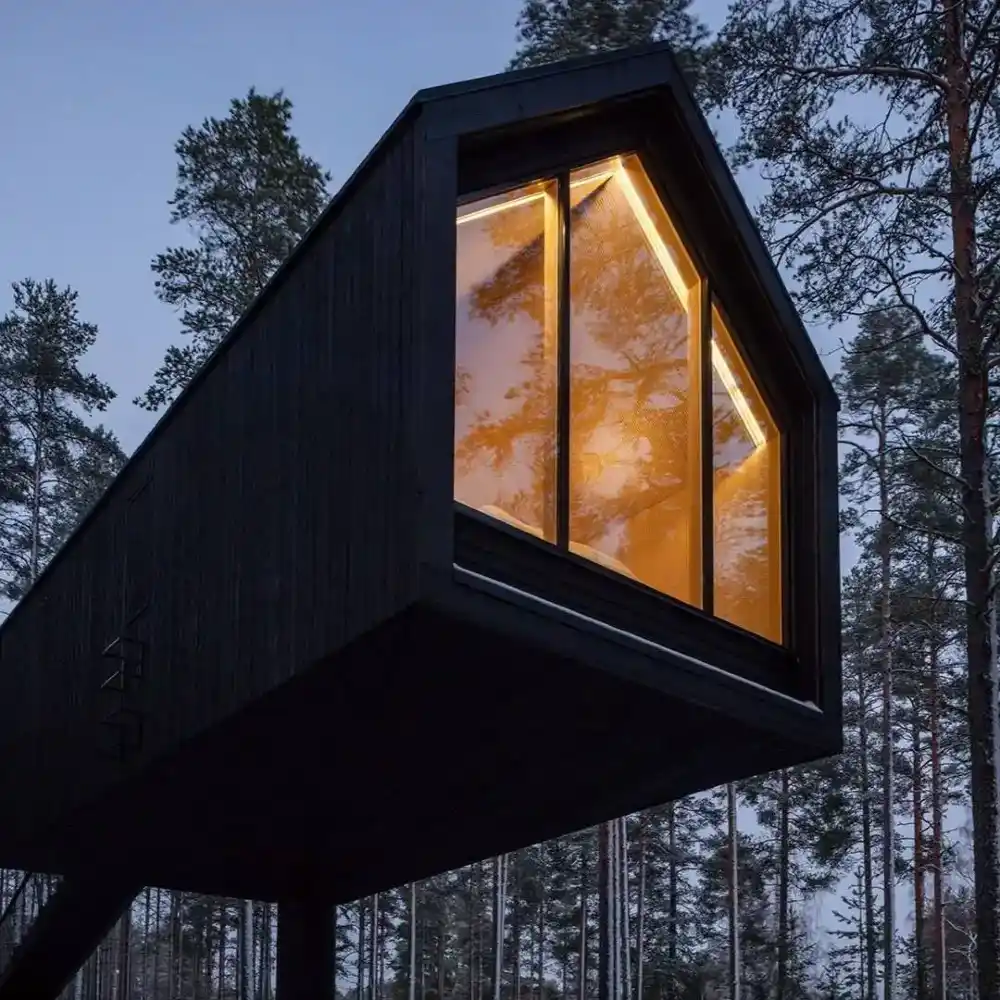
Inside the cabin, elevated design directly shapes the spatial experience. A full-height glazed façade opens the interior toward the surrounding forest, framing the landscape as a living artwork and flooding the space with natural light.
The compact interior layout is organised around a central core that integrates essential functions such as storage, kitchen elements, and bathroom facilities. This efficient planning allows the perimeter to remain open, enhancing the feeling of floating among the trees.
Despite its small size, the cabin offers year-round comfort, proving that elevated cabins can be both experiential and practical.
Elevated Cabins as the Future of Nature Accommodation
As demand grows for sustainable travel and immersive nature stays, elevated cabin design is increasingly seen as a future-proof solution for resorts and remote retreats. Niliaitta was developed as a prototype for a larger cabin resort concept, demonstrating how repeatable elevated units can be placed in sensitive environments without compromising ecological values.
For guests, elevated cabins offer:
- Privacy without isolation
- Strong visual connection to nature
- A memorable, distinctive stay experience
For developers and designers, they provide a scalable model that balances architecture, sustainability, and economic viability.

Why the Niliaitta Cabin Stands Out in Elevated Cabin Design
Among contemporary elevated cabin projects, Niliaitta distinguishes itself through its clarity of concept and execution. It is not elevated for spectacle alone, but as a deliberate architectural response to landscape, tradition, and environmental responsibility.
By combining:
- Nordic vernacular inspiration
- Minimal structural intervention
- Thoughtful interior planning
Studio Puisto has created an elevated cabin design that serves as a benchmark for how modern cabins can coexist respectfully with nature.

Final Thought
The Niliaitta cabin shows that elevated cabin design is more than a visual trend — it is a meaningful architectural strategy. As forests, coastlines, and wilderness areas face increasing pressure, designs like this point toward a future where cabins touch the land lightly, while offering richer experiences for those who inhabit them.
For More Info: Studio Puisto

Related posts:
 Our Place Titanium Pro Cookware Review: NoCo Tech Tested
 A Modern A-Frame Cabin: Minimalist Living Lightly in the Forest
 Walipini Greenhouse: The Complete Guide to Year-Round Underground Growing
 10 Most Popular Gifts for Men in 2026 (That He’ll Actually Use)
 The Wearable Studio Revolution: How ARIatHOME Uses Technology to Build Global Community Through Street Music