
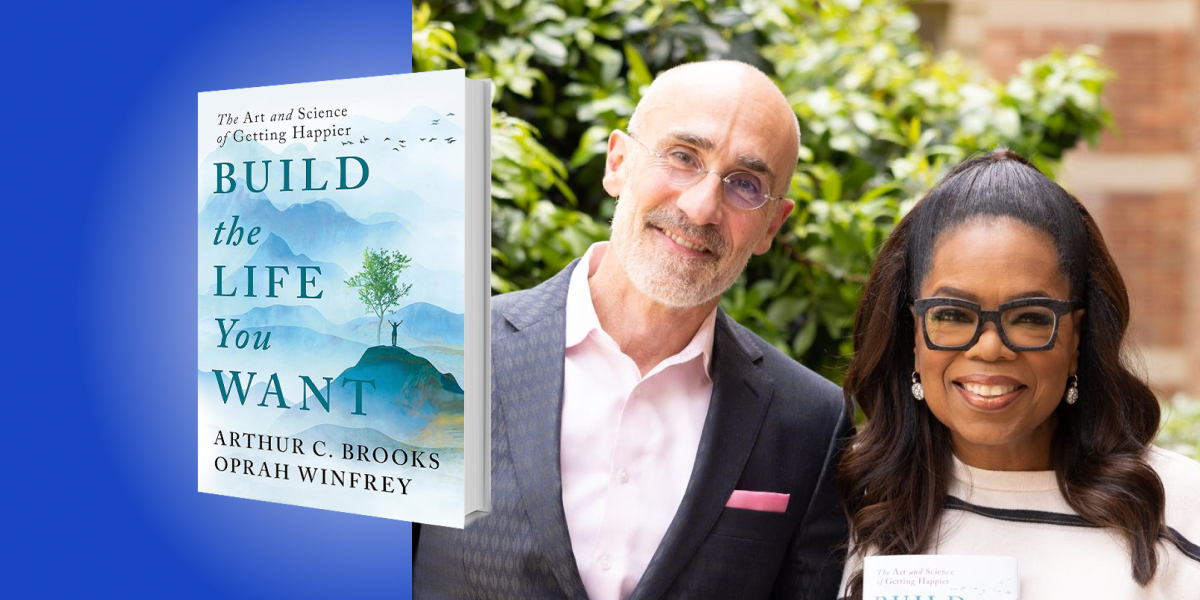
Most books about happiness make impossible promises. They suggest that if you just think positively enough, achieve enough success, or eliminate enough problems from your life, you’ll finally be happy. “Build the Life You Want: The Art and Science of Getting Happier” by Arthur C. Brooks and Oprah Winfrey takes a radically different approach—one grounded in neuroscience, psychology research, and the hard-won wisdom of people who’ve faced genuine difficulty.
This isn’t a book about achieving permanent bliss. It’s a manual for getting progressively happier even while dealing with the inevitable challenges every human life contains. The core insight is revolutionary in its simplicity: happiness is not a destination you reach but a direction you move in, and unhappiness is not the enemy preventing your progress.
For anyone who’s struggled with the feeling that something must be wrong with them because they haven’t figured out how to be happy, this book offers something more valuable than false promises. It offers a framework for understanding how happiness actually works and practical tools for building more of it into your life.
Arthuc C Brooks & Oprah – The Authors: An Unusual Collaboration
Arthur C. Brooks is a Harvard professor who teaches courses on happiness and leadership. He writes the popular “How to Build a Life” column for The Atlantic and is the author of several bestselling books, including “From Strength to Strength.” Despite his expertise in happiness science, Brooks is candid that his baseline well-being is significantly lower than average. He studies happiness precisely because it’s difficult for him.
Oprah Winfrey needs little introduction, but her contribution to this book goes beyond her fame. After twenty-five years of hosting The Oprah Winfrey Show, she had a front-row seat to every type of human happiness and unhappiness imaginable. She witnessed people devastated by tragedy and people who found joy despite having every reason not to. She saw the common thread: the desire for happiness combined with confusion about what happiness actually is.
Their collaboration brings together rigorous research with human wisdom, scientific findings with real-life application. The result is a book that’s both intellectually sophisticated and immediately practical.
The Central Premise: Happiness Is a Direction, Not a Destination
The first myth Brooks and Winfrey demolish is that you can “be happy” in some permanent, stable sense. This is like searching for El Dorado, the fabled city of gold no one has ever found. If the secret to total happiness existed, we would have discovered it by now. It would be taught in schools, sold everywhere, provided by governments.
The fact that we’ve figured out fire, the wheel, space travel, and the internet but still haven’t mastered happiness tells you something crucial: complete happiness in this life is impossible. This sounds like bad news, but it’s actually liberating. It means you can stop searching for the lost city that doesn’t exist and stop wondering what’s wrong with you because you haven’t found it.
Instead of complete happiness, Brooks and Winfrey offer something achievable: getting happier. No matter where you are in life, you can become happier. Then happier still. Then happier after that. This directional approach transforms the entire project. You’re not waiting to arrive at some perfect state. You’re building incremental improvements that compound over time.
The second myth they destroy is that your problems prevent you from getting happier. Many people believe they’d be happy if only their circumstances changed—if they found the right partner, got the promotion, lost the weight, resolved the conflict. But positive circumstances don’t create lasting happiness, and negative circumstances don’t make happiness impossible.
You can get happier even while dealing with problems. In some cases, you can get happier because of problems, since difficulty can become a source of meaning and growth when approached correctly.
The Three Macronutrients of Happiness
Brooks and Winfrey define happiness not by how it feels but by its component parts. Just as food consists of carbohydrates, protein, and fat, happiness consists of enjoyment, satisfaction, and purpose. You need all three in balance.
Enjoyment is different from pleasure. Pleasure is animal—eating, sex, acquiring resources. It activates primitive reward circuits in your brain. Enjoyment takes pleasure and adds communion and consciousness. Thanksgiving dinner brings pleasure when it tastes good. It brings enjoyment when you share it with loved ones and create meaningful memories.
Never settle for pleasure, the authors insist. Always transform it into enjoyment. This requires effort—sharing experiences with others, being present rather than distracted, choosing activities that engage both your reward circuits and your conscious awareness. All addictions involve pleasure without enjoyment.
Satisfaction is the thrill of accomplishing goals you worked for. Getting an A after studying hard. Earning a promotion through years of dedication. Finishing a marathon. Buying a house. Satisfaction is wonderful but elusive. First, it requires suffering—if you don’t struggle for something, achieving it brings no satisfaction. Second, it doesn’t last. You adapt quickly to success and need the next achievement to feel satisfied again.
This is the hedonic treadmill that keeps people perpetually striving. Understanding this pattern helps you pursue achievement without expecting the satisfaction to be permanent. Don’t wait until you hit milestones to be happy. The satisfaction won’t last long enough to justify the wait.
Purpose is the most important macronutrient. You can manage without enjoyment for a while, even without much satisfaction. Without purpose, you’re utterly lost. Purpose is the sense that your life means something beyond immediate pleasure or achievement. It’s what allows you to face difficulty with hope and inner peace.
Paradoxically, people often find purpose in their suffering. Viktor Frankl, the psychiatrist who survived Nazi concentration camps, wrote that how you accept your fate and suffering gives you the opportunity to add deeper meaning to your life even under terrible circumstances. The strategy of eliminating suffering to get happier is futile. Instead, find the why that makes suffering meaningful.
Managing Emotions Through Metacognition
One of the book’s most powerful sections deals with emotional self-management. Brooks and Winfrey explain that your emotions are signals to your conscious brain that something requires your attention and action. That’s all they are. Your conscious brain, if you choose to use it, gets to decide how you’ll respond.
This is metacognition—thinking about your thinking, observing your emotions as if they’re happening to someone else. Viktor Frankl, despite enduring brutality in concentration camps, recognized a fundamental truth: while everything can be taken from you, one freedom remains—to choose your attitude in any circumstance, to choose your own way.
Between stimulus and response exists a space. In that space lies your power. Most people conflate feeling with acting. They feel angry and immediately act angry. They experience fear and let it dictate their choices. Metacognition creates separation between emotion and behavior.
Your emotions arise from your limbic system in about 0.074 seconds, flooding you with feelings designed to trigger immediate fight-or-flight responses. This saved your ancestors from predators. Today, it activates over email criticism and traffic incidents. The solution isn’t eliminating emotion—it’s engaging your prefrontal cortex to respond wisely rather than react blindly.
The authors offer concrete practices: when angry, count to thirty while imagining the consequences of what you want to say. Journal your emotions to force translation from inchoate feelings into specific thoughts. Keep a database of positive memories to interrupt destructive thought patterns. Look for meaning and learning in painful experiences.
These aren’t abstract concepts. They’re techniques that create measurable changes in emotional regulation and well-being when practiced consistently.
Choosing Better Emotions Through Substitution
Sometimes you can’t change your circumstances, but you can change which emotion occupies your attention. Brooks and Winfrey use the metaphor of emotional caffeine. Caffeine doesn’t energize you—it blocks adenosine receptors that make you feel tired. Similarly, certain positive emotions can occupy the neural space that negative emotions would otherwise fill.
Gratitude is the most effective emotional substitute. Your brain has negativity bias—you focus on threats more than opportunities because missing threats once meant death. Today, this misfires constantly. You obsess over one criticism in a glowing review. You remember the rude stranger but forget the kind friend.
Gratitude strategically occupies negative emotion receptors, turning down the noise so you can see reality more clearly. Research shows that deliberately focusing on things you’re grateful for creates more than five times the positive emotion compared to control groups. The key is making it a practice, not waiting to feel grateful.
The authors recommend a specific protocol: write five things you’re authentically grateful for on Sunday night. Study this list for five minutes each evening during the week. Update it each Sunday. After five weeks, assess the changes in your attitude and negativity levels. Research consistently shows significant improvement.
Hope versus optimism is another crucial distinction. Optimism is believing things will turn out well. Hope is the conviction that you can act to make things better. One is passive prediction. The other is active commitment.
During the Vietnam War, Vice Admiral James Stockdale noticed that the most optimistic prisoners often died first. They kept predicting release by Christmas, Easter, Thanksgiving. Each disappointed expectation broke their hearts. Those who survived weren’t optimistic about circumstances but hopeful about their capacity to endure and act.
Hope involves personal agency. Research shows it predicts achievement better than intelligence or prior performance. Hope makes you uncomfortable until you do something. Optimism can make you feel good while doing nothing.
Humor works like emotional anesthetic, temporarily blocking pain and creating space for perspective. Research on humor therapy shows 42 percent increases in happiness after eight weeks. Giovanni Boccaccio’s “The Decameron,” a book of comedic stories, became massively popular during the Black Death—people needed laughter to survive the plague.
The type of humor matters. Humor that doesn’t belittle others correlates with self-esteem and life satisfaction. Humor that attacks creates the opposite pattern. Interestingly, being funny doesn’t increase happiness—consuming humor does. You don’t need to tell jokes. You just need to appreciate them and laugh.
Understanding Your Emotional Profile
Brooks and Winfrey introduce the PANAS (Positive and Negative Affect Schedule) test, which reveals a crucial truth: happiness and unhappiness aren’t opposites on a single spectrum. They’re separate dimensions that can exist simultaneously.
You’re measured on both positive and negative affect, placing you in one of four profiles:
Mad Scientists experience high positive and high negative affect. Life feels intense. You react strongly to everything. You might exhaust others with your emotional volatility, but you also bring energy and passion.
Judges experience low positive and low negative affect. You’re steady, cool, measured. Perfect for high-stakes situations requiring calm, but you might seem unenthusiastic to loved ones who want more visible emotion.
Cheerleaders experience high positive and low negative affect. You celebrate the good and don’t dwell on the bad. People love being around you, but you might avoid necessary difficult conversations.
Poets experience low positive and high negative affect. You see problems before others do and trend toward melancholy. Your skepticism can save others from disasters they don’t see coming.
Most people wish they were Cheerleaders. But the world needs all four profiles. The key isn’t changing your fundamental temperament but understanding it well enough to manage its challenges and leverage its strengths.
The Essential Role of Unhappiness
Perhaps the book’s most counterintuitive insight is that unhappiness isn’t your enemy. Negative emotions are essential to survival, growth, and even happiness itself. Your brain reserves specific space to process negative emotions because they keep you alive.
Negativity bias helps you identify and avoid threats. Regret, when used properly, helps you learn from mistakes rather than repeat them. Sadness focuses your attention on what needs healing. Anxiety keeps you prepared for genuine dangers.
Research shows that the “second-happiest” group often performs better than the happiest. Too much positive emotion leads to ignoring risks and making dangerous choices. You need enough negative emotion to assess threats and stay motivated.
All three macronutrients of happiness contain unhappiness. Enjoyment requires forgoing easy pleasures. Satisfaction demands struggle. Purpose usually involves suffering for something beyond yourself. Getting happier requires accepting unhappiness as an essential part of a full human life.
Building What Matters
The second half of the book focuses on the four pillars that support lasting well-being: family, friendship, work, and faith or philosophy. These aren’t abstract ideals—they’re concrete areas where you invest time and energy to build the life you want.
Brooks and Winfrey emphasize that these relationships and commitments require continuous effort. Your family isn’t perfect. Your friendships will face challenges. Your work will be difficult. Your faith or philosophy will be tested. But building in these areas creates the foundation for sustained happiness that achievements and circumstances can’t provide.
The book provides specific guidance for strengthening each pillar, recognizing that modern life often undermines them. Technology substitutes shallow connections for deep ones. Work demands crowd out time for relationships. Consumer culture promises fulfillment through purchase rather than through meaning and service.
Who This Book Is For
“Build the Life You Want” is for anyone who suspects that the conventional wisdom about happiness is wrong. It’s for people who’ve achieved external success but still feel hollow. It’s for those struggling with circumstances that seem incompatible with well-being. It’s for anyone tired of self-help promises that don’t deliver.
The book is particularly valuable for people who prefer evidence over anecdote, research over platitudes, and practical techniques over vague inspiration. Brooks brings scientific rigor. Oprah brings lived wisdom and the ability to translate research into accessible insights.
It’s also for people willing to do actual work. This isn’t a book you read once for motivation. It’s a manual you return to repeatedly as you build practices that change how you relate to your emotions, circumstances, and life trajectory.
The Practical Payoff
What actually changes when you apply these principles? You stop catastrophizing minor problems. You make better decisions because you’re not constantly stressed. Your relationships improve because you’re not consumed by complaint and criticism. You handle setbacks without being derailed.
Most importantly, you stop waiting for the right circumstances before allowing yourself to work on happiness. You recognize that you can get happier right now, today, regardless of what’s wrong in your life. This shift from conditional (“I’ll be happy when…”) to directional (“I’m getting happier by…”) is transformative.
Brooks and Winfrey don’t promise that their approach will solve all your problems. They promise something better: that it will change how you carry your problems, making even difficult lives more bearable and good lives genuinely enjoyable.
Why This Book Matters Now
We’re living in an age of unprecedented material abundance and widespread unhappiness. Depression and anxiety rates are climbing, especially among young people. Social media creates constant comparison and inadequacy. Political polarization makes everything feel apocalyptic. The promise of happiness through achievement, consumption, or perfect circumstances has failed spectacularly.
“Build the Life You Want” offers an alternative grounded in reality rather than fantasy. It acknowledges that life contains unavoidable difficulty while insisting that well-being remains possible through how you manage emotions, build meaning, and invest in what matters.
The book’s greatest gift might be permission to stop fighting against your own humanity. You don’t have to eliminate negative emotions, achieve perfect circumstances, or reach some static state of bliss. You just have to understand how happiness actually works and take small steps in the right direction, again and again, for the rest of your life.
That’s enough. That’s the life you can build.
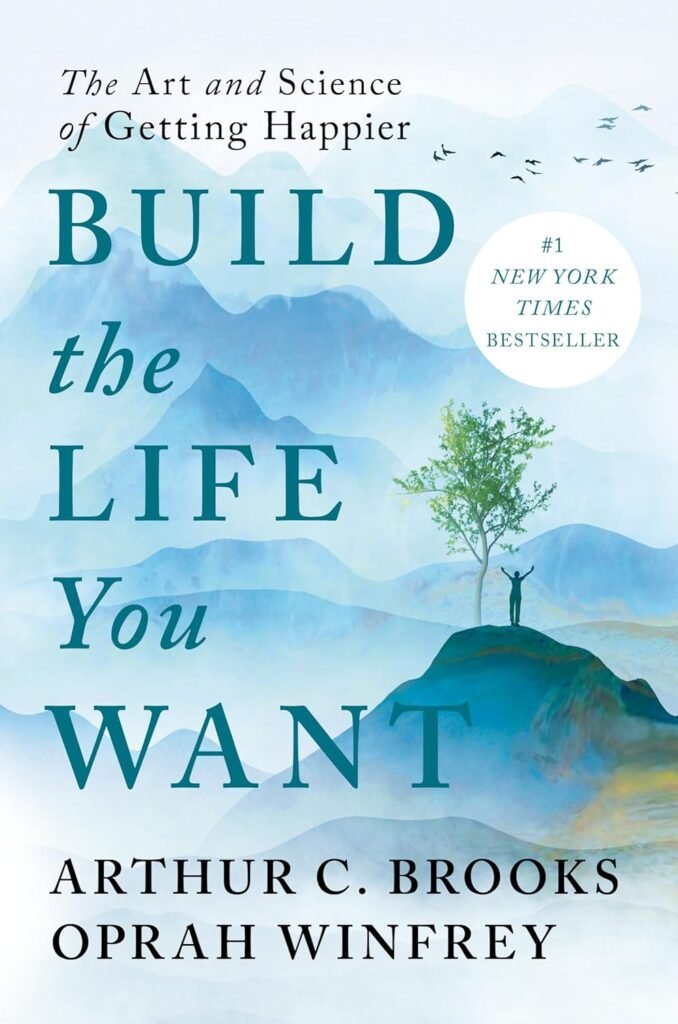
“Build the Life You Want: The Art and Science of Getting Happier” by Arthur C. Brooks and Oprah Winfrey combines cutting-edge research with practical wisdom to provide a comprehensive guide to genuine, sustainable well-being.
Related posts:
 The Productive Power of Sadness, Fear, and Regret: Why You Need Negative Emotions
 The Happiness Formula: Balancing Enjoyment, Satisfaction, and Purpose
 The Four Emotional Types: Which One Are You and Why It Matters
 How to Use Humor to Manage Stress and Build Resilience
 The Neuroscience of Gratitude: How to Rewire Your Negativity Bias