You’ve probably taken personality tests before. Myers-Briggs. Enneagram. StrengthsFinder. Most of them try to put you in a box and tell you who you are. In “Build the Life You Want,” Arthur C. Brooks and Oprah Winfrey offer something different: a simple framework for understanding your natural emotional baseline that doesn’t judge or prescribe, but instead reveals how to work with the unique temperament you’ve been given.
The Positive and Negative Affect Schedule (PANAS) reveals your emotional profile by measuring how intensely and frequently you experience positive and negative emotions. Most importantly, it shatters a dangerous myth: that happiness and unhappiness are opposites on a single spectrum. They’re not. They’re separate dimensions that can exist simultaneously.
This changes everything about how you approach building a better life.
The Revolutionary Insight: Happiness and Unhappiness Coexist
For most of the twentieth century, psychologists assumed happiness and unhappiness existed on a continuum. If you felt less bad after a loss, you naturally felt more good. If your happiness was decreasing, your unhappiness was increasing.
Modern research proves this fundamentally wrong. Positive and negative emotions are separable. You can experience both simultaneously or in rapid succession. Some neuroscientists believe they largely correspond to activity in different hemispheres of the brain, with negative emotions aligning with the left side of the face and positive with the right.
Brooks and Winfrey explain that when people assess their emotional state, they usually blend positive and negative into a general sense of “good” or “bad.” But when asked to separate them, people can identify their emotions with about 90 percent accuracy. In one study, people reported purely positive feelings 41 percent of the time, purely negative 16 percent of the time, and mixed feelings the remaining 33 percent.
What does this mean practically? You can have high happiness and high unhappiness at the same time. The two don’t depend on each other. You don’t have to eradicate unhappiness before you start getting happier.
This is liberating. If you’ve been waiting for your negative emotions to disappear before you can experience positive ones, you’ve been waiting for something impossible. You can start building happiness immediately, even while dealing with legitimate difficulties.
The Four Profiles: Which One Are You?
The PANAS test places you in one of four quadrants based on whether you experience above or below-average positive and negative affect. Brooks and Winfrey give each profile a memorable name that captures its essence.
Mad Scientists experience above-average positive and above-average negative affect. You’re always spun up about something. Life feels intense. You react strongly to both good and bad news. You might be the life of the party, but you can also exhaust those around you with your emotional intensity.
Judges experience below-average positive and below-average negative affect. You’re sober, cool, measured. You don’t get too excited about good things or too upset about bad ones. You’re perfect for high-stakes situations that require keeping your head—surgeon, crisis manager, anyone raising teenagers.
Cheerleaders experience above-average positive and below-average negative affect. You celebrate the good in everything and don’t dwell on the bad. You’re optimistic, enthusiastic, quick to see silver linings. People generally love being around you.
Poets experience below-average positive and above-average negative affect. You have trouble enjoying good things and always know when there’s a threat lurking. You’re the person who sees problems before others do. You might trend toward melancholy, but your skepticism can save others from disasters they don’t see coming.
Most people wish they were Cheerleaders. Brooks and Winfrey insist: the world needs all four profiles. If everyone saw only the bright side of everything, we’d keep making the same catastrophic mistakes. Poets provide necessary perspective and creativity. Mad Scientists bring energy and innovation. Judges maintain stability and sound judgment.
Your profile is a gift. But no matter what your profile is, you have room to increase happiness in your life.

Working With Your Profile, Not Against It
The power of knowing your emotional profile isn’t that it gives you an excuse for your behavior. It’s that it shows you where you need to focus your self-management efforts.
If you’re a Mad Scientist, you’ll react very strongly—both positively and negatively—to events in your life. This makes you engaging and fun, but it can exhaust loved ones and coworkers. You need to work on managing your intense emotional responses. Learn to pause before reacting. Recognize that not everything deserves your maximum energy. Practice bringing more moderation to your expressions of both excitement and distress.
If you’re a Judge, you’re steady and reliable. But with friends and loved ones, you might seem too unenthusiastic. They share exciting news and you respond with measured calm. They’re upset and you stay collected. Work on mustering more visible passion than comes naturally. Not because you need to feel more intensely, but because others need to see that you’re engaged with what matters to them.
If you’re a Poet, your ability to see problems before others is valuable. When everyone says everything’s great, you say “not so fast.” This can literally save lives or prevent disasters. But it can make you pessimistic and hard to be around. You need to deliberately brighten your assessments and resist catastrophizing. Practice finding one positive aspect of situations that worry you. Your skepticism is an asset—your default assumption that everything will go wrong is not.
Even Cheerleaders need emotional self-management. Everyone loves being a Cheerleader, but you probably avoid bad news and struggle to deliver it. This isn’t always good. You need to work on giving people the truth even when it’s uncomfortable. Learn to say “this isn’t going to be all right” when it’s accurate. Your optimism is powerful—your avoidance of necessary difficulty undermines it.
Why Men Struggle With Self-Knowledge
Men face particular obstacles to understanding their emotional profiles. We’re socialized to suppress emotional awareness in favor of action and achievement. Asking “how do I naturally feel?” seems beside the point when you’re focused on what you accomplish.
This creates a dangerous blindness. You end up managing your life without understanding your basic operating system. It’s like trying to optimize a machine’s performance without knowing its specifications.
A Poet trying to force himself to be a Cheerleader will fail and feel defective. A Mad Scientist trying to suppress his intensity will just create internal pressure that eventually explodes. A Judge trying to fake enthusiasm will come across as inauthentic. A Cheerleader forcing himself to dwell on negatives will lose his natural gift for encouragement.
The path forward isn’t changing your profile. It’s understanding it well enough to work with it strategically.
The Hidden Upside of Each Profile
Brooks and Winfrey emphasize that each profile has strengths that become clear when you stop wishing you were something else.
Mad Scientists bring energy and passion to everything they do. When that energy is channeled constructively, it’s infectious and inspiring. You make things happen. You get people excited. You’re fully alive. The key is learning when to dial it up and when to dial it back.
Judges bring stability and clear thinking to chaotic situations. When others are panicking, you’re assessing options. When emotions are running high, you’re seeing patterns. This is invaluable in leadership, crisis management, and any situation requiring sound judgment under pressure. The key is learning to show warmth even when you don’t feel intense emotion.
Cheerleaders bring hope and encouragement that lifts entire communities. Your ability to see the positive isn’t naïveté—it’s a genuine gift that helps others persevere through difficulty. You make hard things seem possible. The key is balancing your optimism with honest acknowledgment when things actually aren’t okay.
Poets bring depth, creativity, and crucial early warnings about problems. Your melancholy isn’t weakness—it’s sensitivity to nuance and complexity that others miss. You create art, anticipate danger, and force necessary conversations. The key is not letting your awareness of problems prevent you from appreciating what’s good.
Taking the PANAS Test
The test is straightforward. When you’re in a relatively neutral state—not unusually stressed or happy—rate how deeply you feel twenty specific emotions on a scale of 1 (very slightly or not at all) to 5 (extremely).
Ten emotions measure positive affect: interested, excited, strong, enthusiastic, proud, alert, inspired, determined, attentive, active.
Ten measure negative affect: distressed, upset, guilty, scared, hostile, irritable, ashamed, nervous, jittery, afraid.
Sum your scores for each category. The average for positive affect is about 35. For negative affect, about 18. Where you fall relative to these averages determines your profile.
Most people aren’t at the average on both dimensions. You’ll likely fall into one of the four quadrants. This isn’t good or bad. It’s information about how you naturally experience the world emotionally.
What Changes When You Know
Understanding your profile changes how you interpret your experiences. You stop thinking something’s wrong with you because you don’t react like others do. You recognize that your emotional responses are neither virtuous nor deficient—they’re just your particular configuration.
This knowledge also transforms your relationships. When you understand that your partner or friend or colleague has a different emotional profile, you stop taking their responses personally. The Judge isn’t cold or uncaring—they’re just naturally less effusive. The Mad Scientist isn’t unstable—they’re just more reactive. The Poet isn’t trying to ruin your good mood—they’re just wired to see threats.
Most relationship conflicts stem from people assuming others should feel and react the way they do. Understanding emotional profiles dissolves this assumption. Different doesn’t mean wrong.
For men specifically, this framework provides permission to be who you actually are rather than who you think you should be. Maybe you’re a Poet in a culture that values Cheerleaders. That’s fine. Your melancholy has value. Maybe you’re a Judge in a social context that rewards Mad Scientists. That’s fine too. Your measured responses have their place.
The Practical Application
Brooks and Winfrey don’t just want you to understand your profile. They want you to use it to get happier. Here’s how:
First, identify which quadrant you fall into. Be honest about your natural tendencies rather than describing who you wish you were.
Second, recognize the specific challenges your profile creates. Where do your natural patterns cause problems in your work, relationships, or inner life?
Third, develop targeted practices to manage those challenges. Don’t try to change your fundamental temperament. Instead, build skills that let you operate more effectively within it.
Fourth, appreciate your profile’s gifts. Stop apologizing for how you naturally are. Start leveraging your particular strengths strategically.
Fifth, extend the same understanding to others. When someone reacts very differently than you would, consider their profile rather than judging their response.
This is emotional intelligence in practice: understanding how emotions work, both in yourself and others, and using that understanding to build better lives and relationships.
You are who you are. The question is whether you’ll know yourself well enough to work with your nature rather than against it.
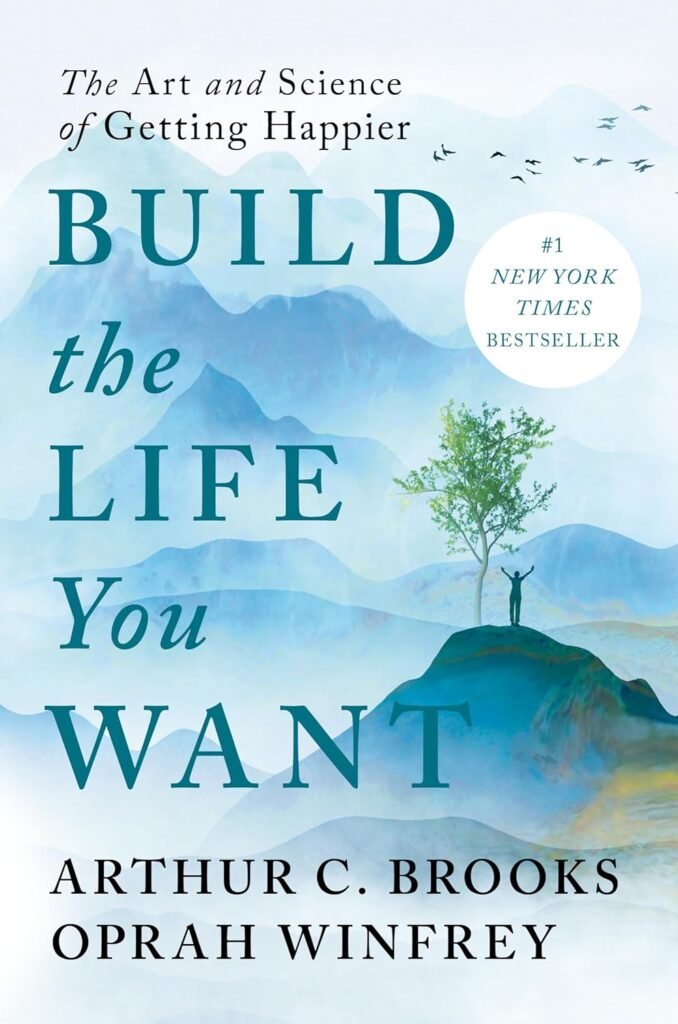
“Build the Life You Want: The Art and Science of Getting Happier” by Arthur C. Brooks and Oprah Winfrey provides practical frameworks for understanding your emotional nature and building genuine well-being.
Related posts:
 Build the Life You Want by Arthur Brooks & Oprah: Summary
 The Productive Power of Sadness, Fear, and Regret: Why You Need Negative Emotions
 The Root of All Negative Emotions (And Why Fighting Them Never Works)
 How to Use Humor to Manage Stress and Build Resilience
 The Happiness Formula: Balancing Enjoyment, Satisfaction, and Purpose