
Uncover why people insult each other: Hidden motivations like status insecurity, narcissism, displaced aggression, and pain projection from William Irvine’s ‘A Slap in the Face.’ Gain Stoic strategies to respond wisely and break the cycle for emotional freedom.
You’ve probably noticed that insults flow more freely when someone feels their status threatened. The colleague who undermines you in meetings is often the one most anxious about their own position. The friend who makes cutting comments about your success might be struggling with their own feelings of inadequacy. The stranger who rages at minor slights is often fighting battles that have nothing to do with you.
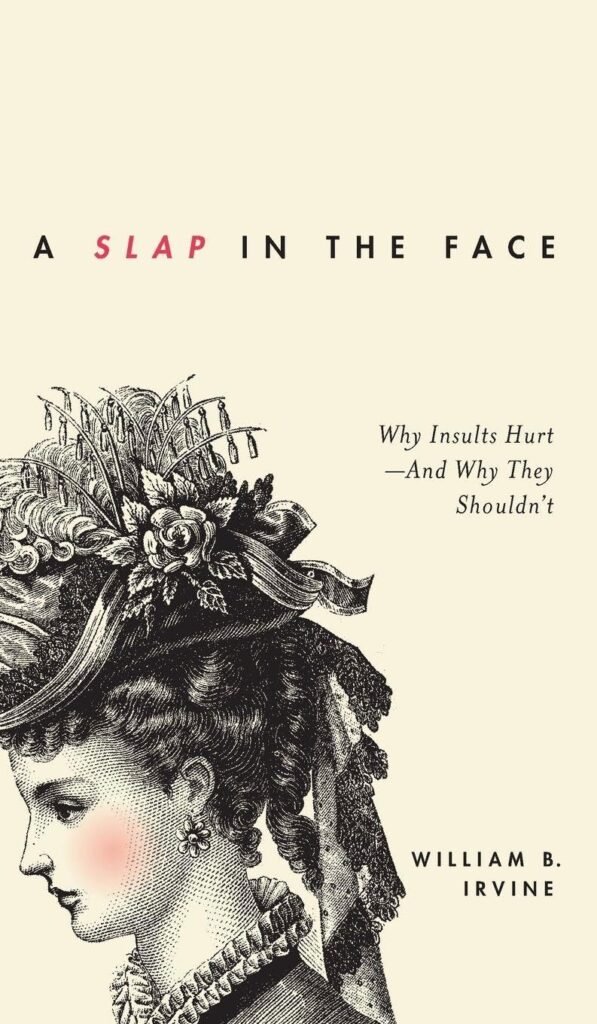
In “A Slap in the Face: Why Insults Hurt—And Why They Shouldn’t,” William B. Irvine explores why humans use insults in the first place. The answer reveals uncomfortable truths about human nature and social dynamics. Understanding these motivations doesn’t excuse cruel behavior, but it does provide insight into the psychological machinery driving it—insight that can free you from taking insults personally.
Because here’s the secret most people don’t realize: insults usually reveal far more about the insulter than about their target.
The Pecking Order Problem
Irvine begins with a fundamental observation about human nature. We are social creatures who cannot survive in isolation. But once we’re among other people, something curious and problematic happens: we immediately begin sorting ourselves into hierarchies. This isn’t a conscious choice or a moral failing. It’s hardwired into our social psychology, inherited from millions of years of primate evolution.
If we were chickens, we’d establish the pecking order through actual pecking. The dominant chicken attacks subordinates. The subordinate chickens submit to those above them and peck those below. Physical dominance determines social position. But humans evolved oversized brains and sophisticated language. We don’t need to use teeth or fists to establish hierarchies. We can use words.
Insults are verbal dominance displays. When someone insults you, they’re attempting to establish or reinforce their superior position relative to yours. The insult is a bid for status—an attempt to lower you so they can feel elevated in comparison. This happens mostly outside conscious awareness. The insulter probably doesn’t think, “I need to establish dominance through a verbal attack.” They just feel the impulse to put you down and follow it.
Status Insecurity as the Root Cause
Irvine argues that most insults stem from status insecurity. People secure in their social position rarely feel compelled to attack others verbally. They don’t need to. But people anxious about their standing, worried about losing status or failing to gain it, frequently use insults as preemptive strikes or defensive measures.
Think about when you’re most likely to insult someone. It’s rarely when you feel completely confident and secure. It’s when you feel threatened, diminished, or uncertain about your position. The criticism from your boss makes you snap at your partner. The friend’s success triggers snide comments about their luck rather than their skill. The stranger who cuts you off in traffic receives a torrent of abuse because they’ve committed what feels like a status violation—they’ve acted as if their time is more valuable than yours.
This doesn’t make the insults acceptable, but it explains them. The person lashing out isn’t responding to you as an individual but to a perceived threat to their standing. You just happened to be the available target when their status anxiety spiked.
The Narcissism Connection
Irvine discusses psychological research showing that narcissists insult others more frequently than non-narcissists. This seems paradoxical—aren’t narcissists supremely confident? But as explored in the previous article, narcissism isn’t confidence. It’s fragile grandiosity requiring constant reinforcement.
Narcissists maintain their inflated self-image partly by putting others down. When they insult you, they’re not responding to anything you actually did. They’re shoring up their precarious sense of superiority by establishing contrast. You’re bad/stupid/worthless, therefore they’re good/smart/valuable. The insult serves their internal psychological needs rather than reflecting any honest assessment of you.
This is why arguing with narcissists about their insults rarely works. You’re trying to have a rational conversation about your actual qualities, while they’re using you as a prop in their internal drama about maintaining grandiosity. Your actual worth is irrelevant to them. They need you to be inferior so they can feel superior.
Anger and Displaced Aggression
Not all insults come from cold calculations about status. Many emerge from anger that has little to do with the target. Irvine explores how displaced aggression works: you’re angry about situation A, but you can’t safely express that anger at its source, so you redirect it at person B who happens to be available and vulnerable.
The employee who can’t confront their abusive boss comes home and lashes out at family. The parent stressed by financial problems snaps at their children over minor infractions. The person humiliated at work takes out their rage on service workers who are socially obligated to absorb the abuse. The insult isn’t really about the target. They’re just convenient recipients of misdirected anger.
Understanding this doesn’t require you to accept mistreatment. But it does help you recognize that someone’s verbal attack probably has little to do with who you actually are. They’re using you as a dumping ground for feelings they can’t process or express more appropriately. Their insult is their problem, not an accurate assessment of your worth.
The Pain Projection Pattern
Irvine discusses a particularly insidious motivation for insulting others: some people hurt others because they themselves are hurting. It’s not that misery loves company; it’s that misery seeks to create company. If I’m in pain and I make you feel pain too, I’ve momentarily equalized our positions. I’m no longer alone in my suffering.
This dynamic explains why people sometimes insult others behind their backs and then report those insults directly. Irvine describes the “free lunch” phenomenon: you hear someone insult your mutual friend and you relay that insult to the friend. The original insulter gets the satisfaction of causing pain without facing consequences. You get to wound someone while claiming innocence—you were just the messenger.
But your motivation in relaying the insult matters enormously. Are you genuinely warning your friend about someone they shouldn’t trust? Or are you enjoying their pain while maintaining the moral high ground of not being the original insulter? This kind of secondhand insult delivery is often more malicious than the original comment because it’s deliberately calculated to inflict maximum pain.
Control and Power Dynamics
Insults are tools of control. In relationships with power imbalances—boss/employee, parent/child, abusive partner/victim—insults function to maintain the hierarchy and keep the subordinate person in their place. The insult reminds them of their inferior position and discourages any challenge to the existing structure.
Irvine notes that this kind of systematic insulting often escalates gradually. It starts with minor put-downs, then increases in frequency and severity. The target’s self-esteem erodes incrementally, making them less likely to resist or leave. The insulter maintains control by keeping the target off-balance and insecure.
This is why insults in abusive relationships are so damaging and why they persist even when the target “should” recognize what’s happening. The insults are strategic psychological warfare, not honest assessments of the target’s qualities. They’re designed to create dependency and prevent escape by destroying the target’s sense of worth.
Testing Boundaries and Relationships
Not all motivations for insulting are entirely negative. Irvine explores how insults sometimes function as relationship tests. When you insult someone mildly, you’re testing the strength of your bond. If they laugh it off or fire back playfully, you’ve confirmed the relationship is secure. If they take offense, you’ve learned the boundaries aren’t what you thought.
Teenagers excel at this kind of testing. They insult their friends constantly, probing the limits of what’s acceptable, establishing and reinforcing social bonds through mock aggression. The ability to insult and be insulted without actual hurt signals intimacy and trust. The group that can’t engage in this kind of teasing is actually less bonded than the one that can.
But this testing becomes problematic when the relationship isn’t actually secure enough to support it. The new coworker trying to build rapport through insult-humor might be violating boundaries they don’t yet have permission to cross. The person who mistakes acquaintanceship for close friendship and delivers insults that don’t land playfully has misjudged the relationship.
Cultural Norms and Insult Behavior
What counts as an insult varies dramatically across cultures, and Irvine emphasizes how cultural context shapes insulting behavior. In some cultures, direct confrontation and verbal aggression are normalized and even valued as signs of strength. In others, maintaining harmony and avoiding direct criticism are paramount, making indirect insults the preferred method.
Failure to understand these cultural differences creates endless opportunities for offense. The American who directly criticizes a Japanese colleague’s work thinks they’re being helpfully straightforward. The Japanese colleague experiences it as a devastating public humiliation. The British person employing subtle sarcasm might be delivering what they consider a severe insult while their American listener misses it entirely.
This cultural variation extends to how insults are received and whether revenge is expected. Some cultures maintain elaborate honor codes where insults must be answered or status is permanently lost. Others emphasize forgiveness and turning the other cheek. The person operating on one cultural script while their insulter operates on another will find conflict nearly inevitable.
The Role of Humor and Entertainment
Irvine acknowledges that some insults serve entertainment purposes. The roast, whether of celebrities or politicians, involves ritual insulting where everyone supposedly understands that no genuine offense is intended. The witty put-down at a dinner party might be performed partly for the enjoyment of observers, not primarily to wound the target.
But this entertainment function is morally complicated. The target of a roast might laugh along while genuinely hurt. The audience enjoying clever insults might not fully appreciate the psychological impact on the target. The social pressure to be “a good sport” can force people to endure insults they find painful while pretending amusement.
Irvine notes that historically, court jesters and comedians have had special license to insult even powerful figures. This served a social function—allowing criticism that would otherwise be dangerous—but it also created opportunities for cruelty disguised as entertainment. The question of where humor stops and genuine insult begins remains contested and contextual.
Suppressed Emotions and Passive Aggression
Some insults emerge not from conscious hostility but from suppressed emotions that leak out in indirect ways. The person who can’t acknowledge their resentment delivers backhanded compliments. The friend who can’t admit jealousy makes subtly undermining comments. The partner who won’t directly confront problems expresses anger through “jokes” that aren’t really funny.
Irvine describes these passive-aggressive insults as particularly difficult to address because the insulter can claim innocent intent. They were “just teasing” or “trying to be helpful” or “didn’t mean it that way.” The target knows something hurtful happened but struggles to articulate exactly what, making effective response nearly impossible.
This dynamic is exhausting for everyone involved. The passive-aggressive person doesn’t get their needs met because they can’t express them directly. The target experiences ongoing low-level hostility without clear cause. The relationship deteriorates without anyone addressing the real issues because they’re all hidden beneath plausibly deniable insults.
Self-Esteem Maintenance Through Comparison
Humans maintain self-esteem partly through social comparison. We evaluate ourselves relative to others rather than by absolute standards. This creates a problematic dynamic: making others look bad can make us feel better by comparison. Insulting someone who’s succeeding helps us feel less bad about not succeeding ourselves.
Irvine connects this to the broader social hierarchy game. When someone’s success threatens our position or highlights our failures, we’re tempted to diminish that success through insult. “They only got that promotion because of connections” feels better than acknowledging we might have been passed over based on merit. “She’s only thin because she’s obsessed” feels better than examining our own choices.
These comparative insults are defensive maneuvers against feeling inadequate. They don’t actually help us improve or succeed. They just temporarily relieve the discomfort of unfavorable comparison by attempting to drag the other person down to our level.
Tribal Identity and Out-Group Hostility
Insults function to reinforce tribal boundaries. We insult people who are different from us—different race, religion, nationality, political affiliation, social class—as a way of strengthening in-group cohesion. Irvine explains how this worked in ancestral environments: identifying and excluding threats to the tribe’s unity was adaptive. Today, the same psychology creates prejudice and intergroup hostility.
The insults directed at out-group members are particularly resistant to challenge because they serve such a powerful social function. They signal loyalty to your in-group. They establish your place within the tribal hierarchy. They create bonding through shared contempt for outsiders. Giving up these insults would mean loosening tribal ties that might feel essential to your identity and social standing.
This is why political insults are so vicious and why people often insult entire groups rather than individuals. The insult isn’t really about any individual member of the out-group; it’s about reinforcing us-versus-them boundaries and signaling which tribe you belong to.
The Personality of the Chronic Insulter
Irvine draws on psychological research to profile people who insult others frequently. They tend to have high status anxiety, low ability to regulate emotions, difficulty with empathy, and often a history of being insulted or abused themselves. The chronic insulter isn’t a confident person keeping others in line. They’re usually a wounded person spreading their pain.
This doesn’t excuse the behavior or mean you should tolerate being insulted. But it does suggest that the appropriate response isn’t taking the insult personally or assuming it reflects accurate assessment of you. The appropriate response is recognizing you’re dealing with someone who has significant psychological issues that manifest as attacking others.
Understanding this changes your relationship to insults. Instead of “What’s wrong with me that this person said this?” you can ask “What’s going on with them that they need to attack me?” The shift in perspective is liberating. Their insult becomes data about their internal state, not a truth about your worth.
Breaking the Cycle
Irvine emphasizes that we all have the capacity to insult others and all have done so. The question isn’t whether we’re good or bad people but whether we’re aware of our motivations and willing to change our behavior. Recognizing when you’re about to insult someone out of status anxiety, displaced anger, or insecurity is the first step toward choosing a different response.
This awareness is difficult because insulting others often happens automatically. You feel threatened and words come out before you’ve consciously processed what’s happening. Building the capacity to pause between impulse and action takes practice. But it’s possible to develop the habit of asking: “Why do I want to say this? What need is it serving? Is there a better way to address what I’m actually feeling?”
The goal isn’t to never criticize anyone or to eliminate all sharp humor from your interactions. It’s to distinguish between useful feedback offered kindly and attacks motivated by your own psychological needs. It’s to recognize when you’re using someone else as a prop in your internal drama rather than relating to them honestly.
The Liberation of Understanding
When you understand why people insult others, you gain tremendous freedom. The insult that would have ruined your day becomes almost amusing—look at this person’s status anxiety playing out in real time. The cutting comment from a family member becomes recognizable as their own pain projecting outward. The colleague’s undermining behavior reveals their career insecurity rather than your inadequacy.
This understanding doesn’t require you to accept mistreatment or maintain relationships with people who consistently hurt you. It just means you stop taking their words as accurate assessments of your worth. You recognize insults for what they usually are: symptoms of the insulter’s internal struggles, bids for status made from a position of anxiety, or tools of control deployed by people who feel powerless.
Irvine’s central message is that insults hurt because we grant them authority. When you understand the flawed, anxious, self-serving motivations behind most insults, you can revoke that authority. The words lose power not because you’ve built thicker skin but because you’ve seen through the game to the wounded people playing it.
The next time someone insults you, try this: instead of asking “Why did they say that about me?” ask “Why did they need to say that?” The shift from taking it personally to understanding it psychologically can transform your entire experience of the interaction. You might even feel compassion for the person who felt so insecure they needed to attack you.
That doesn’t mean you have to accept the behavior. But it does mean you’re no longer wounded by it. And that’s the kind of freedom the Stoics were pointing toward two thousand years ago—not freedom from encountering insults, but freedom from being diminished by them.
Related posts:
 33 Powerful Takeaways from William B. Irvine’s “A Slap in the Face” (Book Summary)
 A Slap in the Face by William B. Irvine: How Stoicism Makes You Immune to Insults
 How Stoic Philosophy Makes You Immune to Insults—Without Emotional Detachment
 Discover how to respond to insults effectively with 6 practical Stoic strategies from William B. Irvine’s ‘A Slap in the Face’
 Why Do Insults Hurt So Much: The Hidden Psychology Behind Words That Wound