
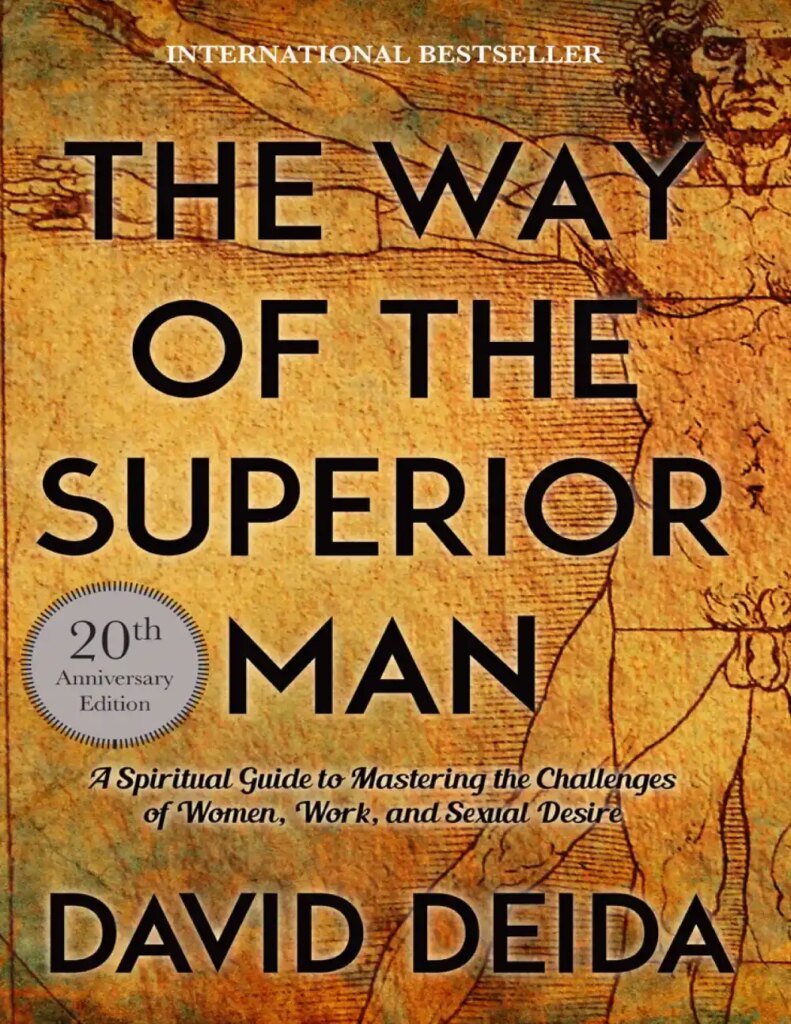
In a world where traditional masculine roles have dissolved and modern men struggle to find authentic direction, David Deida’s groundbreaking book “The Way of the Superior Man” offers a provocative roadmap for living with purpose, passion, and spiritual depth. First published in 1997 and recently updated for its 20th anniversary edition, this classic text has guided countless men toward integrating their masculine core with emotional openness and spiritual awakening.
Understanding the Superior Man’s Path
David Deida defines the “superior man” not as someone who dominates others, but as a man who lives from his deepest truth while maintaining fierce commitment to his purpose and relationships. This man is “unabashedly masculine—purposeful, confident, and directed, living his chosen way of life with deep integrity and humor—and he is sensitive, spontaneous, and spiritually alive, with a heart-commitment to discovering and living his deepest truth.”
The book dismantles the false choice between the “macho jerk” archetype and the “new age wimp,” instead proposing a third way that honors both strength and sensitivity, direction and flow, consciousness and passion.
The Primacy of Purpose Over Relationship
One of Deida’s most controversial yet liberating teachings centers on the masculine priority of mission over intimacy. In “The Way of the Superior Man,” he writes: “Every man knows that his highest purpose in life cannot be reduced to any particular relationship. If a man prioritizes his relationship over his highest purpose, he weakens himself, disserves the universe, and cheats his woman of an authentic man who can offer her full, undivided presence.”
This doesn’t mean men should neglect their intimate relationships. Rather, Deida argues that a man must discover and live his deepest purpose first, and then bring that fullness to his relationship. When a man abandons his mission to please his woman or maintain domestic comfort, he becomes resentful and his woman loses trust in his masculine core.
The superior man understands that his woman doesn’t actually want to be the number one priority in his life. Deep down, she wants to feel that he would sacrifice their relationship for his highest purpose if necessary—because this demonstrates his unwavering commitment to truth and his capacity to maintain direction even when challenged.
Masculine-Feminine Polarity and Sexual Attraction
Deida’s work centers on understanding sexual polarity as the foundation of passionate intimacy. He explains that about 90% of people have either a more masculine or feminine sexual essence, regardless of gender or sexual orientation. Sexual attraction flows between these poles like electricity between positive and negative charges.
“Sexual attraction is based on sexual polarity, which is the force of passion that arcs between masculine and feminine poles,” Deida writes. Without this polarity, relationships become neutralized friendships rather than passionate unions.
For men with masculine essences, this means embracing direction, purpose, and consciousness. For women with feminine essences, it means embodying energy, radiance, and flow. The modern trend toward 50/50 equality in all aspects of relationship, while socially progressive, can inadvertently destroy sexual passion by eliminating these essential differences.
Understanding and Responding to Feminine Energy
A significant portion of “The Way of the Superior Man” focuses on helping men understand feminine energy and communication. Deida teaches that women’s words are often expressions of feeling rather than literal statements of fact. “When you listen to your woman, listen to her as you would the ocean, or the wind in the leaves. The sounds you hear from her are sounds of the motion of her feeling-energy.”
This insight revolutionizes how men respond to their partners. Instead of arguing about the literal content of complaints, a superior man recognizes that his woman’s mood reflects how well he’s showing up in his truth and loving. Her tests and challenges aren’t problems to solve but invitations to demonstrate his unwavering presence.
When a woman says “I hate you” in a moment of anger, she’s not making a factual declaration but expressing a temporary emotional state. Understanding this allows men to remain unperturbed, loving through the storm rather than defending against it or withdrawing.
Living at Your Edge
Central to Deida’s teaching is the concept of “living at your edge”—the place where you’re neither playing it safe in your comfort zone nor pushing so hard you disconnect from your source. “In any given moment, a man’s growth is optimized if he leans just beyond his edge, his capacity, his fear,” Deida writes.
This means regularly facing your fears, whether in career, relationship, sexuality, or spiritual practice. The superior man doesn’t wait for circumstances to improve before giving his fullest gift. He operates from the understanding that “it’s never going to be over,” so he might as well live fully now rather than postponing his deepest desires for an imaginary future.
Living at your edge requires brutal honesty about where fear stops you from making your largest contribution to the world. It means acknowledging your real limits while refusing to pretend you’re more evolved than you are. “It is honorable for a man to admit his fears, resistance, and edge of practice,” Deida notes.
Sexual Mastery and Energy Cultivation
“The Way of the Superior Man” includes extensive teaching on sexual energy and the practice of bypassing ejaculation for deeper, more rejuvenating forms of orgasm. Deida argues that frequent ejaculation depletes masculine energy and diminishes a man’s capacity to penetrate the world with his gifts.
“When a man has no control over his ejaculation, he cannot meet his woman sexually or emotionally,” Deida explains. The practice of circulating sexual energy up the spine rather than releasing it genitally allows for sustained intimacy and the opening of both partners into profound states of love and surrender.
This isn’t about sexual repression but about cultivating the capacity to sustain increasingly intense pleasure without needing to release tension. Through breath work, pelvic floor exercises, and conscious intention, men can convert ejaculative orgasms into whole-body experiences that deepen rather than end the lovemaking session.
The Role of Brotherhood and Practice
Deida emphasizes that men need regular time in the company of other men who won’t tolerate mediocrity. “About once a week, you should sit down with your closest men friends and discuss what you are doing in your life and what you are afraid of doing,” he advises.
These gatherings serve to challenge men’s tendency toward comfort-seeking and self-deception. Good friends push each other beyond their edges, offering concrete behavioral challenges that test resolve. A man might tell his friends about a project he’s been avoiding, and they respond by setting a deadline with consequences for failure.
Beyond accountability, men need to practice austerity and solitude to reconnect with their deepest purpose. This might mean vision quests in nature, extended meditation retreats, or simply daily time alone without distractions—no TV, phone, or reading material—to feel through layers of conditioning to the source of authentic desire.
Breathing and Energy Practices
The book includes specific somatic practices for opening the front of the body and circulating energy. Deida teaches that tension accumulates along the frontal line—from the forehead through the throat, heart, solar plexus, and belly—whenever men curl attention back on themselves in self-concern.
The antidote is full, deep breathing that draws energy down the front of the body and releases it up the spine. “Throughout the day, as soon as you feel tension in the front of your body, inhale into that area and open it,” Deida instructs. This practice can be extended to feeling into other people’s tensions and breathing them open, converting blocked energy into gifts of service.
Taking Responsibility for Growth in Intimacy
The superior man takes complete responsibility for the depth and direction of his intimate relationship. While modern psychology emphasizes personal boundaries and self-responsibility, Deida teaches that true maturity includes the willingness to serve your partner’s growth into greater love and openness.
“The direction of growth of a relationship is primarily the man’s responsibility,” he states. This doesn’t mean controlling or fixing your woman, but rather maintaining such clarity of purpose and strength of loving that she can relax into her feminine radiance rather than having to supply her own masculine direction.
When a woman is chronically stressed, guarded, or closed, a superior man recognizes this as feedback about how fully he’s living his truth and offering his gifts. Rather than blaming her mood or seeking a different partner, he penetrates her closure with unwavering loving until she surrenders into openness—or he recognizes the relationship isn’t serving either person’s growth and ends it with integrity.
Integrating Spirituality and Sexuality
Perhaps most revolutionary is Deida’s integration of sexuality and spiritual practice. In contemporary culture, these realms are usually kept separate—sexuality relegated to physical pleasure or reproduction, spirituality to transcendent practices that deny the body.
“The Way of the Superior Man” presents sexual intimacy as a direct path to spiritual awakening. The same masculine capacity to feel through fear into the groundless mystery of existence can be cultivated in sexual union by feeling through your boundaries and your partner’s form into the radiant consciousness that animates all appearance.
“Your attraction to women must be converted from attraction to women into attraction through women,” Deida writes. “He must feel through her beauty, into the very delight of which her beauty is but a ripple and reminder.” This transforms lust from a distraction into a doorway to divine realization.
Living as Love’s Offering
Ultimately, “The Way of the Superior Man” calls men to live as an offering of love rather than pursuing personal fulfillment. Deida writes: “Your basic motivation is to be released from constraint and experience the freedom on the other side.” This masculine drive toward freedom, when matured, becomes the desire to dissolve completely in service.
The superior man no longer tries to get something from the world or from women. Instead, he gives his deepest gifts without holding back, trusting that true freedom lies not in protecting himself but in yielding himself utterly in love. “Die in the giving of your gift, so you don’t even notice you have stopped holding onto yourself,” Deida advises.
This path requires courage most men lack—the willingness to face death daily, to live without the consolations of comfort and security, to remain present through fear rather than escaping into distraction. Yet this is precisely what separates the superior man from the mediocre man who settles for a good-enough life.
Practical Application and Modern Relevance
Written in the late 1990s and updated in 2017, “The Way of the Superior Man” remains remarkably relevant as men continue navigating the dissolution of traditional roles without clear guidance for authentic masculine expression. The book’s teachings apply across sexual orientations and relationship structures, focused on the energetic principles of masculine direction and feminine radiance rather than rigid gender roles.
Modern readers may initially resist some of Deida’s more provocative claims, particularly regarding gender differences and sexual polarity. However, thousands of men and women report that applying these principles has revitalized their relationships and reconnected them with authentic desire.
The book works best when read not as prescriptive rules but as invitations to experimentation. Try living at your edge for a week. Practice feeling through your woman’s moods rather than defending against them. Breathe deeply into your belly throughout the day. Notice what happens to your energy, presence, and capacity to give your gifts.
Conclusion: The Way Forward
“The Way of the Superior Man” offers no easy answers or quick fixes. Instead, David Deida presents a demanding path of ongoing practice, requiring men to face their deepest fears, live from unwavering truth, and give their fullest gifts even when the world seems to refuse them.
For men seeking to integrate authentic masculinity with spiritual depth, skillful intimacy with powerful purpose, and sexual mastery with emotional openness, this book provides essential guidance. It challenges and instructs, provokes and clarifies, always pointing toward the possibility of living as love itself—fierce, free, and fully alive.
As Deida concludes: “Moment by moment, practice loving through your woman and the world, allowing the force of your surrender to transform every moment into an orgasm of divine dissolution. Embrace every moment of experience as a lover, and trust whatever direction love moves you. Die in the giving of your gift, so you don’t even notice you have stopped holding onto yourself.”
Related posts:
 Masculine Leadership in Relationships Without Control
 Purpose Before Relationship? David Deida’s Teaching Explained
Living at Your Edge: How to Stop Playing Small and Embrace Your Full Masculine Capacity (The Way of the Superior Man)
Purpose Before Relationship? David Deida’s Teaching Explained
Living at Your Edge: How to Stop Playing Small and Embrace Your Full Masculine Capacity (The Way of the Superior Man)
 Understanding Feminine Communication: David Deida’s Insight Into Emotional Expression
 Deida’s Breath-work Practice for Masculine Presence and Power (The Way of the Superior Man)