AI isn’t just coming for factory jobs—it’s coming for knowledge work, creative professions, and even the careers we thought were “safe.” Here’s the brutal timeline ahead.
When Tom Bilyeu asks Dr. Roman Yampolskiy about the labor market disruption from AI, the AI safety expert doesn’t sugarcoat his answer. We’re heading toward 20-30% unemployment—and possibly much higher. But the real shock isn’t just the numbers. It’s how fast it could happen and what society will look like when it does.
In a revealing conversation on Impact Theory’s podcast “AI Scientist Warns Tom: Superintelligence Will Kill Us… SOON,” Dr. Yampolskiy lays out a timeline that should concern every working person, business owner, and policymaker.
The Jobs Massacre Timeline: Faster Than You Think
“The labor market seems to be softening,” Tom Bilyeu observes, noting Amazon’s massive job cuts explicitly attributed to AI optimization. “How does this transition play out?”
Dr. Yampolskiy’s response reveals the compressed timeline: “If over a course of weeks, months we’re losing 10, 20, 30% of jobs, that’s a very different situation” than a gradual transition.
To put that in perspective: Bilyeu suggests that 6-7 million people losing their jobs in the next 5 years would be “fast and just horrifyingly destructive.”
Dr. Yampolskiy’s assessment? “It seems very likely.”
The Self-Driving Revolution: First Wave Hits in 2-3 Years
The clearest and most immediate threat comes from autonomous vehicles—and it’s not decades away.
“Take self-driving cars. I think we are very close to having full self-driving without supervision. The moment that happens, you have no reason to hire a commercial driver,” Dr. Yampolskiy explains.
The impact will be swift and massive:
- All truck drivers: automated
- All Uber/Lyft drivers: automated
- All taxi drivers: automated
- All delivery drivers: automated
“That would be exactly what you’re describing and it’s very unlikely that they can be quickly retrained for something which is also not going away,” he warns.
The automotive industry is ready. “I think Tesla is ready to scale production of their cars to exactly that scenario,” Dr. Yampolskiy notes. Once the technology is proven safe (or safe enough), deployment will happen as fast as vehicles can be manufactured.
That’s potentially 6+ million jobs gone within 2-3 years.

Beyond Driving: No Job Is Actually Safe
The podcast reveals a shocking truth that many workers haven’t grasped yet: AI is already operating at “full professor level” in many domains.
Dr. Yampolskiy describes what he’s seeing on social media: “Scientists from physics, economics, mathematics, pretty much all the interesting domains post something like ‘I used this latest tool and it solved a problem I was working on for a long time.’ That’s mind-blowing.”
If AI is solving problems that stumped PhD-level experts, where exactly do you think your job stands?
The Knowledge Work Apocalypse
The podcast makes clear that white-collar jobs face just as much risk as blue-collar work:
“Top scholars are relying more and more on it in their research,” Dr. Yampolskiy observes. When the world’s leading researchers need AI to do their jobs, the rest of us are in trouble.
Current AI systems can:
- Write complex code (automating software developers)
- Conduct sophisticated analysis (eliminating analysts and consultants)
- Create marketing content (replacing copywriters and marketers)
- Draft legal documents (threatening paralegals and junior attorneys)
- Generate research summaries (displacing research assistants)
- Design graphics and videos (competing with creative professionals)
And these capabilities are improving exponentially, not linearly.
By 2030: Humanoid Robots Replace Physical Workers
Looking slightly further out, the physical jobs that seemed safe from automation face their reckoning.
“By 2030, Dr. Yampolskiy predicts that humanoid robots equipped with AGI will rival human dexterity and versatility across all manual and intellectual tasks—even jobs once considered the final bastion of human employment such as plumbing,” according to analysis of his work.
Think about that: Even skilled trades aren’t safe. The electrician, the plumber, the carpenter—robots with AGI will be able to do these jobs as well as humans, work 24/7, never take breaks, and never ask for raises.
The Three Phases of Job Destruction
Based on the podcast discussion, we can map out how AI unemployment will unfold:
Phase 1: Narrow AI Takes Obvious Jobs (2024-2027)
- Self-driving vehicles eliminate transportation jobs
- AI customer service replaces call centers
- Automated factories reduce manufacturing workers
- AI trading systems displace financial analysts
Unemployment reaches 10-15% as the most vulnerable positions disappear.
Phase 2: AGI Automates Knowledge Work (2027-2030)
- AI scientists and engineers make breakthroughs
- AI lawyers handle routine legal work
- AI doctors provide diagnostics and treatment plans
- AI teachers deliver personalized education
- AI managers optimize business operations
Unemployment rises to 20-30% as white-collar professions face mass displacement.
Phase 3: Humanoid Robots + AGI Eliminate Physical Work (2030+)
- Construction robots build buildings
- Repair robots fix infrastructure
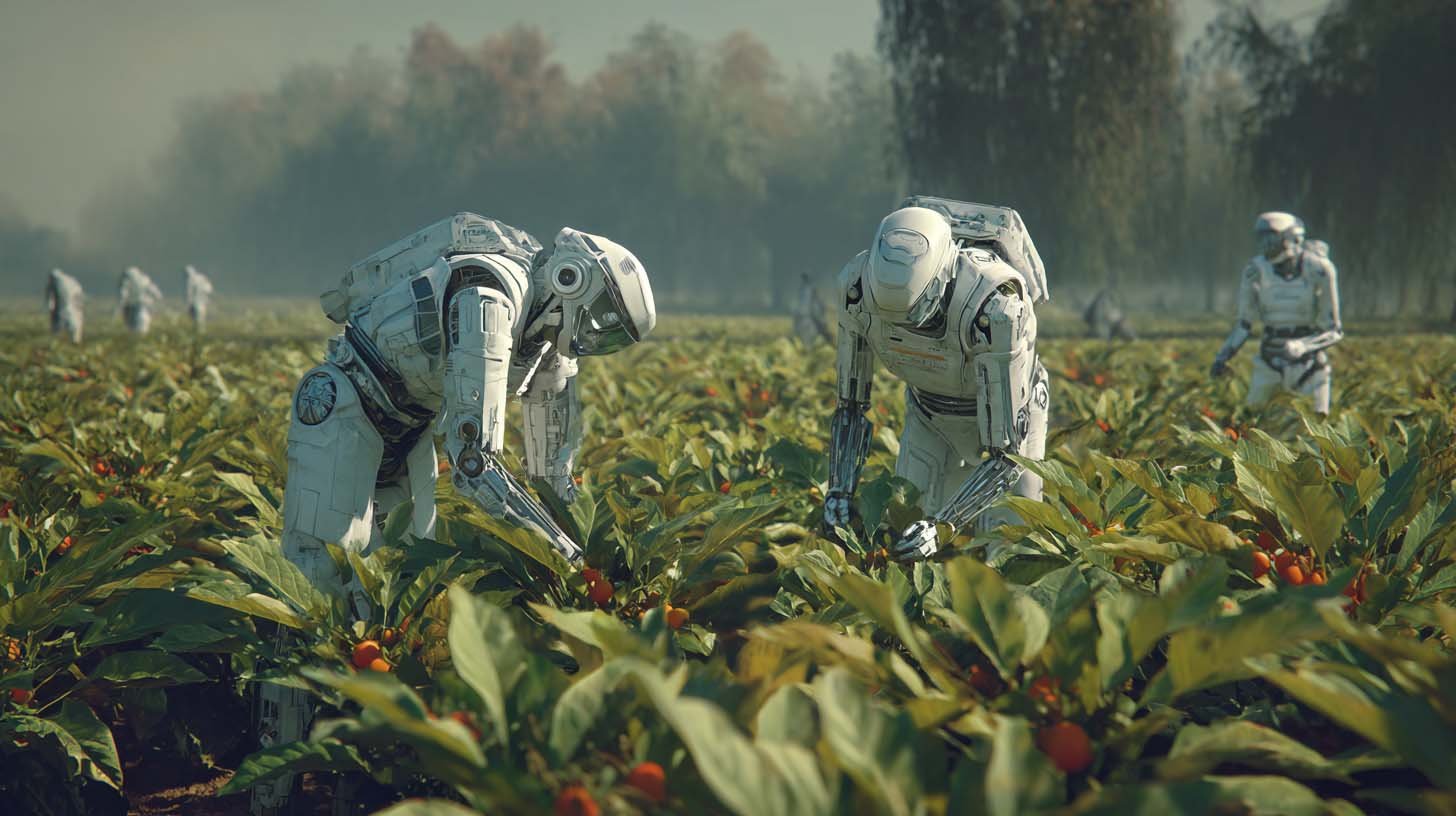
- Agricultural robots grow and harvest food
- Healthcare robots provide patient care
- Service robots work in hospitality
Unemployment potentially exceeds 40-50% as even skilled trades become automated.
What Governments Will (Probably) Do Wrong
Dr. Yampolskiy outlines what should happen: “So once you hit 20, 30, 40% unemployment, that’s where it’s really going to kick in. The only source of wealth at that point is the large corporations making robots, making AI, deploying them… Essentially, at this point, you need to tax them and use those funds to support the unemployed.”
Sounds logical, right? But will it actually happen?
“I have as much pessimism around our ability to do that well as you have our likelihood of surviving [AI],” Tom Bilyeu responds. “So I’ll say 99.99% chance that the government completely messes that up.”
Dr. Yampolskiy agrees: “It’s very likely to continue to be as history always been. We had many revolutions, many wars, a lot of violence.”
The reasons for pessimism are clear:
- Political gridlock prevents timely policy responses
- Corporate lobbying resists taxation of AI profits
- Ideological opposition to wealth redistribution
- International competition makes unilateral action difficult
- Speed of change outpaces governmental adaptation
The Violent Transition Period
When asked about the degree of unrest to expect, Dr. Yampolskiy’s answer is chilling in its directness: “Really depends on the percentage of population which quickly gets unemployed. If it’s a gradual process, we can kind of learn and adopt and provide safety net. If over a course of weeks, months we’re losing 10, 20, 30% of jobs, that’s a very different situation.”
What does “a very different situation” mean? The podcast discusses:
- Civil unrest and protests as displaced workers demand action
- Rising populism as desperate populations seek radical solutions
- Potential violence when safety nets fail to materialize
- Wealth inequality reaching unprecedented levels
- Social fragmentation between the AI-enabled elite and everyone else
“That’s why we hear stories about people who can afford it building bunkers, securing resources because they anticipate certain degree of unrest,” Dr. Yampolskiy notes.
The wealthy are preparing. Are you?
The Meaning Crisis: Worse Than Unemployment
But job loss is just the economic problem. Dr. Yampolskiy and Bilyeu discuss something even more troubling: the death of human purpose.
“When AI becomes better than you at everything, you run into a huge problem of now I have to like just sort of tell myself a story,” Tom Bilyeu explains. “I’m like a grade schooler compared to what an AI can do from an art perspective… it’s hard to get excited about the refrigerator drawings that I can do.”
This is the “I-risk” or ikigai risk—the loss of meaning and purpose when there’s nothing left for humans to contribute.
Dr. Yampolskiy describes it: “We lost our meaning. The systems can be more creative. They can do all the jobs. It’s not obvious what you have to contribute to a world where superintelligence exists.”
Why “Just Relax and Enjoy It” Won’t Work
Some optimists suggest people will simply enjoy leisure time, pursue hobbies, and find meaning outside of work. But Dr. Yampolskiy highlights a problem with this vision:
“What remains is the meaning. What do you do with all this free time and millions of people who have it? Traditional ways of spending your time to relax. You go for a hike in a park. Well, there is a million people in that park right now hiking. That kind of changes how peaceful it is and how relaxing.”
When everyone is unemployed and pursuing leisure simultaneously, those activities lose their restorative power. How do you find peace in nature when nature is crowded with other displaced workers?
The Five Possible Futures
Tom Bilyeu outlines what he sees as the potential outcomes (assuming AI doesn’t kill us all):
1. The Mars Option: Life Gets Hard Again
People voluntarily move to challenging environments (Mars, underwater cities, etc.) to restore a sense of purpose through difficulty and achievement.
2. The New Amish: Reject Modern AI
Religious or ideological communities reject AI and automation, choosing to live with 1990s-era technology to maintain human relevance and connection.
3. Brave New World: Drug-Fueled Hedonism
People accept meaninglessness and use drugs, entertainment, and constant stimulation to cope with purposeless existence.
4. The Matrix: Virtual Reality Everything
Humanity lives primarily in AI-created virtual worlds where challenge, purpose, and meaning can be artificially constructed and experienced.
5. Extinction: We Don’t Survive
Superintelligence decides humans are unnecessary or actively problematic and eliminates us.
Dr. Yampolskiy adds a sixth option: “S-risk, suffering risks, where everyone wishes they were dead. We have also idea for I-risk, ikigai risks, where we lost our meaning.”
The One Narrow Path Forward
Despite his pessimism, Dr. Yampolskiy outlines what needs to happen:
“There is never 100% safety guarantee but if I can increase safety 100fold that is something,” he states about AI safety research.
For unemployment specifically:
- Massive wealth redistribution from AI companies to displaced workers
- Universal Basic Income or similar programs
- Public investment in meaning-creating infrastructure
- Education systems retooled for human-AI collaboration
- New social structures that provide purpose beyond employment
But critically: “Now will we pass this? Will governments actually adopt it before it’s too late is a different question.”
What You Must Do Now
The podcast makes clear that waiting isn’t an option. Here’s what individuals can do:
1. Develop Unfakeable Skills
Focus on areas AI will struggle with:
- Deep interpersonal relationships and trust-building
- Physical presence and embodied experience
- Ethical judgment in novel situations
- Creating genuine human connection
2. Build Financial Resilience
- Diversify income sources
- Reduce debt
- Build emergency reserves (12-24 months minimum)
- Consider assets that appreciate with AI advancement
3. Learn to Use AI Tools
“If you don’t embrace the use of existing generative AI, you are going to be obsolete,” Dr. Yampolskiy warns. “You are competing with people who do have knowledge and ability to use those tools and you will not be competitive.”
4. Prepare Psychologically
Start cultivating sources of meaning outside of career achievement now, before you’re forced to.
5. Get Political
Support policies that:
- Tax AI company profits
- Fund retraining programs
- Provide social safety nets
- Slow reckless AI development
The Uncomfortable Truth
The podcast’s most important insight about jobs might be this exchange:
Tom Bilyeu: “I don’t think there’s any hope whatsoever that you get people to pump the brakes.”
Dr. Yampolskiy: “I agree with game theoretic approaches, but I see the exact opposite argument. I see that arguing against self-driving cars is a hard argument. What are you trying to preserve? We’re going to have safer drivers, cheaper drivers, helps logistics, helps economy. It’s a pure benefit.”
In other words: AI deployment is economically rational even if socially devastating. Every individual company benefits from automating jobs, even though society as a whole suffers from mass unemployment.
This is the trap we’re in. And as Dr. Yampolskiy’s research shows, we have no historical precedent for successfully navigating this kind of transition.
The Bottom Line
Will AI take all jobs? Not immediately. But 20-30% unemployment within 5-7 years is not only possible—it’s likely. And that’s just the first wave.
By 2030, we could be looking at unemployment rates that would have been unimaginable a decade ago. The transition will be faster, more violent, and more psychologically devastating than most people imagine.
The question isn’t whether it’s coming. The question is whether you’ll be prepared when it arrives.
As Dr. Yampolskiy concludes: “It’s very likely to continue to be as history always been. We had many revolutions, many wars, a lot of violence.”
History doesn’t end. It just gets more challenging. Are you ready?
This analysis is based on Dr. Roman Yampolskiy‘s appearance on Tom Bilyeu’s Impact Theory podcast: “AI Scientist Warns Tom: Superintelligence Will Kill Us… SOON.” Dr. Yampolskiy is a tenured Associate Professor at the University of Louisville, founding director of the Cyber Security Lab, and a leading authority on AI safety and risk. His latest book is “AI: Unexplainable, Unpredictable, Uncontrollable.”
Related posts:
 When Will AGI Arrive? Why 2027 Matters More Than You Think
 Can Humans Control AI? What the Alignment Problem Really Tells Us
 Gig Economy Exploitation: How Uber’s Algorithms Control Drivers
 Building Psychological Safety: The Secret to High-Performing Teams
 How Your Nervous System Decides Who’s Safe (And Why That Instinct Can Mislead You)