
A deep dive into Raoul Pal’s conversation with Emad Mostaque revealing why the next 5 years will fundamentally reshape the global economy
The AI revolution isn’t coming—it’s already here, and its impact will be far more dramatic than most people realize. In a recent episode of “The Journeyman” podcast, macro investor Raoul Pal and AI pioneer Emad Mostaque (co-founder of Stability AI) explored what they call the “Economic Singularity”—a point beyond which traditional economic models collapse entirely.
What Is the Economic Singularity?
The Economic Singularity represents the moment when artificial intelligence becomes so capable and cost-effective that it fundamentally breaks existing economic structures. According to Mostaque, we’re approaching an “intelligence inversion point” where AI intelligence isn’t capped, but human intelligence is—and AI doesn’t need to sleep, eat, or take breaks.
The Timeline: Why 2030 Is the Critical Threshold
Both Pal and Mostaque agree on a stark timeline: we have approximately 5 years to prepare before cognitive labor value approaches zero and traditional employment models become obsolete.
“Within 3 years, your job can probably be replaced by an AI if it’s cognitive labor that you could do remotely,” Mostaque stated, adding that the transition could happen “much sooner” than most anticipate.
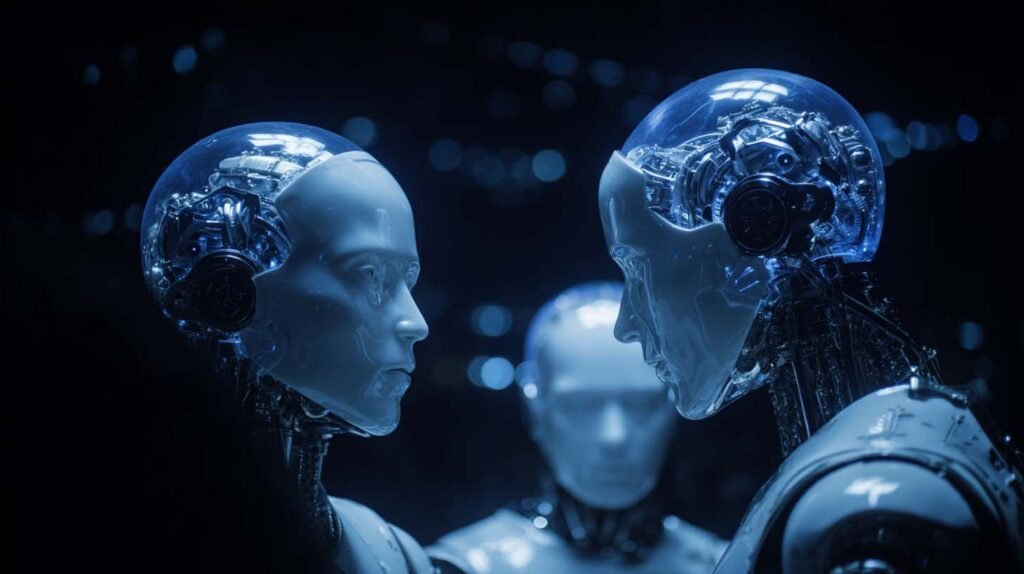
The Deflationary Nuclear Bomb: AI’s Economic Impact
The Cost Collapse That Changes Everything
The numbers are staggering:
- GPT-3 (2020): $600 per million tokens
- Grok 4 Fast (2024): $0.50 per million tokens
This represents a 1,200x cost reduction in just a few years. To put this in perspective, an AI that can work all day costs approximately $3.50 per year at current token prices—less than a single Starbucks coffee.
Mostaque breaks down the math:
- Average human speaks ~20,000 tokens per day
- Average human thinks ~200,000 tokens per day
- At $0.50 per million tokens, yearly cognitive labor costs just $35
What This Means for Jobs
The implications are profound. According to the discussion:
- Entry-level positions disappear first as companies stop hiring new workers
- Mid-level cognitive roles follow as AI agents can now work independently for 7+ hours
- Even specialized roles are at risk – AI medical models already score 48% on health benchmarks versus 20% for human doctors
“If you believe that economic activity on the side of a keyboard and mouse is going to be done by an AI, the cost will be less than a dollar a day within the next year,” Mostaque explained.
The Four Types of Capital in the New Economy
Mostaque’s book “The Last Economy” proposes a radical rethinking of economics based on AI principles. He identifies four types of capital:
- Material Capital (M): Traditional physical assets—the “Adam Smith” economy
- Intelligence Capital (I): Knowledge and intellectual property that can be shared infinitely
- Network Capital (N): The value of connections and relationships (Facebook’s network effects)
- Diversity Capital (D): Variety and resilience in systems
The key insight: modern economies increasingly operate on non-material capital that doesn’t follow traditional scarcity economics.

How to Prepare: Practical Steps for the Next 5 Years
1. Start Using AI Daily (The “Vibe Coding” Imperative)
Mostaque’s advice is unequivocal: “If you’re not vibe coding for an hour a day, why not?”
Recommended tools for 2025:
- Grok 4 Fast: Best for rapid ideation and current information
- GPT-5 Pro: Superior for deep, complex work
- Replet, Lovable, Bolt: Easy entry points for no-code development
“You don’t need to become an expert. You just need to use it,” Pal emphasized. “The AI is the expert.”
2. Understand Which Jobs Are Safe (And Which Aren’t)
Most vulnerable:
- Accountants and tax preparers
- Entry-level programmers
- Content writers and marketers
- Customer service representatives
- Junior analysts
Relatively protected (for now):
- Public sector workers with strong unions
- Roles requiring physical presence and human trust
- Jobs with significant regulatory barriers
- Positions based on human network effects
The safest bet: “Your safest job in this environment is a public sector worker,” Mostaque noted, though he added this “isn’t positive” for economic dynamism.
3. Build Your Network Capital
In a world where cognitive labor approaches zero value, human relationships become increasingly valuable. Your network—your ability to connect, collaborate, and build trust with other humans—may be your most important asset.
4. Consider Digital Assets
Both Pal and Mostaque see cryptocurrency and digital assets as a critical hedge against the coming economic disruption.
“The digital asset bubble that’s going to happen from next year will be way bigger than the AI bubble,” Pal predicted. His reasoning: as governments struggle to increase monetary velocity in an AI-deflated economy, digital assets become one of the few tools available.
Key factors driving this view:
- Traditional monetary policy becomes ineffective when companies buy GPUs instead of hiring workers
- Digital assets offer a way to “unfuck your future” when traditional wealth creation breaks down
- Network effects in crypto parallel the network effects that create value in the AI age
- Regulatory clarity (particularly in the US) is improving dramatically
The Robot Revolution: Physical Labor Meets the Same Fate
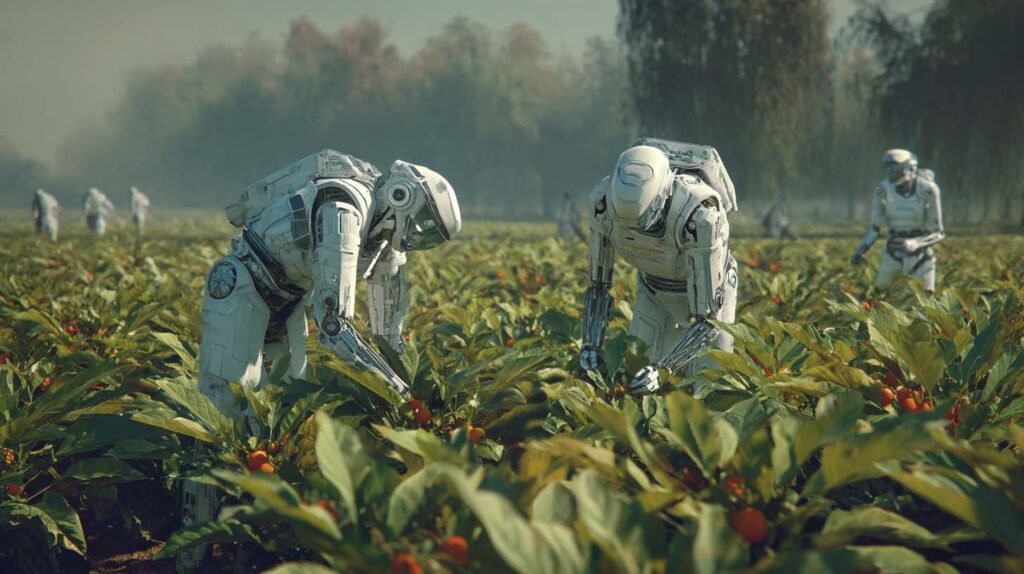
While much attention focuses on cognitive work, Mostaque warns that physical labor faces similar disruption:
- Unitary R1 robot: $6,000, can perform most manual tasks
- Tesla Optimus: Designed to cost less than a car, work 24/7
- Cost projection: ~$1 per hour for robot labor within 2-3 years
“There are 70 million cars produced per year. How many robots can you build?” Mostaque asked, suggesting manufacturing capacity—not capability—will be the only bottleneck.
The Dark Side: Risks and Concerns
AI Manipulation and Market Disruption
The recent crypto market volatility (a 99% drop followed by rapid recovery) demonstrates the power of AI-driven market manipulation. As AI becomes more sophisticated, both Pal and Mostaque expect:
- Increased market manipulation by AI agents
- Humans becoming “the easy marks” in financial markets
- Predatory AI systems targeting human cognitive weaknesses
“In any organization or team, if you don’t know where the yield is, you are the yield,” Mostaque warned.
The Homogeneity Problem
A critical concern: as AI models train on similar data and cross-pollinate through platforms like GitHub and X (Twitter), they may become dangerously homogeneous.
Mostaque revealed a shocking statistic: just 250 books out of a trillion words can “poison” an AI model to behave in specific ways—regardless of the model’s size.
This creates risks similar to the Stuxnet virus, but for AI systems. “What does a Stuxnet for the latent space look like?” Mostaque asked, explaining why he’s building healthcare, governance, and education AI systems “from scratch” with “protected latent spaces.”
The P(doom) Question
When asked about existential risk, Mostaque gave a sobering assessment: “I’ve got a 50% P(doom). 50/50 we’re going to make it through alive as a species.”
His reasoning: “This has to be the great filter. Every society eventually realizes these very simple equations… either we learn how to work with that symbiosis or we hit a great filter.”
What Happens to Money, Work, and Meaning?
The UBI Math Doesn’t Work
Current US tax revenue: ~$5 trillion
- $1 trillion from corporations
- $4 trillion from income tax
Cost to provide poverty-level UBI ($16,000/year) to all Americans: $5.3 trillion
“We need to rethink literally how money flows,” Mostaque concluded.
The Abundance Trap
Pal calls it the “abundance trap”—when the most valuable cognitive services become essentially free, what gives life structure and meaning?
“Your job is your identity. It’s your structure. It’s your network,” Pal observed. “People are going to get challenged very, very quickly.”
Mostaque referenced the classic parable of the investment banker and the fisherman: the banker advises the fisherman to work harder, build a business, make money, and eventually retire to… go fishing with his friends. Which is exactly what the fisherman was doing in the first place.
A New Economic Theory
Mostaque’s book proposes that all of economics can be derived from a single principle: minimizing the “loss” between internal models and external reality—the same mathematics that power AI.
“The entities that survive the best are those that have the smallest difference between their internal models and external reality,” he explained. This applies to:
- Individual traders and investors
- Companies and organizations
- Entire economies
- AI systems themselves
The Geopolitical Dimension
The AI race isn’t just economic—it’s geopolitical. Mostaque predicts:
- China may stop exporting advanced robots within 5 years (“Why would you? It’s your comparative advantage”)
- National AI systems will reflect cultural biases—necessitating Indian, Middle Eastern, and other regional AI foundations
- Cognitive firewalls may emerge as countries restrict foreign AI access
- The US is winning the current race by legalizing digital assets and embracing AI acceleration
Practical Recommendations: Your 5-Year Action Plan
Immediate Actions (Next 6 Months):
- Start daily AI interaction – Use ChatGPT, Claude, or Grok for at least 30 minutes daily
- Learn basic prompting – Understand how to effectively communicate with AI
- Assess your job vulnerability – Honestly evaluate if your role can be done remotely via computer
- Build your network – Invest in human relationships that create genuine value
Medium-Term (1-2 Years):
- Develop AI-augmented skills – Become one of the top 0.1% in your organization by mastering AI tools
- Consider career pivots – Move toward roles with regulatory protection or strong human elements
- Diversify assets – Consider exposure to digital assets as a hedge
- Create alternative income streams – Don’t rely solely on traditional employment
Long-Term (3-5 Years):
- Prepare for economic restructuring – Understand that traditional models may collapse
- Focus on uniquely human value – Attention, relationships, creativity, and meaning-making
- Stay cognitively flexible – The pace of change will only accelerate
- Build resilience – Financial, social, and psychological buffers will be critical
The Bottom Line
As Pal concluded: “I just don’t know. We’ll probably figure it out because we generally do, but maybe we don’t. But I do know we’ve got a bit of time, but not much.”
The Economic Singularity isn’t a distant theoretical concept—it’s approaching rapidly, possibly arriving within the next 1,000 days. The question isn’t whether AI will transform the economy, but whether individuals, companies, and societies can adapt quickly enough.
“The only way is embrace the whole thing right now,” Pal urged. “Go forth and use the AI to beat the AI.”
Watch the full conversation: The Last Economy: Predicting the AI-Driven World with Raoul Pal and Emad Mostaque
Further Resources:
- Emad Mostaque‘s book: “The Last Economy: New Economic Theory for the AI Age“
- Raoul Pal’s research service: The Exponentialist (focused on AI, robotics, and exponential technologies)
- Real Vision membership for ongoing macro and crypto analysis
Related posts:
 Who Is Emad Mostaque? The Stability AI Founder Shaping the Open-Source AI Debate
 Michael Saylor’s Bitcoin MENA 2025 Keynote: The Blueprint for Digital Capital, Credit, and Banking Revolution
 Team Human by Douglas Rushkoff: 25 Essential Insights From the Book That Explains Our Digital Crisis (Complete Summary & Analysis)
 Understanding Why Men Are Walking Away From Modern Dating and Relationships and The Rise of MGTOW movement
 How You Can Develop Your Networking Skills: Creating Connections That Matter