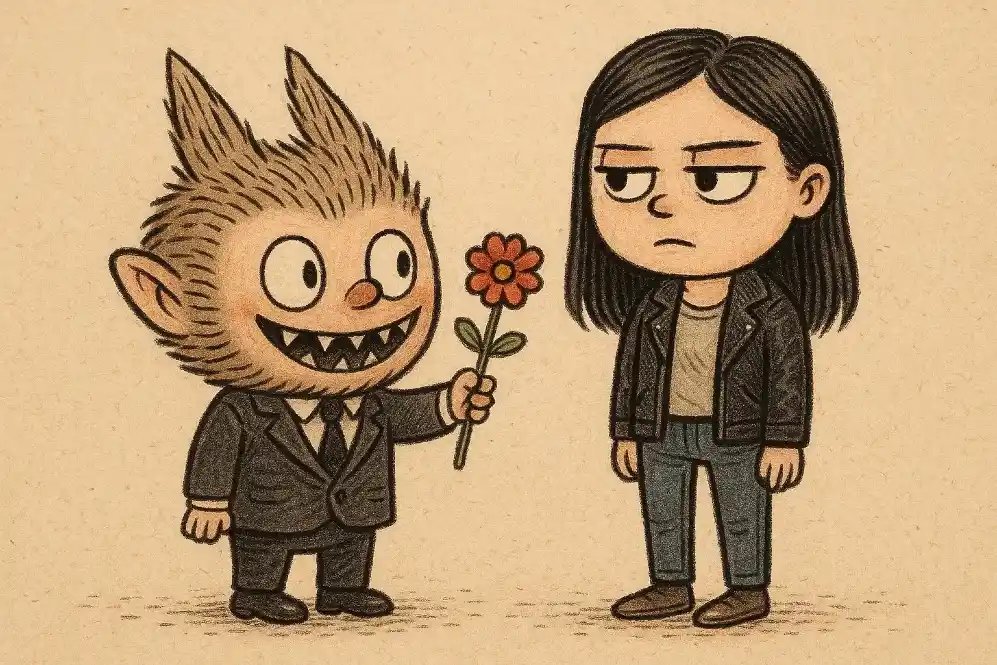
The Dating Crisis, Masculinity, and Modern Relationships: Key Insights
In this groundbreaking Modern Wisdom episode, host Chris Williamson sits down with authors Louise Perry (The Case Against the Sexual Revolution) and Mary Harrington (Feminism Against Progress) to dissect the modern dating landscape, declining birth rates, and the emergence of what they call “performative males” or “Labubu men.”
1. America’s Sex Recession Has Reached Record Lows
Only 37% of American adults have sex weekly, down from 55% in 1990 – even lower than during COVID-19 lockdowns. This decline affects both married and unmarried people, suggesting systemic cultural shifts beyond relationship status.
2. “Limbic Capitalism” Is Hijacking Human Reproduction
The term “limbic capitalism,” coined by David Courtwright, describes how modern companies profit by hacking our primitive drives – through junk food, pornography, and social media – redirecting them away from healthy purposes like forming relationships and reproducing.
3. Smartphones May Be the Primary Birth Rate Killer
Academic Alice Evans blames smartphones for the birth crisis, noting that fertility drops track closely with smartphone adoption globally. People are “so besotted with the joys of limbic capitalism delivered via their phones that they forget to behave like normal human beings and reproduce.”
4. The “Performative Male” or “Labubu Man” Phenomenon
A new male archetype has emerged: floppy-haired men with oversized jeans, tote bags, and matcha drinks, reading literary fiction and presenting a deliberately feminized aesthetic. Perry and Harrington identify this as potentially the “sneaky fucker” mating strategy disguised as progressive sensitivity.
5. The Himbo Archetype Offers an Alternative
Women increasingly express preference for “himbos” – physically capable men with hearts of gold who are “politically ambiguous” and not overly intellectual. The archetype balances physical masculinity with emotional availability without the perceived threat of aggression.
6. K-Pop‘s Celibacy Rules May Be Tanking South Korea’s Birth Rate
South Korea’s K-pop stars are contractually forbidden from dating, making the country’s most aspirational role models uncoupled and childless. This creates powerful mimetic effects where young people model behavior after celebrities who cannot demonstrate family formation.
7. Taylor Swift‘s Engagement Could Boost Marriage Rates
When Taylor Swift announced her engagement, “little girls screamed, grown women cried, and the awkward child we all carry inside finally felt chosen.” Parasocial relationships can have real effects on behavior – if your “sister” (even a celebrity one) gets married, you’re more likely to follow suit.
8. Male Competition Theory Predicts Sexual Success Better Than Female Ratings
A study by David Puts found that men’s ratings of how likely another man could beat them in a fight correlated highly with that man’s actual sexual partners over the following year, while women’s attractiveness ratings were barely predictive. Competence matters more than perceived attractiveness.
9. Me Too Created the Labubu Man Problem
The Me Too movement’s message “don’t be too pushy” was ignored by men who needed to hear it and over-internalized by well-behaved men. This created a selection effect where bad actors still act badly while decent men became excessively passive – the “Labubu man.”
10. Cold Approach Dating Was a Brief Historical Anomaly
The era of men successfully meeting partners through cold approaches in bars or workplaces lasted only a few decades – roughly coinciding with free speech absolutism. It required high-trust, culturally homogeneous societies where behavioral norms were understood and respected.
11. Dinner Parties Were the Original Dating Apps
Historically, “smug married” couples hosted dinner parties specifically to set up eligible singles among their friends. This social infrastructure has largely disappeared, replaced by nothing except impersonal apps and algorithm-driven matching.
12. Britain’s Class War Has Norman Roots
England’s class system is a 1,000-year-old racialized caste system dating to the Norman Conquest of 1066. People with Norman surnames (like Grosvenor) are still more likely to be wealthy and attend Oxbridge than those with Saxon names (like Smith or Cooper).
13. The “Flag Wars” Reveal Deep Class Divides
Working-class Brits putting up St. George’s flags are confronted by middle-class “de-flaggers.” The class divide is obvious: flaggers are working-class, de-flaggers are middle-class, and the conflict represents divergent relationships with nationalism and globalization.
14. Women Don’t Want Men Who “Post Physique”
Getting extremely shredded and posting gym photos is considered “girly” behavior by women – it signals competing for male attention rather than female attraction. Women prefer “scaffolder physique” over “gym physique” because it signals genuine functional capability rather than vanity.
15. The “Male-to-Male Transsexual” Phenomenon
Some hypermasculine men are essentially “LARPing as more masculine versions of themselves,” devoting their lives to this transformation in ways that paradoxically mirror feminine beauty culture – constant self-monitoring, selfies, and aesthetic obsession.
16. Social Media Is Structurally Feminizing
Social media discourse is inherently feminine because it involves endless talking and excludes physical confrontation. Male bonding traditionally happens through doing things together (fixing a lawnmower), not discussing feelings – but online spaces privilege verbal processing.
17. The “Tea App” Was a Tech Fix for Missing Community
The controversial Tea app, where women anonymously shared warnings about men, attempted to replicate traditional community gossip networks. In stable villages, women naturally track which men are trustworthy through social networks – the app tried to artificially recreate this at scale.
18. Princess Treatment Is Lifestyle BDSM
The “princess treatment” trend (partner-funded pedicures, not ordering your own food, not speaking to waitstaff) is essentially lifestyle BDSM rebranded for mainstream consumption – the same power dynamics with different aesthetic presentation.
19. Obesity Lowers Overall Sexual Activity
Beyond hormonal effects, rising obesity rates mean more people fall below the “minimum bar” for mutual attraction. When average physical attractiveness declines across a population, there’s less desire across the board – a “good enough partner” standard that’s increasingly unmet.
20. Women Have Gotten Prettier While Getting Fatter
Modern beauty technology (microblading, retinols, hair treatments) means women’s faces and presentation have improved even as average body weight increased. Men’s attractiveness enhancement technology hasn’t kept pace, creating asymmetric investment in appearance.
21. The Entrepreneurship Boom Is Displaced Paternal Instinct
Many young men channel paternal instincts into businesses rather than families – “my team, my staff, my purpose” replaces “my wife, my kids, my home.” The startup becomes the surrogate family that provides meaning and direction.
22. Nation States Are Too New to Command Tribal Loyalty
After teaching multiple generations that “nation states are fake and caused Hitler,” governments now struggle to reinstate drafts or inspire national defense. People haven’t abandoned tribalism – they’ve just drawn tribal boundaries around ethnicity or ideology instead of citizenship.
23. Women Will Turn Right Quickly When They Do
Women’s political alignment is more mimetic and mob-like than men’s. The same emotional energy that powered “refugees welcome” can flip to “close the hotels” when perceived threats shift from abstract vulnerable groups to actual children. The “pink protests” in Britain demonstrate this pivot.
24. Having Children Determines Immigration Politics
The biggest predictor of women’s stance on immigration isn’t class or education – it’s whether they have children. Childless women see refugees as vulnerable figures needing protection; mothers prioritize their own children’s safety and resources.
25. The Internet Has Killed Nuanced Masculinity
Online platforms force everyone into “reductive meme versions” of themselves. Complex archetypes like Chris Bumstead (“looks that could kill you, but is a cinnamon roll”) can’t survive online’s demand for instant categorization. The attention economy rewards simple, extreme presentations over nuanced humanity.
Why This Matters for Modern Dating and Society
Perry and Harrington’s conversation reveals interconnected crises: declining birth rates, deteriorating social infrastructure, class warfare, and confused gender relations. The “performative male” isn’t just a TikTok aesthetic – it represents men’s confused response to contradictory cultural signals about masculinity.
The solution isn’t online advice or tech fixes, but rebuilding offline social structures: dinner parties, trusted older mentors (the “aunties” and uncles), church communities, and local networks where reputations matter and relationships form naturally through repeated interaction.
Podcast: Modern Wisdom with Chris Williamson Episode: The Performative Male Epidemic – Louise Perry & Mary Harrington Watch Full Episode: https://youtu.be/w6PNOlTVFlM?si=u0w8Kc_QSbZ7-Cbe
Subscribe to Modern Wisdom: The full conversation contains even more insights about relationship formation, political polarization, and navigating modern dating dynamics.
Related posts:
 Sexual Market Value Explained: How Men and Women Peak at Different Ages
 Sexual Selection in Humans: How Evolutionary Psychology Explains Human Attraction
 Why Men Crave Sexual Variety: The Evolutionary Psychology Behind Male Desire
 Ridge Wallet Review (2026): Is the Minimalist Metal Wallet Actually Worth It?
 Understanding Why Men Are Walking Away From Modern Dating and Relationships and The Rise of MGTOW movement