
How Incubation and Unconscious Processing Drive Mathematical Discovery
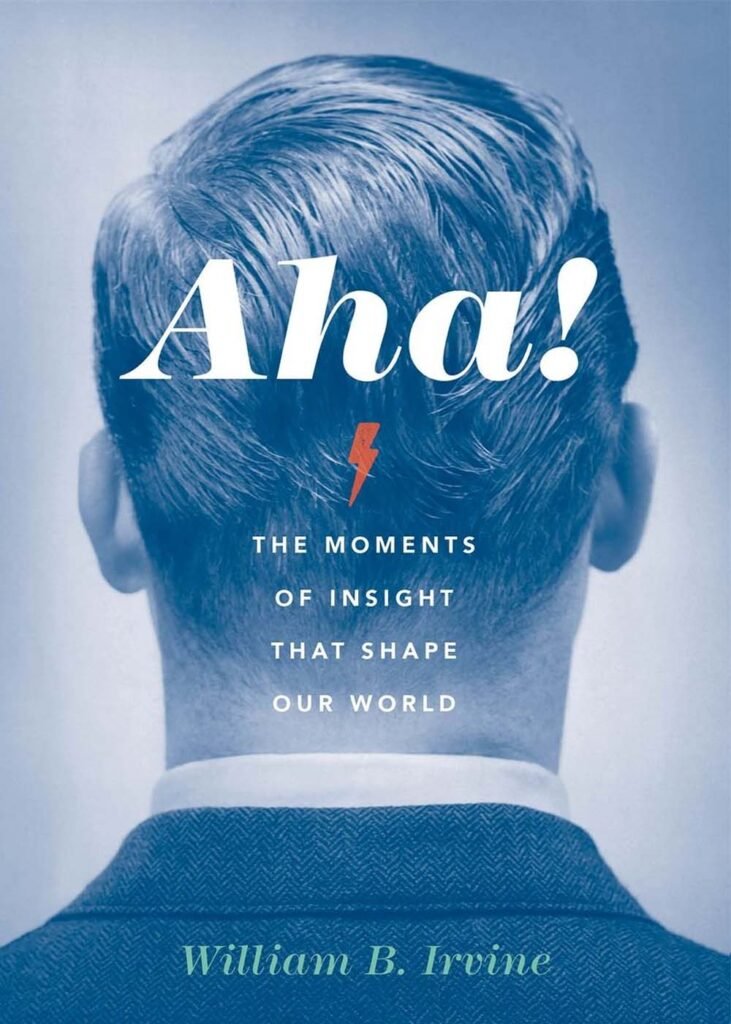
Mathematics provides perhaps the clearest examples of aha moments because mathematical truths exist independently of physical reality. When mathematicians experience breakthrough insights, they describe discovering eternal verities that were always there, waiting to be found. In “Aha! The Moments of Insight that Shape Our World,” philosopher William B. Irvine explores the unique nature of mathematical epiphanies and the mysterious role of incubation in generating solutions to complex problems.
Mathematical aha moments combine intellectual rigor with aesthetic beauty, creating experiences that mathematicians describe as profoundly satisfying and even transcendent. Unlike scientific hypotheses that might be disproven by future observations, correct mathematical proofs establish certainties that remain true forever. This quality gives mathematical insights a distinctive character that illuminates fundamental aspects of human cognition and creativity.
Understanding mathematical breakthroughs reveals how unconscious mental processes contribute to problem-solving and why strategic periods of rest prove essential for optimal thinking. Irvine’s Oxford University Press book examines famous mathematical discoveries and the patterns underlying moments of pure insight that have advanced human understanding across millennia.
Poincaré’s Famous Breakthrough on the Bus
French mathematician Henri Poincaré’s account of solving problems involving Fuchsian functions provides one of history’s most famous descriptions of mathematical insight. After working intensely on these problems, Poincaré decided to take a break from his research to join a geological excursion. The change of scenery allowed him to forget his mathematical struggles temporarily.
The trip required traveling by bus, and at the precise moment Poincaré stepped onto the vehicle, the solution appeared suddenly in his consciousness. As he later wrote, the idea came to him without anything in his previous thoughts appearing to have prepared him for it. He instantly recognized that the transformations he had used to define Fuchsian functions were identical to those of non-Euclidean geometry.
This insight arrived with complete clarity and certainty. Poincaré didn’t need to work through logical steps or verify calculations. He simply knew the solution was correct with absolute conviction. On returning home to Caen, he wrote down the resulting proof, making a key contribution to the geometric theory of functions.
Several features of this episode exemplify patterns in mathematical aha moments that Irvine explores in “Aha! The Moments of Insight that Shape Our World.” The breakthrough occurred not during focused calculation but during a moment of distraction. It arrived suddenly and completely rather than emerging gradually. It felt surprising yet inevitable. Most mysteriously, it seemed to come from nowhere, without conscious preparation or logical progression leading to it.
The Joy and Beauty of Mathematical Discovery
Mathematicians who experience breakthrough insights describe feelings comparable to profound aesthetic experiences. Discovering mathematical truths creates deep satisfaction that transcends mere problem-solving. The elegance and beauty of mathematical proofs provide pleasure that motivates sustained effort despite frustration and difficulty.
Mathematician Gian-Carlo Rota captured this sentiment by noting that mathematical certainty provides pleasures unlike those available in other intellectual pursuits. When mathematicians prove theorems, they establish truths that will remain valid forever, independent of changing circumstances or new discoveries. This permanence creates profound satisfaction.
The aesthetic dimension of mathematics influences how mathematicians evaluate proofs and theories. Multiple approaches might prove the same theorem, but mathematicians distinguish between elegant proofs that reveal deep connections versus clunky demonstrations that merely establish validity. The most admired proofs possess simplicity and beauty that illuminate why results must be true rather than merely showing that they are true.
This emphasis on beauty reflects more than subjective preference. Mathematical elegance typically indicates fundamental insights rather than superficial manipulations. Beautiful proofs often generalize more readily, suggest new research directions, and reveal deep structural features of mathematical reality. The aesthetic and intellectual dimensions of mathematics intertwine inseparably.
The Mystery of Mathematical Incubation
One of the most puzzling aspects of mathematical discovery involves the role of incubation periods. After working intensely on problems without success, mathematicians often experience breakthroughs after deliberately stopping work and engaging in completely different activities. This pattern suggests that unconscious mental processes continue working on problems even when conscious attention shifts elsewhere.
Poincaré’s bus ride exemplified this phenomenon, but it appears consistently throughout mathematical history. Andrew Wiles spent years working on Fermat’s Last Theorem before experiencing a crucial insight while taking a break from focused calculation. Carl Friedrich Gauss reported that solutions to problems he had struggled with for years suddenly appeared when he stopped thinking about them consciously.
The mechanisms underlying incubation remain mysterious. Conscious thought proceeds through steps we can observe and communicate. Unconscious processing operates beyond awareness, preventing direct observation of how solutions emerge. Results appear suddenly in consciousness as though delivered by an unknown source, creating the impression of external inspiration rather than internal calculation.
Some researchers propose that unconscious processing explores possibilities more freely than conscious thought, making connections between seemingly unrelated concepts that conscious logic would dismiss. Others suggest that rest allows mental fixation on incorrect approaches to dissipate, enabling fresh perspectives to emerge. Still others emphasize that unconscious processing continues using different strategies than conscious calculation.
The Four Stages of Mathematical Problem Solving
Poincaré himself analyzed the creative process in mathematics, identifying four distinct stages that typically precede breakthrough insights. Understanding these stages helps mathematicians optimize their work and cultivate conditions favorable to discovery.
The preparation stage involves conscious, focused work on problems. Mathematicians gather relevant information, try various approaches, and thoroughly familiarize themselves with the problem’s structure. This stage rarely produces immediate solutions but establishes the foundation necessary for unconscious processing to operate effectively.
The incubation stage occurs when mathematicians deliberately stop working on problems and engage in other activities. Conscious attention shifts away, but unconscious mental processes continue exploring possibilities. This stage proves crucial because it allows creative connections to form without interference from conscious preconceptions and fixations.
The illumination stage represents the actual aha moment when solutions burst into consciousness. These insights arrive suddenly, often during activities completely unrelated to mathematics. They feel surprising yet certain, combining novelty with conviction in ways that distinguish them from ordinary thoughts.
The verification stage involves consciously checking and formalizing the insight. Even though illumination provides strong conviction, mathematicians must rigorously verify their intuitions through formal proof. Sometimes insights prove incorrect or incomplete, requiring return to earlier stages. But often, verification confirms the intuition’s validity and establishes the result definitively.
Why Mathematical Insights Feel Certain
A distinctive feature of mathematical aha moments involves the absolute certainty they provide. When mathematicians experience breakthrough insights, they don’t merely suspect solutions might be correct but know them with complete conviction. This certainty proves remarkable because it occurs before formal verification and yet typically proves accurate.
Several factors contribute to this certainty. Mathematical truths possess internal coherence that creates feelings of inevitability when recognized. Correct solutions resolve previously puzzling inconsistencies so perfectly that they feel like they must be true. They generate new implications and connections that couldn’t have been anticipated without the insight.
Additionally, mathematical insights often involve sudden recognition of patterns or relationships that were always present but previously unnoticed. Like optical illusions where hidden figures suddenly become visible, mathematical breakthroughs reveal structures that existed all along waiting to be perceived. This quality of discovery rather than invention contributes to feelings of certainty and inevitability.
The reliability of this intuitive certainty distinguishes mathematics from other fields. Mathematical intuitions prove correct far more often than might be expected if they represented mere guesses. This reliability suggests that unconscious processing genuinely solves problems rather than randomly generating possibilities that conscious verification must sort through.
The Role of Trial and Error
Despite the sudden clarity of mathematical aha moments, discovering proofs typically involves extensive trial and error. Mathematicians try numerous approaches, most of which fail to produce desired results. Even successful insights often emerge from exploring many blind alleys and failed attempts.
This combination of systematic exploration and sudden insight characterizes productive mathematical research. The trial and error establishes thorough familiarity with problems and eliminates unsuccessful approaches. This groundwork proves essential for enabling unconscious processing to operate effectively and for recognizing correct insights when they emerge.
Irvine’s analysis in “Aha! The Moments of Insight that Shape Our World” emphasizes that aha moments don’t eliminate the need for sustained effort. Instead, they represent culminations of extensive preparatory work that creates conditions for breakthrough insights to occur. Without the preliminary struggle, illumination rarely arrives.
This pattern appears across creative domains. Artists produce many sketches before achieving satisfactory compositions. Writers generate multiple drafts before discovering the right approach. Scientists conduct numerous failed experiments before achieving breakthrough observations. In each case, the apparent suddenness of insight masks extensive prior effort that enabled the breakthrough.
Mathematical Creativity and Gender
Historically, mathematics was dominated almost exclusively by men, with few women gaining recognition for mathematical contributions. This disparity reflected social barriers and educational inequities rather than inherent ability differences. As opportunities expanded, women mathematicians made fundamental contributions across all areas of mathematics.
Irvine explores how gender affects mathematical experience and achievement, noting that women mathematicians face additional obstacles beyond those affecting all researchers. Historical biases created extra skepticism toward women’s mathematical work. Access to education and professional positions was systematically denied. Recognition for achievements was withheld or attributed to male collaborators.
Despite these barriers, women who persisted in mathematics experienced the same kinds of insights and creative satisfaction that motivated men. The aha moment transcends gender, providing universal human access to mathematical beauty and discovery. Breaking down remaining barriers enables fuller participation in mathematical research.
Contemporary research confirms that mathematical ability shows no significant gender differences when opportunities are equal. Success in mathematics depends on sustained effort, effective learning strategies, access to quality instruction, and supportive environments rather than gender. Expanding participation enriches mathematics by bringing diverse perspectives to research problems.
The Social Dimensions of Mathematical Discovery
While mathematical insights occur in individual minds, mathematics itself represents a cumulative social enterprise. Each generation of mathematicians builds on previous achievements, extending understanding through new discoveries. Mathematical progress requires not just individual brilliance but effective communication and collaboration within mathematical communities.
Publishing results allows others to build on discoveries and verify their correctness. Presenting work at conferences and seminars exposes ideas to critical evaluation that strengthens arguments. Collaboration enables researchers to combine complementary skills and knowledge. These social dimensions prove essential for mathematical advancement.
However, social factors also create obstacles to mathematical progress. Priority disputes over discoveries generate bitter conflicts. Established mathematicians sometimes resist novel approaches that challenge traditional methods. Gatekeeping in publications and academic positions can exclude valuable contributions. These human elements affect how mathematics develops despite its abstract subject matter.
Understanding mathematics as social practice as well as individual insight illuminates how mathematical knowledge grows. The lone genius experiencing sudden revelation represents only part of the story. Equally important are communities that validate discoveries, institutions that support research, and traditions that preserve and transmit mathematical knowledge across generations.
Cultivating Mathematical Insight
While breakthrough insights cannot be forced or scheduled, mathematicians develop practices that create favorable conditions for discovery. Deep immersion in problems through sustained focused work provides the foundation necessary for unconscious processing to generate solutions. Superficial engagement rarely produces significant insights.
Strategic use of incubation periods proves equally important. After intense calculation, deliberately stopping work and engaging in different activities creates opportunities for illumination to occur. Many mathematicians schedule their work to alternate between focused problem-solving and restful breaks, maximizing chances for breakthrough insights.
Maintaining multiple active research problems allows shifting between them when progress stalls. Working on one problem while incubating another creates continuous opportunity for insights to emerge. This approach also prevents excessive fixation on single approaches that might prove unproductive.
Collaboration and discussion help externalize mathematical thinking and expose hidden assumptions or errors. Explaining problems to others, defending approaches against criticism, and considering alternative perspectives all contribute to deeper understanding. Sometimes insights emerge during conversations rather than solitary calculation.
The Limits of Mathematical Intuition
While mathematical intuition proves remarkably reliable, it has important limitations. Counterintuitive results appear throughout mathematics, challenging even expert intuitions. The Banach-Tarski paradox, Gödel’s incompleteness theorems, and various results in probability and topology all violate common sense yet prove rigorously correct.
These counterintuitive discoveries remind mathematicians to verify intuitions rigorously rather than trusting them blindly. Even strong convictions require formal proof before acceptance. The verification stage proves essential precisely because intuition, while powerful, remains fallible.
Additionally, mathematical intuition develops through experience and training rather than appearing innately. Beginning students lack the refined intuitions that guide experienced mathematicians. Developing reliable mathematical intuition requires sustained engagement with mathematical thinking and extensive practice solving problems.
This learned nature of mathematical intuition explains why mathematical ability appears unequally distributed. Differences reflect varying opportunities for developing mathematical skills rather than inherent capacity differences. Expanding access to quality mathematical education and supportive learning environments enables more people to develop the intuitions that facilitate mathematical insight.
The Emotional Rewards of Mathematical Understanding
Beyond intellectual satisfaction, mathematical discovery provides emotional rewards that motivate sustained effort. The moment when previously puzzling problems suddenly make sense creates genuine joy and excitement. This pleasure drives mathematicians to persist through frustration and difficulty.
Different mathematicians find satisfaction in different aspects of mathematical work. Some love the abstract beauty of pure mathematics pursued without concern for applications. Others enjoy applied mathematics that solves concrete problems. Some prefer developing new theories while others focus on solving long-standing conjectures.
These diverse satisfactions demonstrate mathematics’ richness and variety. The field encompasses multiple specialties, approaches, and aesthetics that accommodate different interests and strengths. This diversity enables broad participation and ensures continued vitality and progress.
The emotional dimension of mathematical experience also explains why mathematicians continue working despite limited external rewards. Academic mathematics rarely offers wealth or fame comparable to other prestigious careers. Yet mathematicians persist because the intrinsic rewards of mathematical insight provide sufficient motivation independent of external recognition.
Contemporary Challenges in Mathematical Research
Modern mathematics has become increasingly specialized and technical. Cutting-edge research requires mastering vast bodies of prior work before making original contributions. This high barrier to entry creates challenges for aspiring mathematicians while ensuring high standards of rigor and sophistication.
Computer-assisted proofs represent another contemporary development transforming mathematical practice. Some important results now rely on computations too extensive for human verification. While these proofs establish results definitively, they lack the intuitive understanding that traditional proofs provide. This creates tensions about proof’s nature and purpose.
Collaboration has become increasingly common in mathematics as problems grow more complex and specialized knowledge fragments across subfields. Multi-author papers that would have been unusual historically now appear regularly. This trend raises questions about individual versus collective contribution to mathematical discovery.
Despite these changes, the fundamental experience of mathematical insight remains continuous with past practice. Contemporary mathematicians experience the same kinds of aha moments that Poincaré described. The emotional satisfactions, aesthetic pleasures, and cognitive patterns underlying mathematical discovery transcend historical and cultural contexts.
Conclusion: The Timeless Nature of Mathematical Truth
William B. Irvine’s exploration of mathematical aha moments in “Aha! The Moments of Insight that Shape Our World” illuminates both the mysterious nature of mathematical insight and the universal human capacity for discovering eternal truths. Mathematics demonstrates that human minds can access objective knowledge that transcends individual perspectives and cultural contexts.
Understanding mathematical breakthroughs reveals the crucial role of unconscious processing in creative thinking and the importance of strategic incubation periods for optimal problem-solving. These lessons extend beyond mathematics to illuminate how insights emerge across all creative domains.
For anyone interested in creativity, problem-solving, or the nature of human understanding, examining mathematical aha moments provides essential perspective. Irvine’s analysis offers both practical guidance for optimizing creative thinking and philosophical reflection on the remarkable human capacity for mathematical insight.
The study of mathematical discovery ultimately demonstrates that effective thinking requires balancing focused effort with strategic rest, engaging both conscious analysis and unconscious processing, and maintaining openness to insights that challenge existing assumptions. These principles apply across all domains requiring creative problem-solving and breakthrough thinking.
Related posts:
 Aha Moments Explained: The Science Behind Sudden Insights That Changed History
 The Unconscious Mind and Creativity: Where Your Best Ideas Actually Come From
 25 Transformative Insights from “Aha! The Moments of Insight that Shape Our World” by William B. Irvine
 Whay Is The Eureka Effect: How Aha Moments Drive Scientific Breakthroughs and Paradigm Shifts
 How Moral Awakenings Spark Social Change: The Psychology Behind Sudden Ethical Insight