
In an age of relentless self-focus—where every achievement demands a social media announcement and every thought seems worthy of broadcasting—Ryan Holiday’s “Ego is the Enemy” offers a radical antidote: deliberately making yourself feel small. Not worthless, but appropriately sized. Not insignificant, but properly positioned within an immense universe that existed billions of years before you and will continue billions of years after.
This isn’t about self-deprecation or false modesty. It’s about using perspective as a tool to short-circuit ego’s tendency to place ourselves at the center of everything. When we genuinely grasp our place in the cosmos, petty grievances dissolve, territorial instincts fade, and the freedom to focus on what actually matters emerges.
John Muir’s Oceanic Moment
Holiday opens this theme with the naturalist John Muir’s experience in Alaska’s Glacier Bay. Standing in the unique summer climate of the far north, Muir suddenly perceived the entire ecosystem as an integrated whole—the tides, streams, forests, animals, insects, humans, all part of one vast, interconnected system.
His pulse quickened as he and his group were “warmed and quickened into sympathy with everything, taken back into the heart of nature” from which we all came. Muir recorded the experience with unusual eloquence:
“We feel the life and motion about us, and the universal beauty…the vast forests feeding on the drenching sunbeams, every cell in a whirl of enjoyment; misty flocks of insects stirring all the air…bears in the berry-tangles…birds tending to their young—everywhere, everywhere, beauty and life, and glad, rejoicing action.”
What Muir experienced was what the Stoics called sympatheia—a connectedness with the cosmos. The French philosopher Pierre Hadot referred to it as the “oceanic feeling.” The sense of belonging to something larger, of realizing that human concerns are “an infinitesimal point in the immensity.”
This wasn’t a diminishment of Muir’s importance. It was a recalibration of his perspective that paradoxically made his work more meaningful by connecting it to something bigger than himself.
Why We Desperately Need This Perspective
Holiday argues that success actively pulls us away from this cosmic perspective. Material achievement, recognition, power—all these things encourage us to believe we’re special, important, central.
Ego tells us that meaning comes from our activity, that being the center of attention is what makes us matter. It insists that our projects, our problems, our achievements are uniquely significant.
But when we lack connection to anything larger than ourselves, something essential dies. We become detached from the traditions we hail from, whatever they may be—a craft, a sport, a profession, a community, a lineage. Ego blocks us from the beauty and history in the world, standing as an obstacle between us and reality itself.
No wonder success feels empty. No wonder we’re exhausted. No wonder it feels like we’re on a treadmill. We’ve lost touch with the perspective that puts our striving in context and gives it meaning beyond mere self-aggrandizement.
The Historical Long View
Holiday provides a powerful exercise: walk onto an ancient battlefield or place of historical significance. Look at the landscape and you can’t help but see how similar people were to us—and how little has changed.
Here a great man once stood. Here another brave woman died. Here a cruel rich man lived in this palatial home. They struggled, achieved, suffered, and passed on, just as we will. Others have been here before us, generations in fact.
This isn’t depressing—it’s liberating. In those moments, we grasp what Emerson meant when he said, “Every man is a quotation from all his ancestors.” We’re part of a tradition, a continuum. We contribute our verse to an ongoing poem, but we didn’t start the poem and won’t finish it.
The astrophysicist Neil deGrasse Tyson captures this duality perfectly: “When I look up in the universe, I know I’m small, but I’m also big. I’m big because I’m connected to the universe and the universe is connected to me.” We just can’t forget which is bigger and which has been here longer.
The Perspective Time Provides
Holiday provides startling examples that collapse our sense of temporal distance:
- Woolly mammoths walked the earth while the pyramids were being built
- Cleopatra lived closer to our time than to the construction of those pyramids
- British workers building Nelson’s Column found bones of actual lions that roamed Trafalgar Square just thousands of years before
- A chain of only six people shaking hands connects Barack Obama to George Washington
- In 1956, a man appeared on a CBS game show whose secret was that he’d been in Ford’s Theatre when Lincoln was assassinated
These aren’t abstract historical facts. They’re reminders that we’re just the latest iteration of human beings navigating the same fundamental challenges that faced people thousands of years ago. Our problems aren’t unique. Our achievements, however impressive to us, are variations on themes played out countless times before.
This perspective doesn’t diminish what we do—it properly contextualizes it. We’re participating in an ongoing human project that’s much larger and longer than our individual lives.
Why Success Makes This Harder
Holiday notes that as our power or talents grow, we like to think it makes us special, that we live in blessed, unprecedented times. This delusion is compounded by the fact that old photos are in black and white, creating the unconscious assumption that the past was somehow less real or vivid than our present.
Obviously, this is absurd. Their sky was the same color as ours (often brighter, given less pollution). They bled the same way. Their hearts broke with equal pain. Their triumphs felt as sweet. We are not fundamentally different from humans who lived five hundred or five thousand years ago.
Material success, particularly, draws us away from this realization. When we’re always busy, stressed, reported to, relied upon—when we’re wealthy and told we’re important or powerful—it becomes nearly impossible to maintain cosmic perspective.
The Practical Application
Holiday doesn’t just philosophize about perspective—he provides concrete practices for cultivating it:
Spend Time in Nature: Get out of human-created environments and into landscapes that dwarf human concerns. Stand at the ocean’s edge, hike in mountains, watch a storm. Feel unprotected against elements and forces that don’t care about your achievements or problems.
Visit Historical Sites: Walk ancient battlefields, tour old buildings, visit museums. Confront the reality that countless people before you had dreams, struggles, and triumphs—then passed on, as you will.
Study Deep History: Read about civilizations that rose and fell before your ancestors were born. Understand that entire empires have come and gone, that problems that seemed earth-shattering to billions of people were eventually forgotten.
Look at the Sky: Actually gaze at stars, not just glance at them. Contemplate the distances involved, the age of the light reaching your eyes, the number of galaxies. Let your brain struggle with scales it can’t truly comprehend.
Contemplate Death: Not morbidly, but realistically. You will die. Everyone you know will die. Everything you’ve built will eventually crumble or be forgotten. This isn’t nihilism—it’s perspective.
The Blake Insight
Holiday quotes the famous William Blake poem:
“To see a World in a Grain of Sand
And a Heaven in a Wild Flower
Hold Infinity in the palm of your hand
And Eternity in an hour.”
This is what we’re after—the ability to perceive the vastness and beauty of existence in small moments. The transcendental experience that makes petty ego impossible because we’ve glimpsed something so much larger than ourselves.
It’s hard to be self-absorbed and convinced of your greatness inside a sensory deprivation tank. It’s hard to maintain inflated self-importance while walking alone on a beach at night with an endless black ocean crashing beside you. Physical environments that dwarf us help defeat ego’s constant whisper that we’re the center of everything.
Why Leaders Need This Most
Holiday argues that great leaders throughout history have “gone into the wilderness” and returned with inspiration, plans, and experiences that changed the world. This isn’t coincidence or vacation—it’s essential calibration.
In solitude and nature, away from the noise and demands and reinforcement of their importance, they found perspective. They understood the larger picture in ways impossible in the bustle of everyday life. Silencing external noise, they could finally hear the quiet voice they needed to listen to.
This practice is especially crucial for successful people precisely because success insulates us from perspective. The more powerful we become, the more people treat us as if we’re special, important, and central to everything. This constant reinforcement of ego’s delusions requires equally strong counterforce.
Creativity and Receptiveness
Holiday introduces an unexpected benefit of cosmic perspective: enhanced creativity. He notes that creativity is fundamentally about receptiveness and recognition—seeing possibilities and connections that others miss.
This cannot happen if you’re convinced the world revolves around you. Ego narrows vision to what serves its needs and validates its importance. It blocks information that doesn’t reinforce its centrality.
By temporarily removing ego through immersive perspective experiences, we access what remains when self-obsession fades. By widening our view, more comes into focus. Ideas that seemed important reveal themselves as trivial. Problems that seemed insurmountable appear manageable. Opportunities we couldn’t see become obvious.
The Daily Practice
Holiday acknowledges that maintaining cosmic perspective is difficult amid daily responsibilities and ambitions. We can’t always be in nature or contemplating historical timelines. But we can build regular practices that reconnect us to larger realities:
Morning Meditation: Begin each day with a few minutes contemplating your place in the cosmos. Not as miserable insignificance, but as beautiful, temporary participation in something vast.
Gratitude Practice: Regularly acknowledge how much you inherited from others—ideas, infrastructure, opportunities, culture. You didn’t create any of it from scratch.
Sunset or Sunrise Observation: Consistently watch the sun rise or set. This daily cosmic event preceded humanity and will continue after we’re gone. Let it remind you of realities beyond human control.
Read Philosophy or History: Regularly engage with thinkers and stories from other eras. Let their concerns and insights remind you that your problems aren’t as unique as they feel.
Practice “Temporal Distancing”: When upset or stressed, ask: “Will this matter in five years? Fifty years? Five hundred years?” Most things that agitate us don’t pass even the five-year test.
The Muhammad Ali Question
Holiday quotes Muhammad Ali: “It’s hard to be humble when you’re as great as I am.” He acknowledges the humor, then cuts to the deeper point: that’s precisely why great people must work even harder to fight against ego’s headwind.
The most successful, talented, and accomplished people face the strongest temptation to believe their own hype. Their achievements provide evidence that they are, in some sense, special. This makes cosmic perspective not optional but essential—otherwise, disconnection from reality becomes inevitable.
The Repeated Practice
Holiday emphasizes this isn’t a one-time realization. Ego doesn’t permanently surrender to a single moment of perspective. It returns, constantly, insisting on our centrality and importance.
Therefore, accessing cosmic perspective must be a repeated practice. Feel unprotected against the elements regularly. Remind yourself frequently how pointless it is to rage and fight and try to one-up those around you. Reconnect often to the infinite and end your conscious separation from the world. Reconcile yourself again and again with the realities of life.
Then, when you start to feel better or bigger than others, go and do it again. And again. And again.
The Paradox of Importance
Holiday resolves in a paradox: understanding our cosmic insignificance doesn’t make our work less important—it makes it more meaningful. When we grasp that we’re temporary participants in something vast and ongoing, our contribution takes on different character.
We’re not building monuments to ourselves. We’re adding our verse to an infinite poem. We’re not the center of the story. We’re privileged witnesses and momentary actors in something much larger.
This shift in perspective liberates us from ego’s exhausting demands for recognition and vindication. We can focus on the work itself, on contribution, on participating meaningfully in the brief time we have. We can stop protecting inflated self-importance and start engaging authentically with reality.
The Ultimate Freedom
What Holiday describes is ultimately a form of freedom. When we accurately perceive our size relative to the cosmos, we’re liberated from most of what ego demands: constant validation, protection of reputation, defense against slights, competition for status.
None of it matters in the context of cosmic immensity. All of it is temporary, passing, ultimately forgotten. This isn’t nihilism—it’s the recognition that meaning comes not from being important but from participating fully in something larger than ourselves.
The ocean doesn’t care about your quarterly earnings. The mountains don’t track your social media following. The stars don’t validate your achievements. This isn’t rejection—it’s simply reality asserting itself against ego’s delusions.
And in that reality, properly perceived, we find more freedom and peace than ego’s constant demands could ever provide.
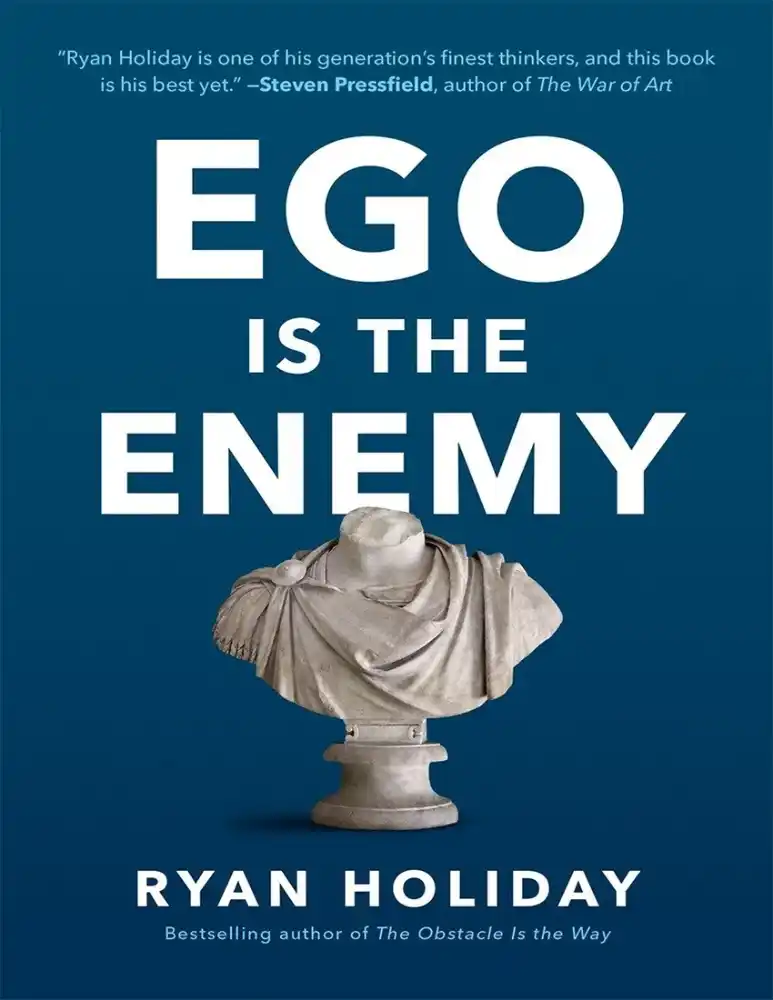
Source: “Ego is the Enemy” by Ryan Holiday – Essential reading for anyone seeking to escape ego’s trap and find genuine perspective on their life and work.
Related posts:
 How Ego Causes Self-Sabotage: A Practical Framework Inspired by Ryan Holiday
 Ego Is the Enemy Summary: 25 Essential Lessons From Ryan Holiday
 Who is Ryan Holiday and His Impact on Philosophy Presented By Masculine Synergy
 Ryan Holiday’s “Wisdom Takes Work”: Why Philosophy Only Matters When It’s Practiced
 The Canvas Strategy: How Helping Others Builds Your Career