
In a world dominated by social media updates, endless networking events, and constant self-promotion, there’s a dangerous trap that catches even the most talented individuals: talking about their ambitions instead of pursuing them. Ryan Holiday’s “Ego is the Enemy” exposes this fundamental weakness that sabotages countless dreams before they ever materialize.
The cost of premature talk isn’t just wasted breath—it’s wasted potential. When we broadcast our intentions before we’ve done the work, we’re essentially asking for credit we haven’t earned, validation we don’t deserve, and recognition that means nothing.
The Upton Sinclair Paradox
Holiday recounts the cautionary tale of Upton Sinclair, the renowned author who ran for Governor of California in 1934. In an unconventional campaign move, Sinclair published a book titled “I, Governor of California and How I Ended Poverty,” written in past tense, describing the brilliant policies he would enact—despite not yet winning the office.
The book became a bestseller. The campaign? A spectacular failure. Sinclair lost by over 250,000 votes. What happened? Campaign manager Carey McWilliams later observed that Sinclair “had already acted out the part of ‘I, Governor of California’…so why bother to enact it in real life?”
This phenomenon reveals a profound truth about human psychology: talk can satisfy the same emotional needs as action, without requiring any of the actual work. When we tell people about our grand plans, our brains release the same feel-good chemicals as if we’d actually accomplished something. We get the reward without the effort.
The Social Media Trap
Today’s digital landscape amplifies this problem exponentially. Facebook asks “What’s on your mind?” Twitter beckons us to “Compose a new tweet.” Every blank text box is an invitation to substitute talk for action.
Holiday highlights writer Emily Gould, who spent an entire year stuck on her novel with a six-figure book deal. Her problem? She was “spending a lot of time on the Internet” instead of writing. She justified it as “building her brand” and claimed that curating content was “a creative act.” Meanwhile, her actual creative work—the novel—stalled completely.
The performance we give on social media is almost universally positive: “Look how great I am.” “See what I’m about to do.” Rarely do we share the truth: “I’m scared. I’m struggling. I don’t know.”
Why We Choose Talk Over Action
Understanding why we default to talk requires examining ego’s role in our decision-making. Holiday explains that there’s a weak side in each of us that wants maximum public credit for minimum actual work. This is ego in its purest form.
When we’re starting something new, we’re nervous and excited. Instead of channeling that energy into work, we seek external comfort and validation. We tell friends about our plans, post updates about our progress, and spend hours in the shallow end of creativity rather than diving into the deep work that actually matters.
The instant gratification of likes, comments, and encouraging words from our network feels like progress. It isn’t. It’s a dopamine hit that delays the real work while making us feel productive.
The High Cost of Premature Talk
Holiday warns that talking about your plans before executing them creates several dangerous outcomes:
Dissipated Energy: Every ounce of energy spent talking about what you’ll do is energy not spent doing it. The enthusiasm that could fuel months of focused work gets dispersed in casual conversations and social media posts.
False Accountability: Telling people about your goals creates an illusion of commitment without actual accountability. When plans fail, we can blame circumstances rather than our lack of execution.
The Pressure of Audience: Once you’ve announced your intentions publicly, you’re performing for an audience rather than focusing on the work itself. The fear of public failure can become paralyzing.
Reduced Drive: Research in psychology confirms what Sinclair experienced: when we tell people about our goals, we experience a “social reality” that makes us less motivated to achieve them. The acknowledgment tricks our brain into thinking we’ve already succeeded.
The Alternative: Silence and Action
The antidote to empty talk is deliberately chosen silence paired with relentless action. Holiday emphasizes that those who achieve greatness typically do so quietly, letting their results speak louder than any words could.
Consider the approach of successful people who understand this principle:
Build First, Announce Later: Create something remarkable, then let others discover it. The quality of your work will generate more authentic buzz than any self-promotion campaign.
Let Results Create Reputation: Your track record speaks louder than your promises. One completed project is worth a thousand announced intentions.
Develop Quietly: The most valuable work happens in private. Whether you’re writing a book, building a business, or mastering a skill, the grunt work happens away from the spotlight.
Practical Steps to Break the Talk Habit
Holiday’s insights translate into actionable strategies for anyone serious about achievement:
Implement a Communication Blackout: When starting a new project, commit to not discussing it publicly until you’ve made substantial progress. Let the work be your focus, not the announcement.
Replace Status Updates with Progress Metrics: Instead of posting about what you plan to do, track private metrics that measure actual advancement. A completed chapter beats a tweet about writing any day.
Find Accountability That Demands Results: Share your goals only with mentors or peers who will hold you to tangible outcomes, not just stated intentions.
Practice Uncomfortable Silence: When people ask what you’re working on, resist the urge to elaborate. A simple “I’m working on something I’m excited about” suffices until you have results to show.
Redirect Social Energy into Work: Every time you feel the urge to post an update or tell someone about your plans, redirect that energy into another hour of actual work.
The Canvas Strategy: When Helping Others Beats Talking About Yourself
Holiday introduces the concept of the “canvas strategy”—making yourself invaluable by helping others succeed. This approach completely inverts the ego-driven impulse to constantly promote yourself.
Instead of talking about your capabilities, demonstrate them by making others look good. Early in his career, Bill Belichick, now one of the most successful NFL coaches, volunteered to analyze game film without pay. He let senior coaches take credit for his insights while building invaluable skills and relationships.
This strategy works because it focuses on action over self-promotion. You’re not talking about what you can do; you’re proving it in ways that benefit others. The recognition comes naturally as a byproduct of your contribution.
The Long Game vs. The Loud Game
Holiday contrasts two approaches to building a career or achieving goals: the long game of quiet competence versus the loud game of constant self-promotion.
The loud game might get you noticed faster, but it’s fundamentally unsustainable. Eventually, you need to deliver results that match your talk. When you can’t, the house of cards collapses.
The long game requires patience and faith in the compound effect of consistent work. You might not get immediate recognition, but you’re building something solid that can’t be shaken by temporary setbacks or changing trends.
History remembers those who did the work, not those who talked about doing it. The monuments stand to builders, not to announcers.
Breaking Free From Ego’s Grip
The ultimate message in Holiday’s exploration of talk versus action is that ego tricks us into choosing the easier path of words over the harder path of deeds. It’s more comfortable to bask in the fantasy of what we’ll accomplish than to face the daily grind of actually accomplishing it.
But comfort is the enemy of achievement. Every hour spent talking is an hour not spent building. Every announcement of intention is energy that could have fueled creation.
The choice is stark and simple: Will you be someone who talks about doing great things, or someone who actually does them? The world is full of the former and desperately needs more of the latter.
The Final Word: Shut Up and Work
Holiday’s advice, distilled to its essence, is almost aggressive in its simplicity: stop talking and start working. The most successful people aren’t necessarily the most talented or the most connected—they’re the ones who stayed quiet and kept their heads down while everyone else was networking and posting updates.
The paradox is that the less you talk about what you’re doing, the more impressive the results become when you finally reveal them. The work speaks for itself, and it speaks with a volume that no amount of self-promotion can match.
Your legacy will be built on what you accomplished, not what you said you would accomplish. The time to start building it is now, in silence, with action as your only language.
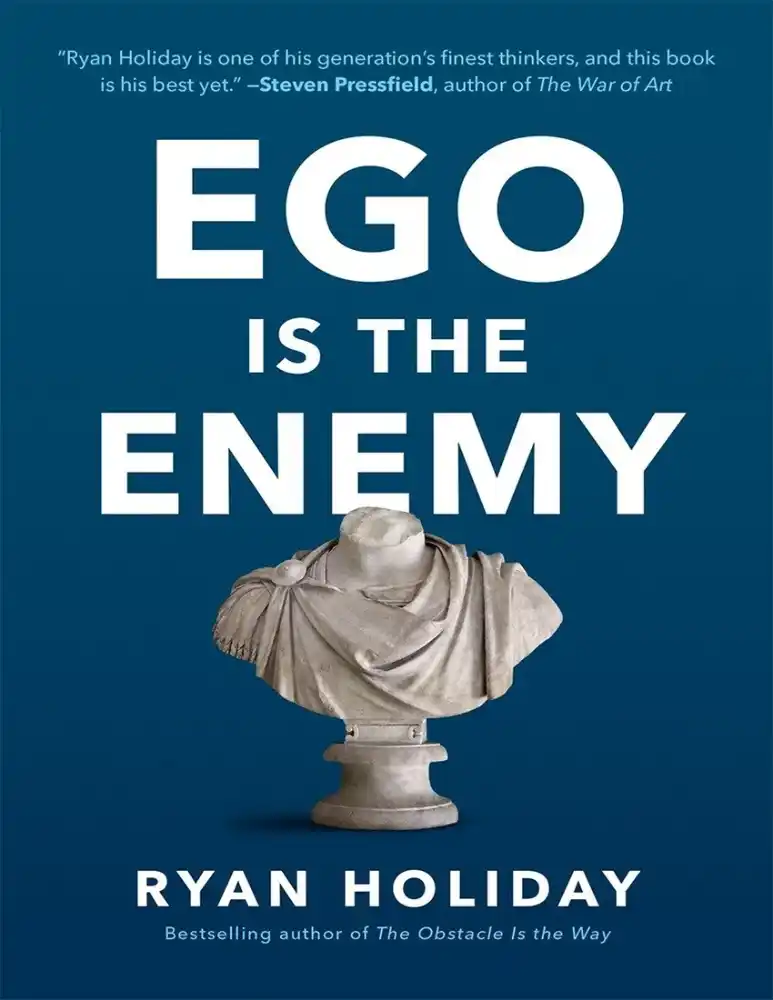
Source: “Ego is the Enemy” by Ryan Holiday – A masterful exploration of how ego sabotages our potential and what we can do about it.
Related posts:
 How Ego Causes Self-Sabotage: A Practical Framework Inspired by Ryan Holiday
 Ego Is the Enemy Summary: 25 Essential Lessons From Ryan Holiday
 Who is Ryan Holiday and His Impact on Philosophy Presented By Masculine Synergy
 Ryan Holiday’s “Wisdom Takes Work”: Why Philosophy Only Matters When It’s Practiced
 Student Mindset for Lifelong Learning: Stay Sharp for Life