Wisdom isn’t something you stumble into—it’s a skill built through constant learning, reflection, and disciplined thinking. In a world driven by quick opinions and surface-level knowledge, developing true wisdom requires questioning your beliefs, embracing humility, and doing the mental work most people avoid. Drawing on Stoic philosophy and real-world examples, this article explores how men can cultivate deeper judgment, clarity, and self-awareness over time. If you want to think better, decide smarter, and live with intention, wisdom starts with the work you’re willing to put in.
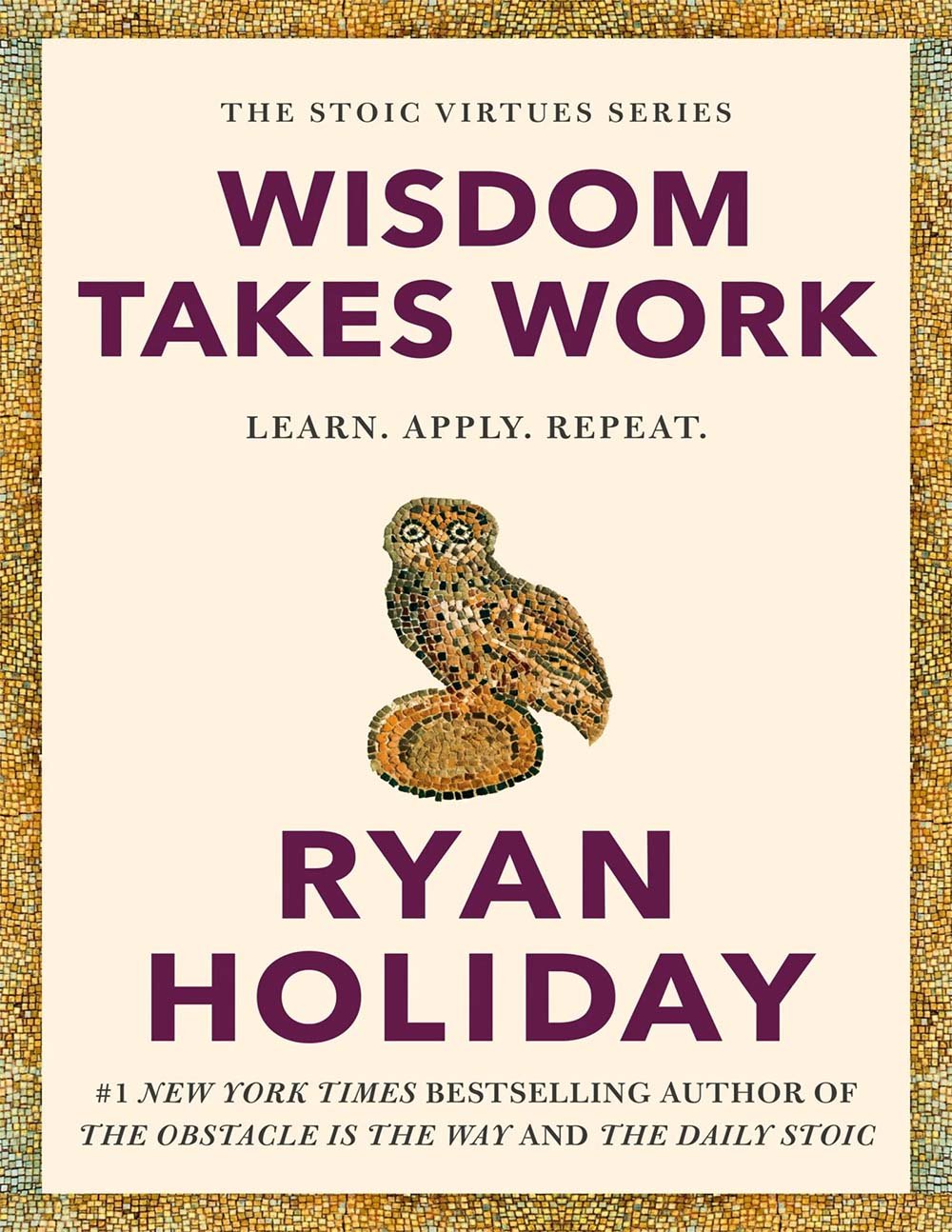
Ryan Holiday’s Wisdom Takes Work marks the powerful conclusion to his four-part series on the cardinal virtues, following Courage Is Calling, Discipline Is Destiny, and Right Thing, Right Now. This isn’t just another self-help book—it’s a philosophical treatise disguised as practical wisdom, drawing from 2,000 years of human experience to answer a question that matters now more than ever: How do you become wise in a world designed to make you stupid?
Published in 2025, Wisdom Takes Work arrives at a critical moment. We’re drowning in information but starving for wisdom. We have unprecedented access to knowledge yet seem collectively incapable of making sound judgments. We celebrate intelligence while dismissing the deeper, harder work of becoming wise.
Holiday’s thesis is both simple and challenging: wisdom isn’t a gift bestowed on the naturally intelligent or philosophically inclined. It’s a skill developed through deliberate practice, just like any other excellence. The title says it all—wisdom takes work.
The Four Cardinal Virtues: Wisdom’s Place in the Framework
To understand Wisdom Takes Work, you need to grasp its position in Holiday’s larger project. The ancient philosophers identified four cardinal virtues—courage, temperance (discipline), justice, and wisdom—as the foundation of a good life.
Courage gives you the strength to face fear and take right action despite danger or difficulty. Temperance provides the self-control to manage your desires and maintain balance. Justice guides you to treat others fairly and act for the common good.
But wisdom stands apart. It’s the virtue that enables all others. Without wisdom, courage becomes recklessness. Without wisdom, discipline becomes rigid dogma. Without wisdom, justice becomes blind ideology.
As Holiday writes, wisdom is the “quarterback” of virtue—the trait that coordinates and directs the others. You need wisdom to know when courage is required and when caution is appropriate. You need wisdom to determine what to control and what to let go. You need wisdom to discern what justice actually demands in complex situations.
This is why Holiday saved wisdom for last. The other virtues prepare you for the hardest work of all: the lifelong pursuit of understanding, judgment, and truth.
The Structure: Three Stages of Becoming Wise
Wisdom Takes Work is organized around three classical concepts, each representing a stage in the development of wisdom:
Part I: The Agoge (Your Training Ground)
The Agoge was the brutal education system of ancient Sparta, designed to forge warriors from boys. Holiday uses this as a metaphor for the disciplined training wisdom requires.
This section covers the foundational practices of wisdom-building: reading voraciously, finding teachers, becoming an apprentice, studying history, acquiring diverse experiences, and maintaining physical and mental health. Holiday emphasizes that wisdom doesn’t happen by accident—it requires intentional training.
Key chapters explore how to create a “second brain” through systematic note-taking, how to identify and learn from mentors, and why curiosity might be the most important trait you can cultivate. Holiday draws from his own apprenticeship under author Robert Greene, sharing hard-won insights about learning from masters.
The message: wisdom begins with building the infrastructure for learning—the habits, systems, and relationships that make growth possible.
Part II: The Sirens (The Perilous Rocks You Must Beware)
In Homer’s Odyssey, the Sirens were creatures whose beautiful songs lured sailors to crash their ships on hidden rocks. Holiday uses this metaphor for the cognitive traps, biases, and temptations that destroy wisdom before it can develop.
This is perhaps the most relevant section for modern readers. Holiday identifies the specific ways contemporary life sabotages wisdom: information overload, echo chambers, groupthink, intellectual arrogance, and the seductive comfort of certainty.
Key chapters tackle “emptying your cup” (intellectual humility), thinking for yourself despite social pressure, managing your information diet, changing your mind when evidence demands it, and understanding the difference between knowledge and wisdom.
Holiday doesn’t pull punches here. He discusses modern examples—including a detailed examination of Elon Musk’s transformation from innovative thinker to ideological partisan—to illustrate how even brilliant people can fall victim to these traps.
The message: wisdom requires constant vigilance against the forces trying to make you stupid, arrogant, or certain.
Part III: The Apotheosis (Touching the Divine)
Apotheosis means the elevation of someone to divine status, the transformation from mortal to god. Holiday uses it to describe the highest expressions of wisdom—those moments when human understanding touches something transcendent.
This section explores wisdom’s fruits: empathy, humility, self-awareness, happiness, the ability to find meaning in suffering, and the capacity to see the essence of things beneath surface complexity.
Holiday discusses what he calls “suffering into truth”—the ancient understanding that wisdom often comes through hardship processed with intention. He explores the relationship between wisdom and joy, arguing that truly wise people aren’t grim philosophers but individuals who’ve learned to laugh at life’s absurdities.
The final chapter addresses wisdom’s relationship to virtue itself, arguing they’re ultimately inseparable. You cannot be wise without being good, and you cannot be good without wisdom to guide your goodness.
The message: wisdom isn’t the end of the journey—it’s a transformation that continues throughout life, with each stage revealing deeper truths.
Core Themes: What the Book Actually Teaches
Beyond its structure, Wisdom Takes Work advances several crucial arguments that challenge conventional thinking about wisdom:
Wisdom Is Democratic, Not Elitist
Holiday rejects the notion that wisdom belongs only to philosophers, intellectuals, or the highly educated. Some of the wisest people he profiles never attended elite universities. Many worked with their hands. Some were former slaves.
Wisdom is available to anyone willing to do the work. The work includes reading (but not necessarily formal study), reflecting on experience, learning from mistakes, seeking truth, and maintaining humility. These practices don’t require credentials—they require commitment.
Wisdom Requires Both Books and Experience
A persistent debate in philosophy: Can you learn wisdom from books, or must it come from life experience? Holiday’s answer: both, and you’re foolish to choose one over the other.
Books give you access to accumulated human wisdom across millennia. They let you learn from others’ mistakes without making them yourself. They provide frameworks for understanding your own experience.
But experience tests theory, reveals nuance, and creates the visceral understanding that books alone cannot provide. The wisest people are those who read deeply and live fully, constantly integrating book knowledge with real-world application.
Wisdom Is Practical, Not Just Theoretical
One of Holiday’s most important contributions is bringing ancient wisdom into modern application. This isn’t an academic treatise—it’s a handbook for living.
Holiday consistently asks: What does this mean for how you should act today? How does ancient Stoic wisdom apply to social media? How do Marcus Aurelius’s meditations help you handle difficult colleagues? How does Socratic questioning improve your decision-making?
The test of wisdom isn’t what you know but how you live. Holiday emphasizes outcomes over intellectual performance, character over credentials.
Wisdom Develops Slowly Over Time
In a culture obsessed with hacks, shortcuts, and rapid results, Holiday offers a harder truth: there is no quick path to wisdom. It develops slowly, through years and decades of reading, reflecting, making mistakes, and learning.
This is actually liberating. You don’t need to become wise immediately. You just need to start the work and trust the process. Holiday compares it to compound interest—small daily investments in learning create extraordinary returns over time.
Modern Society Is Designed to Prevent Wisdom
Perhaps the most provocative theme in Wisdom Takes Work is Holiday’s argument that contemporary life actively undermines wisdom-building.
Social media rewards hot takes over thoughtful reflection. News cycles prioritize outrage over understanding. Educational systems emphasize credentials over actual learning. Professional environments punish uncertainty and reward confident ignorance.
To become wise today requires swimming against powerful cultural currents. You must deliberately create space for deep reading in an age of infinite scroll. You must protect time for reflection in a culture that glorifies constant activity. You must maintain intellectual humility in a world that demands certainty.
Key Practices and Takeaways
For readers looking to apply Holiday’s insights, the book offers numerous practical frameworks:
Build a Second Brain: Maintain a systematic method for capturing, organizing, and retrieving what you learn. Holiday uses index cards and notebooks, but the specific system matters less than the practice of externalizing your thinking.
Find and Follow Teachers: Identify people wiser than you and learn from them directly. This might mean formal apprenticeship, but it can also mean reading their work, studying their decisions, or simply observing how they navigate challenges.
Empty Your Cup Regularly: Question your certainties. Ask what would change your mind. Seek disconfirming evidence. The practice of intellectual humility creates space for new understanding.
Read Primary Sources: Don’t just consume summaries and interpretations. Engage directly with original texts, speeches, and data. This builds understanding that secondhand accounts cannot provide.
Suffer Into Truth: When hardship comes, extract lessons from it. Reflect on what pain reveals about yourself, others, and reality. Transform unavoidable suffering into hard-won wisdom.
Think for Yourself: Resist groupthink and social pressure. Examine evidence directly. Question consensus when appropriate. Follow reason even when it leads you away from popular opinion.
Stay a Student Forever: Never stop learning. Approach each day with curiosity. Remain teachable regardless of age or achievement. The moment you think you’ve arrived is the moment growth stops.
Who Should Read This Book
Wisdom Takes Work speaks to several distinct audiences:
Young people building their lives: If you’re in your 20s or 30s, establishing career and life direction, this book provides a blueprint for becoming the person you want to be. Holiday shows how investing in wisdom early pays dividends across your entire life.
Mid-career professionals feeling stuck: Many successful people find that their intelligence and hard work have taken them far, but they’ve plateaued because they lack wisdom. This book helps you develop the judgment and perspective that knowledge alone doesn’t provide.
Leaders and decision-makers: Whether you’re running a company, managing a team, or raising children, you need wisdom to make sound judgments in complex situations. Holiday offers frameworks for better decision-making rooted in ancient philosophy.
Anyone overwhelmed by modern life: If you feel confused by constant information, paralyzed by competing opinions, or exhausted by the pace of change, this book provides clarity. Holiday shows how to navigate complexity with wisdom.
Philosophy enthusiasts: Even if you’re well-versed in Stoicism and ancient wisdom, Holiday synthesizes diverse traditions (Stoic, Socratic, Buddhist, Christian) and connects them to contemporary challenges in fresh ways.
What Makes This Book Different
The self-help and philosophy sections are crowded with books about wisdom. What distinguishes Wisdom Takes Work?
Holiday’s unique voice and accessibility: He writes clearly and compellingly, making ancient philosophy relevant without dumbing it down. The book works for both philosophy novices and serious students.
The integration of ancient and modern: Holiday doesn’t just quote Marcus Aurelius—he shows how Stoic principles apply to social media, political polarization, and contemporary crises. The examples are current and relevant.
Personal vulnerability: Holiday shares his own struggles, failures, and ongoing work to become wiser. He doesn’t write as someone who’s achieved perfect wisdom but as a fellow traveler committed to the journey.
The comprehensive framework: By completing the four-virtue series, Holiday has created something rare—a complete philosophical system for modern life, grounded in ancient wisdom but adapted for contemporary challenges.
Practical application over theory: Every concept is paired with actionable practices. Holiday doesn’t just explain what wisdom is—he shows you how to build it.
Critical Reception and Controversies
No review would be complete without acknowledging that Wisdom Takes Work has sparked both praise and criticism.
Supporters appreciate Holiday’s ability to make philosophy accessible and applicable. They value the concrete practices, the historical examples, and the challenge to think more deeply in a superficial age.
Critics note that some of Holiday’s political commentary—particularly regarding Elon Musk and contemporary polarization—may date the book or alienate readers who disagree with his assessments. Some philosophy purists argue that Holiday simplifies complex traditions.
Holiday addresses these potential objections in the book itself, noting that wisdom sometimes requires taking positions that upset people. He explicitly chose to discuss Musk despite knowing it would be controversial, arguing that intellectual courage matters more than maintaining universal appeal.
How It Connects to Holiday’s Other Work
Wisdom Takes Work builds on themes from Holiday’s earlier books while completing the virtue framework:
From The Obstacle Is the Way and Ego Is the Enemy, it develops the Stoic practice of turning adversity into advantage—what he calls “suffering into truth.”
From Stillness Is the Key, it expands on the need for contemplation and reflection in a noisy world, showing how stillness creates space for wisdom to emerge.
From the Daily Stoic series, it takes the practice of daily philosophical reflection and scales it to a lifetime of wisdom-building.
The virtue series—Courage, Discipline, Justice, and Wisdom—works as an integrated whole, each virtue supporting and depending on the others.
The Bottom Line: Should You Read It?
If you’re committed to becoming a better thinker, decision-maker, and human being, Wisdom Takes Work belongs on your shelf. It’s not an easy book—it challenges comfortable assumptions and demands real effort. But that’s precisely the point.
Holiday doesn’t promise that wisdom will make your life easier. He promises it will make your life better, more meaningful, and more aligned with truth. He shows that the work of becoming wise is the most important work you can do, and it’s work that never ends.
In an age of artificial intelligence, deep fakes, and information warfare, the ability to think clearly, judge soundly, and act wisely matters more than ever. Holiday’s book is a roadmap for that journey—not because it gives you all the answers, but because it teaches you how to ask better questions and do the work of finding your own answers.
As the Stoics understood and Holiday reminds us: we become what we repeatedly do. If you do the work of wisdom—reading deeply, thinking critically, learning from experience, maintaining humility, and questioning constantly—wisdom will come.
It won’t be easy. It won’t be quick. But as the book’s title promises: wisdom takes work. The question is whether you’re willing to do it.

Related posts:
 Who is Ryan Holiday and His Impact on Philosophy Presented By Masculine Synergy
 Lifelong Learning: Why the Wisest People Never Stop Being Students (Wisdom Takes Work by Ryan Holiday)
 Practical Wisdom: How to Empty Your Cup and Fill It With Wisdom From Ryan Holiday
 Stoic Wisdom: How Hardship Builds Character (Wisdom Takes Work by Ryan Holiday)
 Improve Your Curiosity: Why Asking Questions Is the Beginning of Wisdom (Wisdom Takes Work By Ryan Holiday)