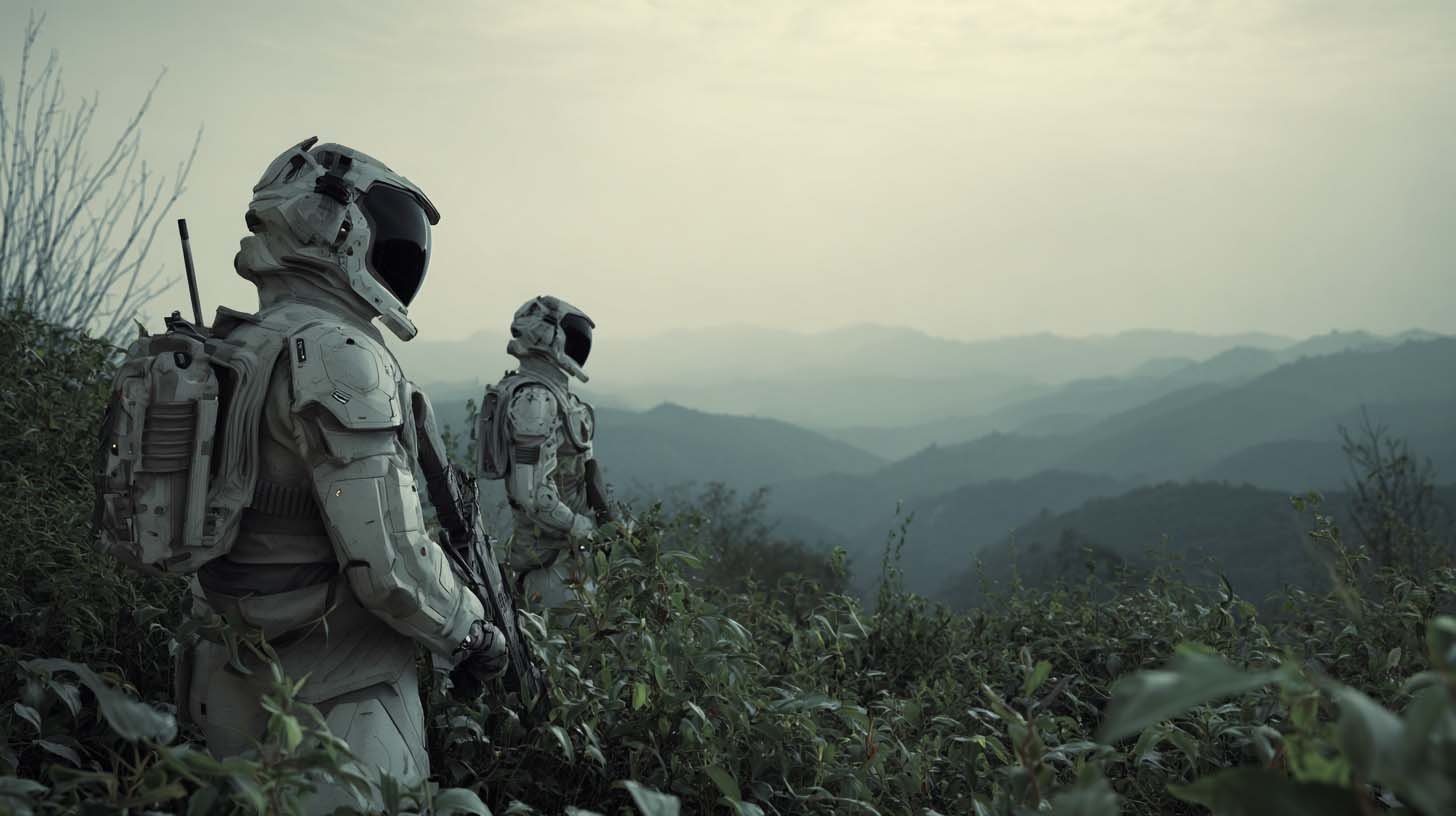
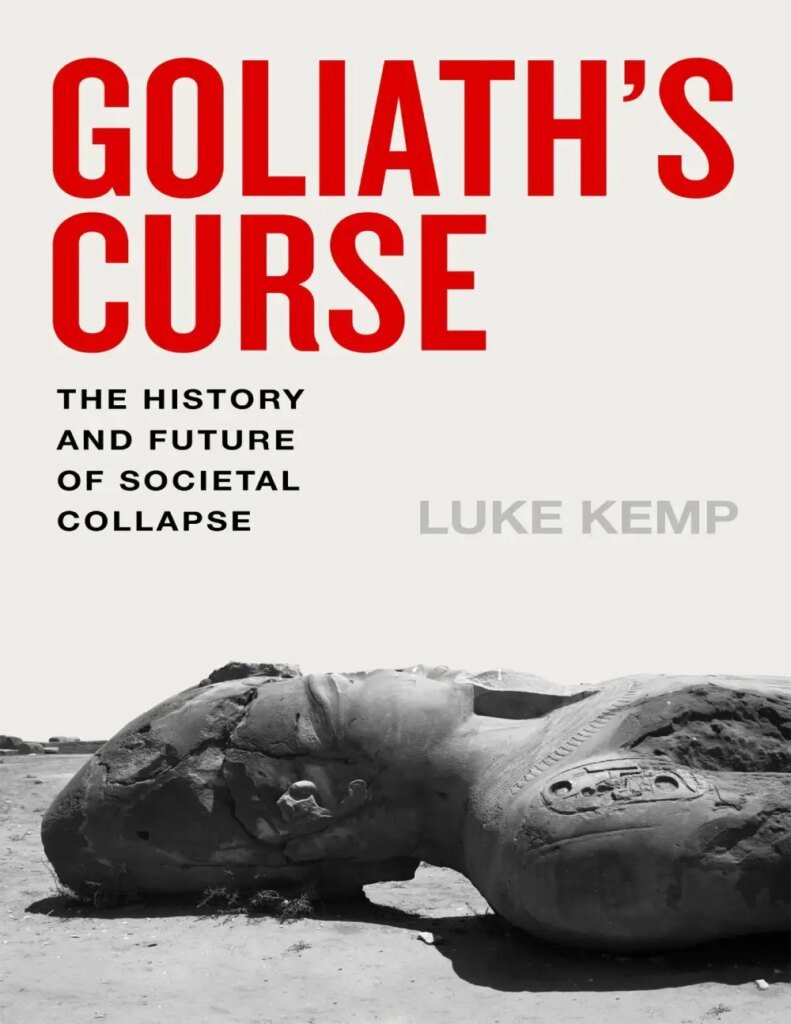
Throughout history, collapsed civilizations could eventually rebuild. After Rome fell, medieval Europe slowly reconstructed complex societies. Chinese dynasties rose, fell, and rose again. The Bronze Age collapse gave way to Iron Age civilizations. Recovery always remained possible because fundamental resources persisted. But in “Goliath’s Curse: The History and Future of Societal Collapse,” Luke Kemp introduces a chilling concept: the “rungless ladder”—the possibility that if modern industrial civilization collapses, humanity might lack the resources to ever rebuild technological society again.
The Resources That Built Modernity
The Industrial Revolution depended on specific, finite resources conveniently accessible to pre-industrial societies. Early industrialization required easily mined coal near the surface, accessible iron ore deposits, timber for construction and fuel, and simple mineral resources. These resources existed in forms that relatively simple technologies could exploit.
British industrialization began with coal outcroppings where black rocks literally lay exposed on hillsides. Early mines were shallow, using human and animal power for extraction. The first steam engines, though inefficient, could pump water from these mines, enabling deeper extraction. Each technological step built upon the previous, creating a ladder of increasing capability.
Iron ore similarly existed in surface deposits requiring only modest heat and simple techniques to smelt. Timber grew abundantly in forests cleared for agriculture. Copper, tin, and other metals could be extracted from shallow deposits. The resources enabling industrial takeoff were accessible to societies with Renaissance-era technology.
Modern industrial civilization has consumed these easy resources. Surface coal has been mined. Easily accessible iron ore is depleted. Old-growth forests providing superior timber are largely gone. Remaining resources require sophisticated extraction technologies: deep mines, advanced drilling, complex metallurgy, global supply chains.
Kemp emphasizes the profound implications: the ladder that lifted humanity to industrial civilization has lost its lower rungs. Any future society emerging from collapse would face a planet already stripped of resources accessible to pre-industrial technology. They couldn’t recreate the industrialization path we followed.
What Remains and What Doesn’t
Consider specific resources essential for industrial development. Coal deposits that powered the first Industrial Revolution in Britain, Europe, and America have been substantially depleted. Remaining coal requires deep mining with modern equipment, underground railways, ventilation systems, and safety infrastructure far beyond pre-industrial capabilities.
Petroleum represents an even starker example. The first oil wells struck deposits where oil naturally seeped to the surface. Early drilling required only modest technology. Today’s oil comes from offshore platforms in deep water, hydraulic fracturing of shale formations, or tar sands requiring extensive processing. None of these sources could be tapped by societies lacking advanced industrial capabilities.
Metal ores followed similar trajectories. Rich surface deposits have been exhausted. Modern mining processes low-grade ores economically only through massive-scale operations, complex chemical processing, and energy-intensive extraction. Future post-collapse societies might find abandoned mines, rusting equipment, and depleted ore bodies but lack means to process remaining low-grade deposits.
Phosphate for fertilizer—essential for feeding large populations—comes increasingly from limited deposits requiring industrial-scale mining. Easily accessible deposits have been depleted. Recycling phosphorus from agricultural waste could sustain smaller populations but couldn’t support billions.
Even timber resources differ dramatically from past availability. Old-growth forests provided massive trees ideal for shipbuilding, construction, and industrial uses. Remaining forests consist largely of smaller second or third-growth trees. While still valuable, they can’t substitute for the massive timbers that built sailing ships and early industrial infrastructure.
The One-Shot Civilization Problem
These resource constraints create what Kemp calls the “one-shot civilization” problem. Humanity may have one opportunity to build stable, sustainable technological civilization. If we fail—if industrial civilization collapses before we develop sustainable energy, materials recycling, and closed-loop production—the door may close permanently.
Future post-collapse societies would face immense challenges. They’d inherit a depleted planet, degraded ecosystems, and no easy path back to industrial capabilities. Without accessible fossil fuels, they couldn’t power the energy-intensive processes that built our infrastructure. Without surface metal ores, they couldn’t develop the metallurgy underpinning modern technology. Without old-growth forests, they couldn’t build the ships that connected early modern economies.
They would possess one advantage: archaeological artifacts and ruins from our civilization. Imagine future peoples discovering buildings, roads, machinery, books, and computers. This “gift” from the past provides knowledge our ancestors lacked. But knowledge alone doesn’t provide capability. Understanding internal combustion engines doesn’t help societies lacking refined petroleum. Comprehending electrical generation doesn’t assist groups without copper wire, generator components, or reliable power sources.
The survivors of collapse might find themselves in a peculiar situation: possessing encyclopedic knowledge of advanced technologies they lack resources to recreate. They could understand atomic theory while unable to build anything more sophisticated than medieval technology. They’d know about modern medicine while lacking pharmaceutical manufacturing capabilities. They’d comprehend global communication networks while limited to local horse-powered transport.
Could Renewables Provide an Alternative Path?
One potential escape from the rungless ladder involves renewable energy. Solar panels, wind turbines, and hydroelectric systems don’t require fossil fuels for operation. If modern civilization transitioned to renewables before collapse, survivors might maintain industrial capabilities using clean energy.
However, manufacturing renewable energy systems requires substantial industrial capacity. Solar panels need purified silicon, complex materials, and sophisticated fabrication facilities. Wind turbines require advanced metallurgy, precision manufacturing, and large-scale construction capabilities. These technologies depend on intact industrial supply chains and energy systems.
Post-collapse societies would face a bootstrapping problem. Operating renewable energy systems requires maintaining and eventually replacing equipment. But manufacturing replacement components demands industrial capabilities that require energy to sustain. If collapse disrupts energy systems before renewables reach sufficient scale and distribution, the transition window closes.
Kemp suggests that our best hope involves building resilient renewable infrastructure before collapse, distributing knowledge of maintenance and manufacturing widely, and ensuring local communities can sustain basic industrial processes. This requires intentional preparation rather than assuming recovery will naturally occur as in past collapses.
The Knowledge Preservation Challenge
Future societies would need not just artifacts but also preserved knowledge enabling technology reconstruction. This raises critical questions about information preservation across collapse scenarios.
Modern knowledge exists primarily in formats requiring electricity: computer databases, internet servers, digital storage. A prolonged power grid failure would render most contemporary information inaccessible. Hard drives deteriorate. Server farms require cooling and maintenance. Cloud storage depends on functioning infrastructure networks. Digital information, while seemingly permanent, proves remarkably fragile to systemic disruption.
Physical books provide more resilience but face their own challenges. Paper degrades over decades without proper storage. Libraries require maintenance. In collapse scenarios, books might be burned for fuel, destroyed by weather, or simply lost as populations scatter. The medieval period preserved classical knowledge largely through monasteries—institutions specifically dedicated to manuscript preservation. Post-collapse societies would need similar dedication.
Some propose creating deliberately permanent archives—the Svalbard Global Seed Vault stores seed samples in Arctic permafrost, while various projects work on ultra-long-term data storage. These efforts might provide future societies with starting resources for recovery. But accessing such archives requires survivors knowing they exist and possessing means to reach them.
The knowledge preservation problem extends beyond technology. Agriculture, medicine, social organization, and governance wisdom accumulated across millennia could vanish within a generation if not transmitted effectively. Oral traditions preserved crucial information in pre-literate societies but prove unreliable for technical knowledge. Future societies might face a curious situation: archeological access to our advanced technology alongside inability to understand or reproduce it.
Historical Precedents: The Bronze Age Collapse
Historical collapses offer imperfect analogies for the rungless ladder concept. The Bronze Age collapse destroyed palace economies and erased literacy in several regions. Yet recovery eventually occurred. Why might modern collapse prove different?
First, Bronze Age societies hadn’t depleted fundamental resources. Forests still grew. Copper and tin deposits remained accessible. Agricultural land retained fertility. Climate systems, while variable, fell within ranges human societies had adapted to. Bronze Age collapse disrupted complex systems but didn’t exhaust the resource base enabling those systems.
Second, Bronze Age technology remained simple enough for small communities to maintain. A village blacksmith could forge tools using techniques passed through apprenticeship. Farmers could save seeds and cultivate crops without industrial inputs. Builders could construct shelter with hand tools and local materials. The knowledge supporting Bronze Age technology could survive in decentralized, orally transmitted forms.
Modern technology differs fundamentally. No village blacksmith can manufacture computer chips. No local farmer can produce synthetic fertilizers or pesticides industrial agriculture depends upon. No community builder can fabricate solar panels or wind turbines. Modern technology requires vast integrated systems, specialized knowledge, and industrial infrastructure. Losing these systems could mean losing capabilities permanently rather than temporarily.
The Population Trap
The rungless ladder problem intensifies when considering population levels. Industrial civilization supports nearly eight billion people. This population depends on industrial agriculture, global trade, complex supply chains, and fossil-fuel-powered transportation. Pre-industrial agricultural systems supported far smaller populations—perhaps one billion globally at most.
If industrial collapse occurred, population would necessarily decline to levels sustainable by available agricultural techniques. This decline would occur through starvation, disease, conflict, and reduced reproduction—a demographic catastrophe of unimaginable scale. The survivors would face the dual challenges of maintaining knowledge through social chaos and attempting to rebuild with depleted resources.
Moreover, post-collapse populations would likely fragment into small communities focused on immediate survival rather than long-term technological development. Historical examples show collapsed populations reverting to subsistence strategies, abandoning complex social organization, and losing specialized knowledge. Rebuilding industrial civilization requires surplus production, specialized labor, and coordinated effort across large populations—precisely what collapse destroys.
Alternative Technological Paths
Could post-collapse societies develop alternative technologies not requiring fossil fuels or concentrated mineral deposits? Some proposals suggest focusing on renewable energy, biological materials, and sustainable agriculture from the start, avoiding the fossil-fuel-dependent path industrial civilization followed.
In principle, societies could build infrastructure using wood, stone, and renewable materials. They could harness water, wind, and solar power with appropriate designs. They could practice intensive sustainable agriculture rather than industrial monoculture. They could develop biotechnology using traditional breeding and fermentation rather than genetic engineering.
However, Kemp notes that such alternatives, while theoretically possible, prove difficult in practice. Renewable energy at scale requires manufacturing capabilities that bootstrapping societies might lack. Sustainable agriculture supports smaller populations than industrial farming, constraining available labor for industrial development. Biological materials, while renewable, take time to grow and provide limited material properties compared to metals and plastics.
The challenge involves developing sufficient technological capability to enable further development while remaining within resource constraints. Historical industrialization solved this through fossil fuels—concentrated energy enabling rapid capability growth. Alternative paths must achieve similar bootstrapping with more limited energy sources, making the climb harder even if eventually possible.
The Moral Dimensions
The rungless ladder concept carries profound moral implications. Current generations enjoy the benefits of depleting one-time resource endowments accumulated over geological time. We’re consuming fossil fuels formed over hundreds of millions of years, exhausting mineral deposits concentrated by geological processes, and degrading ecosystems that provided stable conditions for human civilization.
If our consumption patterns prevent future generations from rebuilding after collapse, we’re not just harming our immediate descendants but potentially condemning humanity to permanent pre-industrial technology levels. We’re spending an inheritance that could enable recovery, leaving future peoples impoverished in resources while facing problems we created—depleted soils, changed climate, contaminated environments, and exhausted easy resources.
Kemp argues this creates obligations to avoid collapse if possible and to prepare for resilient recovery if collapse occurs. We should transition to sustainable systems while industrial capabilities remain intact. We should preserve knowledge in accessible formats. We should maintain seed banks, tool-making capabilities, and understanding of low-technology solutions. We should reduce resource consumption to leave more options for future societies.
Breaking the Curse
The concept of a rungless ladder represents perhaps the darkest implication of Goliath’s Curse. Not only do all civilizations eventually end, but our particular civilization may have consumed the resources necessary for any successor to reach industrial capabilities again. We’ve built a technological tower by burning the ladder beneath us.
Yet this knowledge provides motivation for action. Understanding the rungless ladder problem emphasizes the importance of building sustainable civilization now, while we still possess industrial capabilities. Transitioning to renewable energy, developing circular material economies, preserving critical knowledge, and creating resilient infrastructure all become not just environmental or economic issues but existential imperatives.
The alternative to success isn’t just collapse but potentially permanent technological limitations for future humanity. If we fail to build sustainable systems with current resources, we may deny all future generations opportunities we enjoyed. This transforms the challenge from preserving current civilization to ensuring human civilization’s long-term potential survives regardless of near-term setbacks.
As “Goliath’s Curse” makes clear, we’re conducting an experiment with only one chance for success. The question isn’t whether we should try to avoid collapse—the stakes demand we must. The question is whether we’ll recognize the urgency before depleting remaining resources and foreclose humanity’s technological future. The ladder has few rungs remaining, and we’re running out of time to build a sustainable civilization that doesn’t require them.
25 Key Takeaways From Luke Kemp’s Book Goliath’s Curse
Related posts:
 25 Key Takeaways From Luke Kemp’s Book Goliath’s Curse
Why Civilizations Collapse: The Definitive Guide to Goliath’s Curse by Luke Kemp
25 Key Takeaways From Luke Kemp’s Book Goliath’s Curse
Why Civilizations Collapse: The Definitive Guide to Goliath’s Curse by Luke Kemp
 AI, Climate Change, and Nuclear War: The New Collapse Threats Ancient Empires Never Faced (Goliath’s Curse by Luke Kemp)
 The Year Civilization Collapsed: What Ancient Collapse Teaches Modern Civilization
 From Maya to Rome: How Environmental Degradation Triggers Societal Collapse (Goliath’s Curse by Luke Kemp)