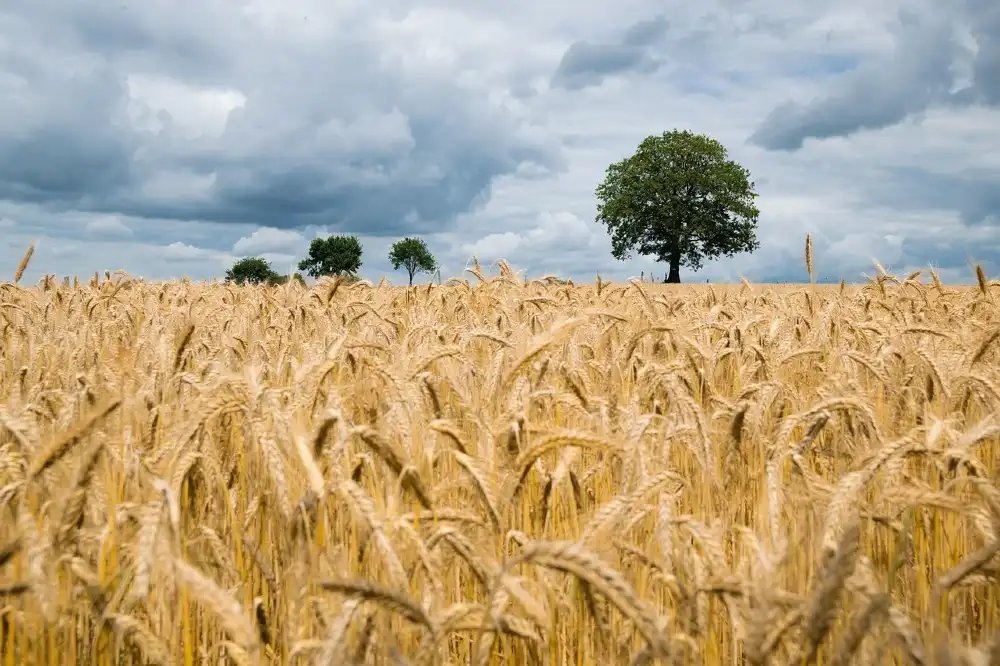
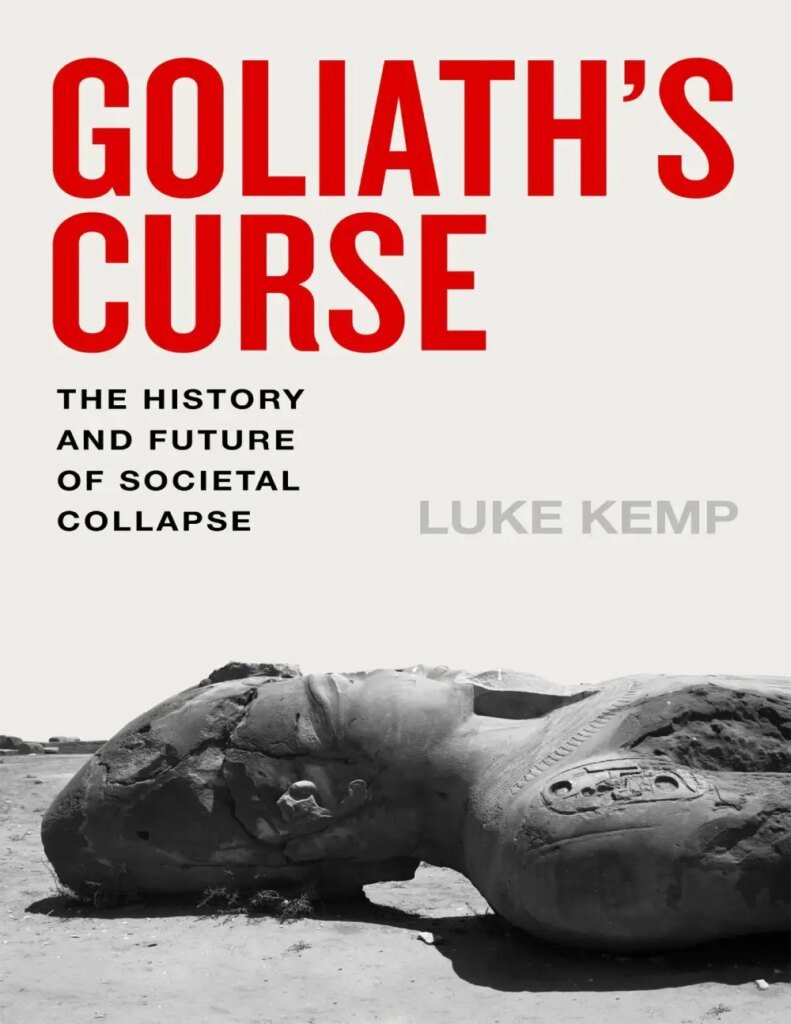
For decades, the story we’ve told ourselves about human progress follows a simple narrative: primitive hunter-gatherers lived short, brutish lives until agriculture saved humanity, enabling civilization to flourish. Luke Kemp‘s “Goliath’s Curse: The History and Future of Societal Collapse” shatters this comfortable myth with archaeological evidence that challenges everything we thought we knew about early human societies and the dawn of agriculture.
The Comfortable Myth of Progress
The conventional wisdom paints a stark picture. Before agriculture, humans supposedly wandered in small bands, constantly on the brink of starvation, living in fear of nature and each other. The development of farming around 10,000 BCE marked humanity’s great leap forward—a technological revolution that provided food security, enabled population growth, and laid foundations for art, science, and everything we associate with civilization.
This narrative, rooted in Enlightenment thinking and reinforced by centuries of Western education, shapes how we understand human history. It justifies the present by portraying the past as necessarily inferior. Agricultural civilization becomes not just different from foraging societies, but demonstrably better by every meaningful metric.
Yet Kemp’s research, synthesizing decades of archaeological and anthropological findings, reveals a far more complex and often troubling reality. The transition to agriculture didn’t represent an unambiguous improvement in human welfare. In many cases, it made life measurably worse.
What the Bones Tell Us
Archaeological evidence provides our most reliable window into ancient health and living conditions. Skeletal remains reveal nutrition levels, disease prevalence, injury patterns, and lifespan. When researchers compare hunter-gatherer remains with those of early agricultural peoples, the results consistently surprise.
Early farmers frequently displayed signs of poorer nutrition than their foraging ancestors. Dental cavities increased dramatically with agriculture—a direct result of increased carbohydrate consumption from grains. Skeletal evidence shows more cases of anemia, suggesting inferior diets despite agricultural food production.
Height provides another telling indicator. Hunter-gatherer populations often stood taller than early agricultural peoples in the same regions. This height difference reflected better childhood nutrition and overall health. Only in recent centuries, with modern medicine and diverse food supplies, have agricultural populations regained heights matching their foraging ancestors.
Disease patterns shifted dramatically with agriculture. Sedentary farming communities living in close proximity enabled epidemic diseases to emerge and spread. Tuberculosis, plague, and numerous other infections thrived in agricultural settlements while remaining rare among dispersed foraging bands. The domestication of animals introduced zoonotic diseases—illnesses jumping from animals to humans—that continue plaguing humanity today.
The Labor Burden
Kemp documents how agriculture often demanded more work than foraging. Hunter-gatherers in favorable environments worked perhaps 15-20 hours weekly to meet survival needs. The remainder of their time went toward social activities, storytelling, art, and leisure. Anthropological studies of contemporary foraging peoples confirm this pattern.
Farming required substantially more labor. Fields needed clearing, planting, weeding, and harvesting. Grain required processing—grinding, husking, and cooking. Storage facilities needed construction and maintenance. Irrigation systems demanded continual upkeep. The agricultural year imposed rigid work schedules tied to planting and harvest seasons, unlike the more flexible subsistence strategies of foragers.
Women often bore particularly heavy agricultural burdens. In many farming societies, women performed the bulk of agricultural labor while also managing childcare and household tasks. The increased birthrates that agriculture enabled meant women spent more years pregnant and nursing, further intensifying their workload.
Equality Lost
Perhaps the most profound change accompanying agriculture involved social organization. Most hunter-gatherer societies exhibited remarkable egalitarianism. Without means to accumulate and store wealth, material inequality remained limited. Leadership often rotated based on specific tasks or situations rather than fixed hierarchies.
Kemp emphasizes how foraging societies developed cultural mechanisms actively resisting inequality and concentrated power. These included ridicule of boastful individuals, communal sharing norms, and consensus decision-making. Violence, while present, remained constrained by the inability of individuals to gain overwhelming power advantages over others.
Agriculture transformed social possibilities. Storable grain surpluses enabled some individuals to accumulate wealth while others faced scarcity. Those controlling land, water, or food supplies gained leverage over dependents. Hereditary inequality emerged as wealthy families passed advantages to offspring.
The archaeological record documents this shift starkly. Early agricultural settlements show relatively uniform housing and burial goods. Later agricultural societies display dramatic differences—elite residences vastly larger than commoner dwellings, lavish burials filled with precious goods contrasting with simple graves for ordinary people. This material inequality reflected increasingly hierarchical social structures.
The Rise of Violence and Coercion
With agriculture came new forms of organized violence. While hunter-gatherers certainly fought, their conflicts typically involved small-scale raids or individual disputes. Farming societies developed warfare on entirely different scales.
The reasons prove straightforward. Agricultural populations remained tied to specific lands. They couldn’t easily flee conflicts like mobile foragers. Stored grain and fixed settlements created valuable resources worth fighting over. Population growth enabled larger military forces. Military specialists emerged as some individuals focused exclusively on warfare rather than food production.
Kemp documents how early states often arose through conquest and subjugation rather than voluntary cooperation. Military groups conquered farming populations, establishing themselves as ruling classes. The first states developed taxation, conscription, and organized violence to extract resources from subject populations. What we celebrate as civilization’s birth frequently involved coercion of farming peoples by militarized elites.
Why Did People Become Farmers?
Given these costs, why did agriculture spread? Kemp explores several explanations, noting that the transition likely varied across different regions and circumstances.
Climate change may have forced some groups into agriculture. The end of the Ice Age brought environmental shifts that reduced wild food availability in certain areas. Population growth among successful foraging groups might have pressured resources, making cultivation necessary to support larger numbers.
Agriculture’s spread may have reflected competition more than individual choice. Groups practicing farming could support larger populations and more specialized military forces than foraging neighbors. In conflicts, agricultural societies often overwhelmed foraging peoples through sheer numbers, forcing survivors to adopt farming or face elimination.
The transition wasn’t necessarily a conscious decision to adopt a “better” system. Agriculture likely emerged gradually—people supplementing foraging with small-scale cultivation, slowly increasing agricultural dependence over generations. By the time communities realized they’d become dependent on farming, returning to foraging proved difficult or impossible.
Locked Into Agriculture
Once populations adopted agriculture, they became trapped. Farming supported larger populations than foraging in the same territories. But these larger populations needed agriculture to survive. Even if people recognized farming meant harder work and worse health than foraging, they couldn’t return. Foraging couldn’t support agricultural population densities.
This created a ratchet effect. Agricultural populations grew, filling landscapes. Foraging peoples faced displacement or assimilation. Eventually, agriculture became the only viable subsistence strategy for most of humanity. We became locked into a system that, while enabling larger populations and eventually complex civilizations, didn’t necessarily improve individual welfare.
Modern Parallels
Kemp draws provocative parallels to modern society. Like early farmers trapped in systems that demanded increasing labor without improving welfare, we may be locked into economic and technological systems that don’t actually enhance human flourishing. We work longer hours than medieval peasants despite massive productivity gains. Psychological distress, alienation, and inequality plague wealthy nations. Progress in GDP doesn’t necessarily translate to progress in human happiness or health.
The agricultural transition reminds us that widespread adoption of new systems doesn’t guarantee they’re better for individual welfare. Technologies and social arrangements can spread through competition and coercion rather than because they improve human lives. What benefits populations in competitive struggles between groups may harm individuals within those populations.
Lessons From Foragers
Should we romanticize hunter-gatherer life? Certainly not. Foraging societies faced challenges including infant mortality, injuries without modern medicine, and occasional food scarcity. Kemp doesn’t suggest we abandon civilization for a foraging lifestyle.
However, studying foraging societies reveals that hierarchy, inequality, and concentrated power aren’t inevitable human conditions. Humans lived most of their evolutionary history in relatively egalitarian groups. We possess cultural and psychological capacities for cooperation, sharing, and consensus decision-making that agricultural civilizations often suppressed.
Foraging societies demonstrated that humans can organize without centralized states, manage resources communally, and resolve disputes without elaborate hierarchies. These examples prove valuable when imagining alternative social arrangements. They show that current systems, while deeply embedded, don’t represent the only possible ways humans can organize themselves.
Rethinking Progress
“Goliath’s Curse” challenges us to abandon simple narratives about inevitable human progress from primitive origins toward enlightened modernity. The agricultural transition brought tremendous changes—enabling larger populations, technological advancement, and complex cultural achievements. But it came at significant cost to individual health, equality, and autonomy.
Understanding this history helps us think more critically about contemporary changes. When new technologies or social systems emerge, we should ask: who benefits? Do these changes improve individual welfare or merely enable larger populations and more powerful states? Are we choosing progress or merely adapting to competitive pressures?
The hunter-gatherer past doesn’t provide a blueprint for the future. But it reminds us that human history contains more diversity than conventional narratives suggest. Societies can organize in multiple ways. Systems that spread widely aren’t necessarily better for people living within them. And progress defined by some metrics—population size, technological complexity, economic output—may come at the expense of other values like equality, health, and leisure.
As Kemp demonstrates throughout “Goliath’s Curse,” understanding how we got here—including the costs hidden beneath progress narratives—proves essential for thinking clearly about where we’re going. The agricultural revolution created the world we inhabit, but it didn’t represent an unambiguous triumph. Acknowledging this complexity helps us make more informed choices about our collective future.
25 Key Takeaways From Luke Kemp’s Book Goliath’s Curse
Related posts:
 25 Key Takeaways From Luke Kemp’s Book Goliath’s Curse
 Why Extreme Inequality Destroys Civilizations: The Goliath’s Curse Explained
 The New Collapse Threats Ancient Empires Never Faced
Why Civilizations Collapse: The Definitive Guide to Goliath’s Curse by Luke Kemp
The New Collapse Threats Ancient Empires Never Faced
Why Civilizations Collapse: The Definitive Guide to Goliath’s Curse by Luke Kemp
 The Rungless Ladder Theory: Could Civilization Rebuild?